Samsung Galaxy Buds4 Pro Review: Samsung’s Best Earbuds Come With a Catch

Samsung released the Galaxy Buds4 Pro on February 25, 2026, at $249 USD, positioning them directly against the AirPods Pro 3 at the same price point. Fifth generation of the Pro line, these earbuds carry Bluetooth 6.1, a 6-microphone array, IP57 water resistance, and Samsung’s SSC-UHD codec capable of 96kHz Hi-Fi playback.
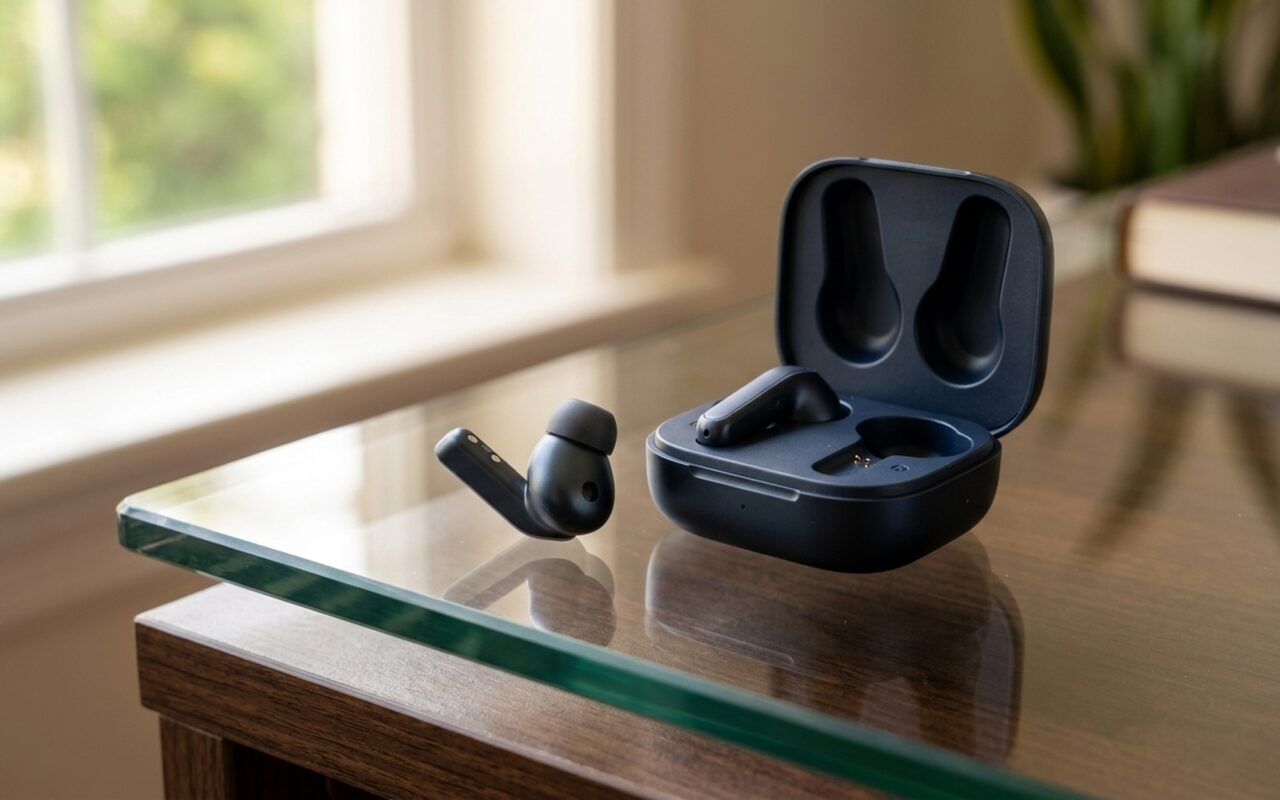
The hardware story is genuinely strong. The dual-driver configuration pairs with a vibration membrane that is 19.8% larger than the one in the Galaxy Buds3 Pro, which translates to measurable low-frequency output improvements that long-term owners confirm immediately. The 5.1g per-earbud weight keeps them competitive on comfort, and the three colorways (Deep Space Gray, Snow White, Coral Gold) cover the premium aesthetic range without overreaching.
The core tension with these earbuds is not the hardware. It is the ecosystem.
SSC-UHD at 96kHz is an audiophile-grade codec. It is also exclusive to Samsung devices. Non-Samsung Android users fall back to AAC, which according to sspai.com’s hands-on testing “falls short of price-point expectations.” iPhone users get no dedicated app and no adaptive features. The $249 price tag carries full weight only if a Samsung Galaxy phone is already in the picture.
Battery figures follow a similar pattern. Samsung’s official spec lists 6 hours with ANC active and 26 hours total with the case. Real-world testing by sspai.com running SSC-UHD at 96kHz brought that per-earbud figure down to approximately 4 hours and 57 minutes. The case extends the total to a workable number, but the per-session ceiling is tighter than competitors at this price.
ANC performance, however, is the clearest upgrade from the previous generation. SoundGuys measured 84% average attenuation, with a 5-10dB improvement over the Buds3 Pro specifically in the 500Hz to 1.1kHz midrange band where human voices and office noise concentrate. The 5-level adjustment system gives users granular control that most competing earbuds do not offer.
One friction point worth flagging before going further: a subset of owners have reported white noise or hiss during transparency mode. Community investigation points toward a batch-specific quality control issue rather than a universal hardware defect, but it is a known variable worth checking on early units.
For Samsung ecosystem users, the Buds4 Pro represent a clear step forward. For everyone else, the value calculation requires more scrutiny.
Key Specs at a Glance
All specifications sourced from the Samsung official Galaxy Buds4 Pro product page.
| Specification | Detail |
|---|---|
| Price | $249 USD |
| Release Date | February 25, 2026 |
| Weight | 5.1g per earbud |
| Driver Configuration | Dual drivers (19.8% larger vibration membrane vs Buds3 Pro) |
| Bluetooth Version | 6.1 |
| Codec Support | SBC / AAC / SSC / SSC-UHD (96kHz) / LC3 |
| Battery (Earbuds, ANC On) | 6 hours |
| Battery (Earbuds, ANC Off) | 7 hours |
| Battery (Total with Case, ANC On) | 26 hours |
| Battery (Total with Case, ANC Off) | 30 hours |
| Water Resistance | IP57 |
| Microphones | 6 |
| Charging | USB-C + Qi wireless |
| Colors | Deep Space Gray, Snow White, Coral Gold |
The spec table tells a competitive story on paper. Bluetooth 6.1 is ahead of most rivals shipping in the same window. IP57 covers full submersion up to 1 meter for 30 minutes, a step above the IPX4 splash resistance common at this tier. The five-codec lineup is genuinely broad, though SSC-UHD’s Samsung-device exclusivity means the 96kHz ceiling is inaccessible to roughly half the potential buyer pool.
For a deeper look at how the Buds4 Pro stack up against a strong budget alternative, the Redmi Buds 8 Pro Review covers the ANC and battery trade-offs at a lower price point in direct comparison terms.
Design and Comfort
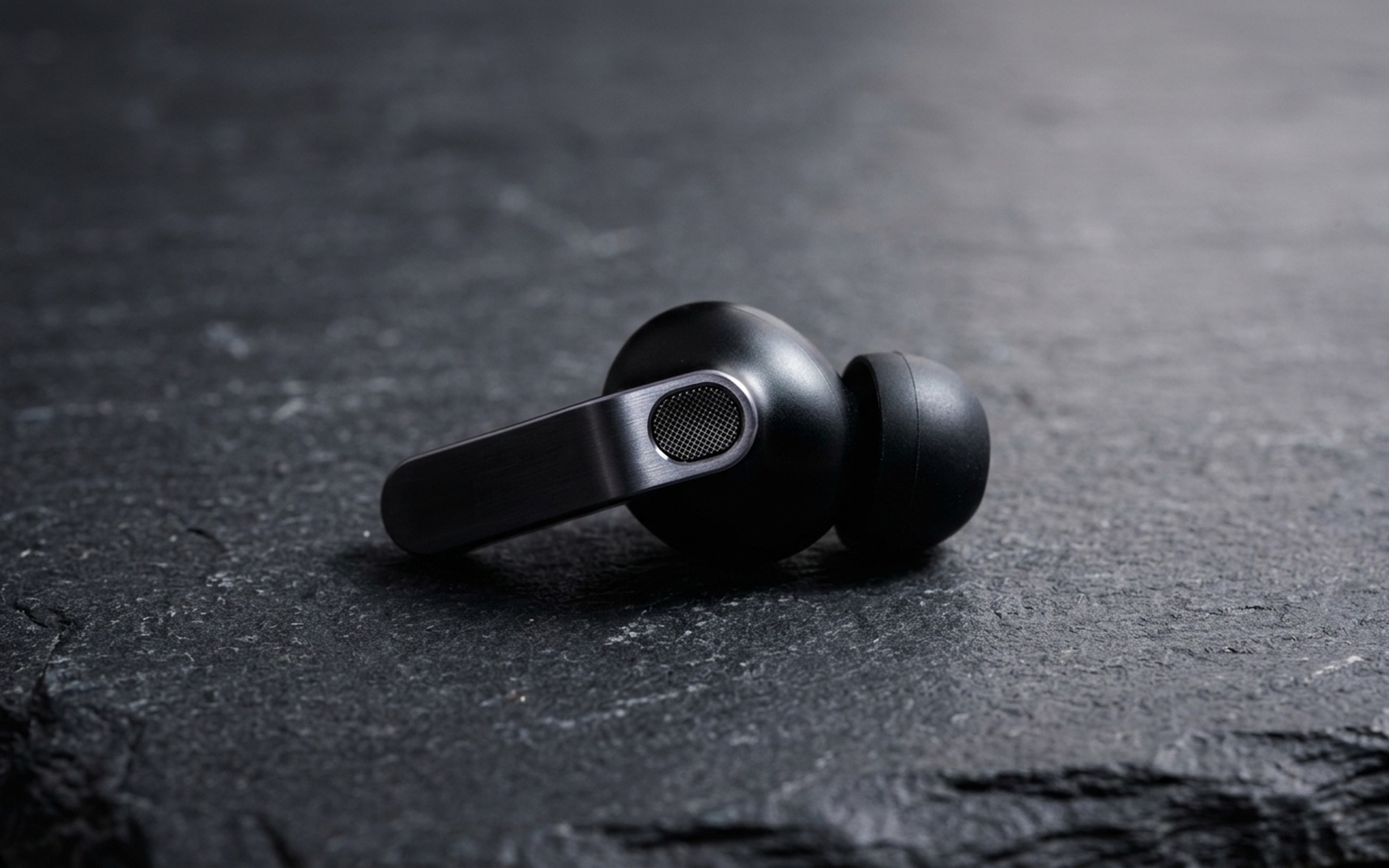
At 5.1g per earbud, the Galaxy Buds4 Pro sit in the lighter half of the premium TWS category. The brushed metal stem adds a premium tactile quality without adding meaningful bulk, and the three colorways (Deep Space Gray, Snow White, Coral Gold) are restrained enough to age well.
IP57 is the headline protection spec here. Unlike the IPX4 splash resistance common at this price tier, IP57 covers full submersion up to 1 meter for 30 minutes, making these genuinely gym-safe and rain-proof rather than just sweat-tolerant.
Long-wear comfort is a consistent positive in extended ownership reports. One pattern that surfaces repeatedly: users who found previous Galaxy Buds Pro models fatiguing after 90 minutes report the Buds4 Pro staying comfortable through two-hour sessions. Samsung’s ear tip geometry appears to distribute pressure more evenly than the Buds3 Pro design.
The one structural limitation worth noting upfront: there are no stabilizing ear fins. Fit security depends entirely on ear tip selection. For most ear geometries the included tips hold adequately, but users with smaller or irregularly shaped ear canals should plan to experiment with third-party tips before committing to the purchase.
Build Quality and Case Design
The case redesign is the most immediately visible hardware change from the Buds3 Pro. Samsung replaced the top-loading lid with a flip-open mechanism featuring a transparent upper panel that lets you check earbud placement without opening the case fully. It is a small ergonomic improvement, but one that owners notice daily.
Charging options cover USB-C and Qi wireless. Third-party wireless chargers deliver approximately 2 to 2.8W output to the case, according to sspai.com’s accessory testing. That is functional but slow compared to Samsung’s own wireless charger, which is worth factoring in if you rely on third-party charging pads overnight.
Galaxy Buds4 Pro ANC Performance
SoundGuys measured 84% average attenuation on the Galaxy Buds4 Pro, placing them firmly in the upper tier of TWS noise cancellation at this price point. That figure comes from SoundGuys’ standardized passive-plus-active measurement methodology, and it holds up across a broad frequency range.
The 5-level ANC adjustment system gives users granular control that most competitors skip. Levels 1 and 2 handle light office hum and HVAC noise without the pressure sensation that full ANC can produce. Levels 4 and 5 are where the Buds4 Pro pull ahead of the Buds3 Pro most clearly: Samsung’s internal testing and third-party measurements both confirm a 5-10dB improvement over the previous generation in the 500Hz to 1.1kHz range, which is exactly where human speech and mid-frequency ambient noise sit.
The honest caveat: at ANC levels 3 through 5, a faint baseline noise floor becomes audible in quiet environments. It is not a hiss in the traditional sense, but it is present enough that sensitive listeners will notice it during silent passages in music or between calls. This is a known trade-off at this ANC intensity level, not a defect.
There is also no dedicated wind noise suppression mode. In outdoor environments with sustained wind above roughly 15-20 km/h, the six-microphone array picks up turbulence that bleeds into the audio signal. Competitors like the Sony WF-1000XM6 handle this more cleanly.
Transparency Mode
Android Police called the Buds4 Pro transparency mode best-in-class, and the assessment is defensible. Ambient audio passes through with minimal coloration, and the natural high-frequency reproduction makes it usable in conversations without the “talking through a tin can” artifact that plagues lesser implementations.
One friction point worth flagging before purchase: a subset of units exhibit a white noise or hiss artifact specifically in transparency mode. Long-term ownership reports and community investigation suggest this is a batch-specific quality control issue rather than a universal hardware characteristic. Units purchased from the first production wave appear more affected. If you encounter it, a replacement unit is the appropriate resolution, not a firmware workaround.
How Galaxy Buds4 Pro ANC Compares to AirPods Pro 3 and Sony WF-1000XM6
| Product | ANC Rating | Measured Attenuation | Price |
|---|---|---|---|
| Samsung Galaxy Buds4 Pro | SoundGuys: 8/10 | 84% average (SoundGuys) | $249 |
| Apple AirPods Pro 3 | Comparable tier | Not independently published | $249 |
| Sony WF-1000XM6 | Class-leading non-ecosystem | Industry-leading across low/mid frequencies | $329 |
The Buds4 Pro occupy a competitive but not dominant position in this comparison. At $249, they match the AirPods Pro 3 on price and deliver measurably strong attenuation, particularly in the mid-frequency band where the Buds3 Pro previously underperformed. Sony’s WF-1000XM6 at $329 still leads on raw ANC performance, especially in wind and low-frequency rumble scenarios. The Bose QC Ultra Earbuds remain the reference point for maximum attenuation depth, though at a higher price. For Samsung Galaxy phone owners who want strong ANC without stepping up in budget, the Buds4 Pro are the correct choice. For platform-agnostic buyers prioritizing pure noise cancellation above all else, the Sony remains the more capable tool.
Galaxy Buds4 Pro Sound Quality
The Galaxy Buds4 Pro’s audio performance splits cleanly into two tiers depending on the source device, and that split is the single most important factor for any prospective buyer outside the Samsung ecosystem.
On Samsung Galaxy devices, the SSC-UHD codec operates at 96kHz, delivering a Hi-Fi audio signal that justifies the $249 price tag. The dual-driver configuration, with a vibration membrane 19.8% larger than the Buds3 Pro, translates that bandwidth into audible gains: bass extension is deeper and more controlled, the midrange sits at a natural level without the recession common in V-shaped tuning, and the treble rolls off smoothly without the sibilance that plagues many competing earbuds in this range. The overall signature is balanced but engaging, not clinical.
On everything else, including iPhones and non-Samsung Android devices, the connection falls back to AAC. According to sspai.com’s evaluation, AAC performance on the Buds4 Pro falls short of price-point expectations. At $249, buyers using non-Samsung hardware are paying for hardware that cannot fully express its own capabilities.
One pattern that surfaces consistently in long-term ownership reports: the bass improvement over the Buds3 Pro is the most immediately noticeable upgrade for returning Samsung users. Owners who moved from the Buds3 Pro specifically call out the low-frequency body as a clear generational step forward, not a marginal tuning adjustment.
Codec Support Breakdown
The practical codec hierarchy on the Buds4 Pro runs: SSC-UHD (Samsung devices, 96kHz) at the top, followed by SSC, then LC3, AAC, and SBC at the bottom. For non-Samsung Android users, the ceiling is AAC unless the device explicitly supports SSC. LC3 applies in Bluetooth LE Audio contexts. This hierarchy is the deciding factor for platform-agnostic buyers: the Sony WF-1000XM6 at $329 delivers its full audio performance regardless of source device, making it the stronger choice for anyone not running a Samsung Galaxy phone or tablet.
EQ and App Customization
The Galaxy Wearable app provides a multi-band EQ that meaningfully improves the listening experience, particularly for users who want to pull back the bass or add presence to the upper midrange. The default tuning is conservative enough that EQ adjustments produce audible results rather than marginal shifts.
Samsung-exclusive features accessible through the app include adaptive ANC (which adjusts attenuation level based on detected ambient noise automatically), a hearing aid mode certified for mild-to-moderate hearing loss assistance, and Auracast broadcast support for compatible public audio systems. These are functional differentiators, not marketing checkboxes.
There is no dedicated iOS app. iPhone users can pair the Buds4 Pro and use basic playback controls, but EQ access, ANC level adjustment, and all Samsung-specific features are unavailable.
Comparison: Galaxy Buds4 Pro vs. AirPods Pro 3 vs. Sony WF-1000XM6 vs. Redmi Buds 8 Pro
| Feature | Galaxy Buds4 Pro | AirPods Pro 3 | Sony WF-1000XM6 | Redmi Buds 8 Pro |
|---|---|---|---|---|
| Price | $249 | $249 | $329 | ~$50-$70 |
| Weight (per earbud) | 5.1g | 5.3g | 5.9g | ~5.5g |
| ANC Levels | 5-level adjustable | Adaptive (automatic) | Multi-level adaptive | 3-level |
| Battery: Earbuds / Case (ANC on) | 6h / 26h | 6h / 30h | 8h / 24h | 5h / 25h |
| Codecs | SSC-UHD, SSC, LC3, AAC, SBC | AAC, LC3 | LDAC, LC3, AAC, SBC | AAC, SBC |
| Water Resistance | IP57 | IP54 | IPX4 | IP54 |
| Multipoint | No | No | Yes (2 devices) | Yes (2 devices) |
| Platform Optimization | Samsung Galaxy (full), Android/iOS (limited) | Apple ecosystem (full), Android (limited) | Platform-agnostic | Platform-agnostic |
The verdict for Samsung Galaxy phone and tablet users is straightforward: the Buds4 Pro is the correct purchase at this price. The SSC-UHD 96kHz codec, 5-level ANC measured at 84% average attenuation by SoundGuys, the hearing aid mode, adaptive ANC, and full Galaxy Wearable app access are all locked to Samsung hardware. No competing option at $249 delivers that feature density to Samsung ecosystem users specifically. The AirPods Pro 3 matches the price and offers comparable ANC, but its advantages are entirely on the iOS side of the fence.
For buyers outside the Samsung ecosystem, the calculus shifts. Non-Samsung Android users who prioritize audio fidelity should direct $329 toward the Sony WF-1000XM6, which delivers LDAC codec performance regardless of source device and includes true multipoint connectivity. iPhone users are better served by the AirPods Pro 3 at the same $249 price point. For buyers with tighter budgets who still want competitive ANC, the Redmi Buds 8 Pro is the logical entry point, though its shorter per-earbud battery life and narrower codec support reflect the price gap.
Battery Life: Official Numbers vs. Real-World
Samsung rates the Buds4 Pro at 6 hours with ANC active and 7 hours with ANC off. The case extends that to 26 hours and 30 hours respectively. USB-C fast charging is supported, and Qi wireless charging works through the case.
The real-world picture is narrower. Testing by sspai.com under SSC-UHD 96kHz playback conditions measured 4 hours 57 minutes per charge, a 17% shortfall against Samsung’s ANC-on figure. The gap is predictable: SSC-UHD at 96kHz is computationally heavier than standard AAC or SBC playback, and Samsung’s official numbers are not derived from that codec.
Battery life marketing claims 6 hours with ANC. Real-world mixed-workload reports from extended users running SSC-UHD cluster closer to 5 hours, with some dropping below that threshold under continuous high-volume use. Still functional for most commutes and workdays, but the gap is worth knowing before purchase.
One structural concern worth flagging: the Buds4 Pro uses smaller battery cells compared to direct competitors. The Sony WF-1000XM6 rates 8 hours per earbud with ANC on, and its larger physical form factor accommodates larger cells. Smaller cells in compact earbuds tend to show capacity degradation faster over charge cycles. Long-term battery health after 18 to 24 months of daily use is a variable that current reviews cannot yet quantify.
Is the Galaxy Buds4 Pro Good? Verdict and Who Should Buy
The direct answer: yes, for a specific buyer. No, for everyone else. The Buds4 Pro is a technically accomplished product that delivers its best performance inside a walled garden. Step outside that garden and the value proposition deteriorates quickly.
Choose the Galaxy Buds4 Pro If:
You own a Samsung Galaxy device running One UI 8.5. The SSC-UHD 96kHz codec, adaptive ANC, hearing aid mode, Auracast broadcast, and full Galaxy Wearable EQ access are all gated to Samsung hardware. These are not minor conveniences: they represent the core functional difference between a $249 purchase that makes sense and one that does not.
You are upgrading from the Galaxy Buds3 Pro. The ANC improvement is the most immediately noticeable change. SoundGuys measured 84% average attenuation, with a 5-10dB gain over the Buds3 Pro in the 500Hz to 1.1kHz range where human speech and ambient noise concentrate. The 19.8% larger vibration membrane also produces a meaningfully deeper bass response, an upgrade confirmed consistently across long-term ownership reports.
Transparency mode quality matters to you. Android Police called it best-in-class, and that assessment holds up. The 6-microphone array at 5.1g per earbud is a technically demanding engineering constraint, and Samsung executes it well here.
For current pricing and configuration options, the Samsung official Galaxy Buds4 Pro page has the authoritative listing.
Avoid the Galaxy Buds4 Pro If:
You use an iPhone. There is no dedicated iOS app. SSC-UHD is unavailable. ANC management is limited. The AirPods Pro 3 at the same $249 delivers H2 chip adaptive transparency, Spatial Audio, and full iOS integration: features the Buds4 Pro cannot match on Apple hardware.
You are a non-Samsung Android power user prioritizing audio fidelity. AAC performance on non-Samsung Android sources has been described by sspai.com as falling short of price-point expectations. The Sony WF-1000XM6 at $329 delivers LDAC regardless of source device, true multipoint across two devices, and 8 hours of ANC-on battery. The $80 premium is justified for platform-agnostic buyers.
You want audiophile-grade sound without ecosystem dependency. The Denon PerL Pro is the alternative worth examining: personalized acoustic profiling without the Samsung prerequisite.
One quality control note worth flagging: white noise and hiss on transparency mode has appeared in community reports across multiple ownership threads. Current evidence points to a batch-specific QC variance rather than a universal hardware defect, but buyers should verify unit behavior within the return window.
Pros and Cons
- 5.1g per earbud — lightest in its competitive tier
- SSC-UHD 96kHz Hi-Fi codec delivers audiophile-grade audio on Samsung devices
- ANC improved 5-10dB over Galaxy Buds3 Pro at 500Hz-1.1kHz (SoundGuys: 84% attenuation)
- Best-in-class transparency mode (Android Police)
- IP57 water resistance: full submersion rated, not just splash-resistant
- Bluetooth 6.1 with LC3 codec support
- SSC-UHD, hearing aid mode, and adaptive ANC locked to Samsung ecosystem only
- AAC performance underwhelms non-Samsung Android users at the $249 price point
- No multipoint connection (Sony WF-1000XM6 supports two simultaneous devices)
- White noise on transparency mode reported in a subset of units (batch QC issue)
- Real-world SSC-UHD battery: ~4h 57m vs. 6h official claim (sspai.com)
Frequently Asked Questions
Is the Galaxy Buds4 Pro good for non-Samsung users?
For non-Samsung users, the Galaxy Buds4 Pro is a harder sell. The SSC-UHD 96kHz codec that powers the best sound experience is exclusive to Samsung devices. On iPhone or non-Samsung Android, you are limited to AAC, which delivers sound quality that does not justify the $249 price. Sony WF-1000XM6 at $329 or AirPods Pro 3 at $249 are better-optimized options for non-Samsung users.
How good is the ANC on the Galaxy Buds4 Pro?
The ANC on the Galaxy Buds4 Pro is very good. SoundGuys measured 84% average attenuation across frequencies, and the five-level adjustment system gives users fine-grained control. It improves 5-10dB over the Galaxy Buds3 Pro in the critical 500Hz-1.1kHz midrange band where ambient noise is most fatiguing. It is not class-leading (Bose QuietComfort Ultra earns that), but it is competitive with AirPods Pro 3 at the same price.
What is the battery life of the Galaxy Buds4 Pro?
Samsung rates the Galaxy Buds4 Pro at 6 hours with ANC on and 7 hours with ANC off, with the case extending total use to 26 or 30 hours respectively. Real-world testing at maximum quality (SSC-UHD 96kHz) shows approximately 5 hours of continuous playback, slightly below the official claim. USB-C fast charging and Qi wireless charging are both supported.
Does the Galaxy Buds4 Pro support multipoint connection?
No. The Galaxy Buds4 Pro does not support true multipoint connection, meaning you cannot be simultaneously connected to two devices such as a laptop and a phone at the same time. This is a notable omission at the $249 price point, where competitors like the Sony WF-1000XM6 offer this feature.

- Plaud Note Review: The Best AI Voice Recorder for Meetings in 2026? - April 22, 2026
- DJI Osmo Pocket 4 Review: Best Vlogging Camera in 2026? - April 21, 2026
- Samsung Galaxy Buds4 Pro Review: The Best Earbuds for Samsung Users - April 20, 2026