What Is the Plaud Note?
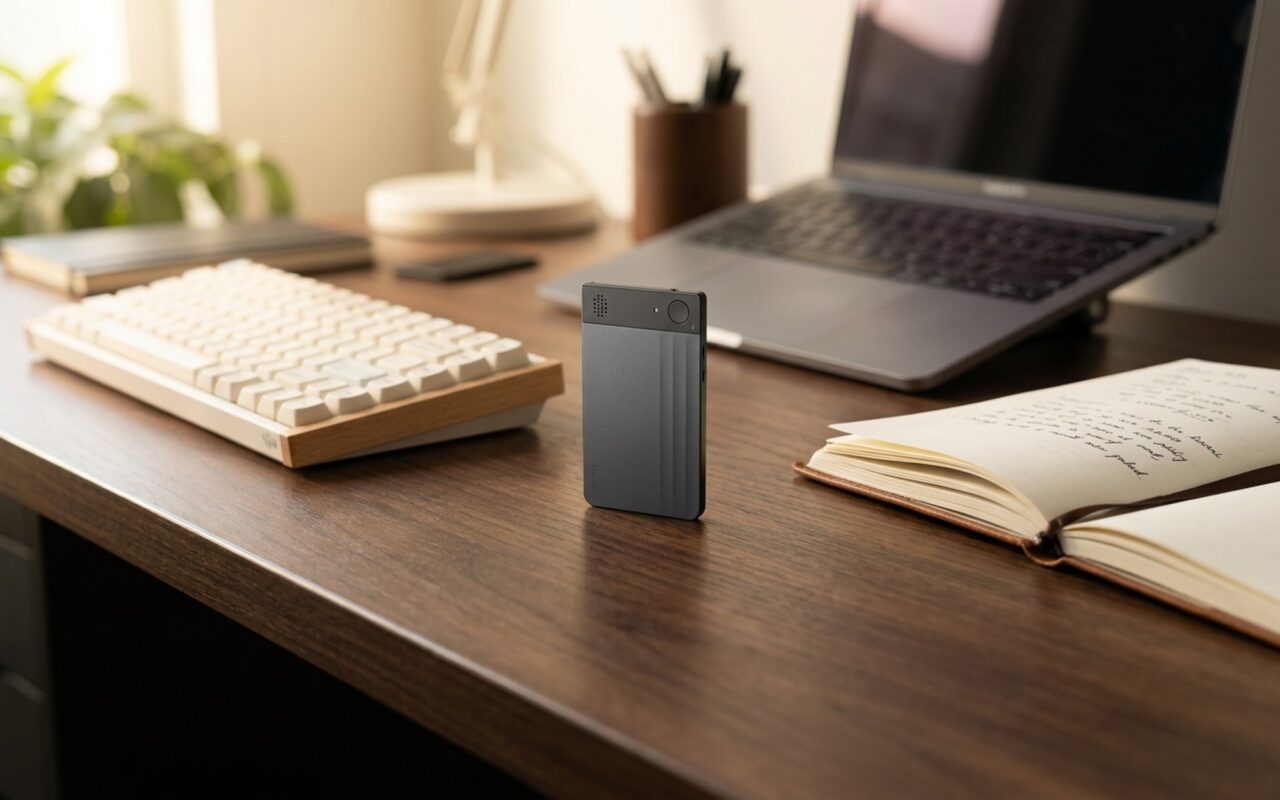
The Plaud Note is a dedicated AI voice recorder designed to replace manual note-taking in meetings, interviews, lectures, and calls. At 0.12 inches thin and 1.06 ounces, it is the size of a credit card and fits in a shirt pocket. Press one button to start recording, and the Plaud app handles everything else: transcription, speaker labeling, summary generation, and even mind map creation.
The core value proposition is simple. When you use your phone to record a meeting, you are also managing notifications, burning battery, and signaling to others that you might be distracted. The Plaud Note is a single-purpose device that removes all of that friction. It records for 30 hours on a charge and never asks you to check a notification.
At $159, the Plaud Note targets professionals who attend frequent meetings and want accurate, searchable records without the manual effort. Casual users who attend one meeting per month will find a free phone app sufficient. This review focuses on whether the hardware and subscription model justify the investment for everyone in between.
Plaud Note Specs and Design
The Plaud Note and its sibling the Plaud Note Pro share the same fundamental design philosophy but differ in recording capacity and hardware.
| Spec | Plaud Note | Plaud Note Pro |
|---|---|---|
| Price | $159 | $189 |
| Battery | 30h recording / 60-day standby | 50h (Endurance) / 30h (Enhance) |
| Storage | 64GB local | 64GB local |
| Microphones | 2 MEMS + 1 VPU | 4 MEMS |
| Capture Range | 9.84ft (3m) | 16.4ft (5m) |
| Display | LED indicator | AMOLED (InstantView) |
| Thickness | 0.12 inches | Ultra-slim |
| Weight | 1.06 oz (30g) | ~30g |
| Connectivity | BLE 5.2 + WiFi | BLE 5.2 + WiFi |
| Charging | Magnetic proprietary | Magnetic proprietary |
| Platforms | iOS and Android | iOS and Android |
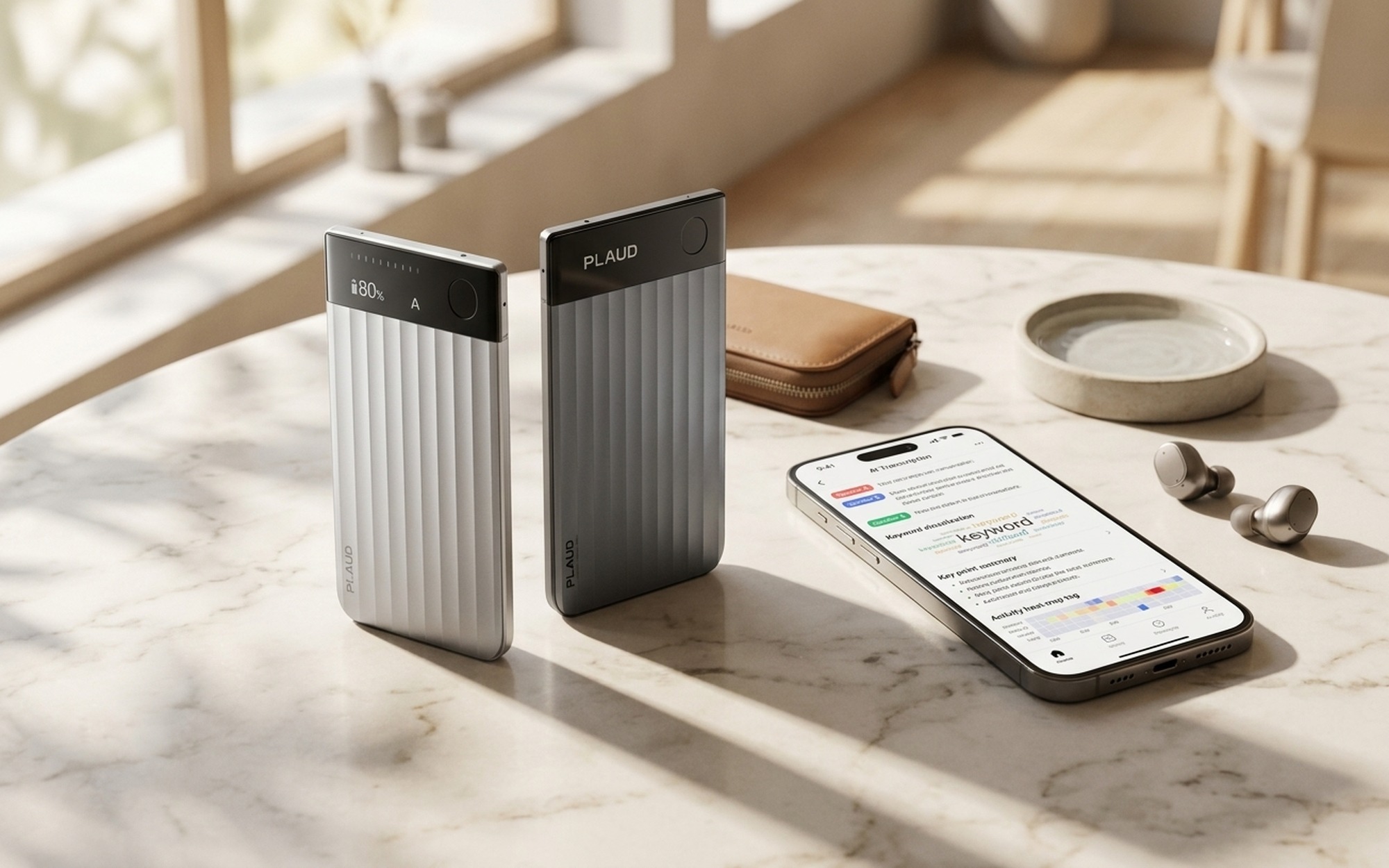
The base Note comes in Black, Starlight, Silver, and Navy Blue. Each unit ships with a magnetic case, magnetic ring, charging cable, and 300 minutes per month of AI transcription on the free plan.
One design note worth flagging immediately: neither model uses USB-C. Both rely on a proprietary magnetic charger. This is the single most consistent complaint from users and a legitimate travel concern.
For full specifications and current pricing, see the Plaud Note official product page.

Recording Quality and Transcription Accuracy
The Plaud Note uses a 2 MEMS microphone array combined with a Voice Processing Unit (VPU) for audio capture. The effective recording range is 9.84 feet (3 meters), which covers most desk meetings and 1:1 calls comfortably. The Note Pro extends this to 16.4 feet with a four-microphone array, making it more suitable for larger conference rooms.
Transcription accuracy is where the Plaud Note earns its asking price. In the Tom’s Guide review of the Plaud Note, the device achieved approximately 90% accuracy on a phone interview using GPT-4o processing – described as “extremely competent” and requiring only minimal tweaking for professional use. The same review found that the Plaud Note outperformed both Otter.ai and Google Meet’s built-in transcriber in a direct comparison.
The device supports two distinct recording modes: standard in-person capture and a phone call mode where you hold the device near your earpiece. The Pro model adds automatic detection between these modes, which removes one manual step from the workflow.
The limitation to know about: accuracy drops meaningfully with heavy regional accents or very fast speech. If your meetings regularly include non-native speakers with strong accents, expect more manual corrections than the headline numbers suggest. This is a known constraint across all AI transcription products, not unique to Plaud.
In practical terms, professionals who have used Plaud Note consistently report a behavioral shift: they stop typing during meetings and focus fully on the conversation. The transcript is waiting in the app when the meeting ends.
AI Features: Transcription, Summaries, and Templates
The Plaud Note is hardware. The intelligence lives in the Plaud app, which connects to GPT-4o and Claude 3.5 Sonnet on the backend.
Once a recording uploads, the app generates:
- Transcription in 112 languages with speaker labels and custom vocabulary support
- Multidimensional summaries using over 10,000 pre-built templates organized by scenario: meeting, presentation, interview, medical consultation, legal deposition, financial call, and more
- Ask Plaud: a Q&A feature where you query your recording and receive answers with traceable references back to the original transcript
- Mind maps: auto-generated visual structure from the recording
- Action items: pulled automatically from meeting summaries
Plaud Desktop extends the system to online meetings, capturing audio from Zoom, Microsoft Teams, and Google Meet sessions directly.
The compliance picture is what separates Plaud from generic transcription apps. The platform holds ISO 27001, SOC 2 Type 2, HIPAA, and GDPR certifications. For healthcare workers, therapists, lawyers, and financial professionals who cannot use uncertified cloud tools for sensitive conversations, this is not a feature – it is a requirement. No phone app offers the same hardware-plus-software compliance package.
Battery, Storage, and the Subscription Question
The Plaud Note records for 30 continuous hours on a single charge with 60-day standby. Charging via the magnetic cable takes approximately 2 hours. The 64GB local storage holds recordings on-device without forcing uploads to the cloud.
These hardware numbers are genuinely strong. No smartphone recording app can match 30 hours of active recording – a phone is doing too many other things. The 64GB local capacity means you can record for weeks before worrying about space.
The subscription model is where the value equation gets complicated.
Plaud uses a tiered AI plan system:
| Plan | Monthly Cost (billed annually) | Transcription Quota |
|---|---|---|
| Starter (Free) | $0 | 300 min/month |
| Pro | ~$8.33/month ($99.99/year) | 1,200 min/month |
| Unlimited | ~$20/month ($239.99/year) | Unlimited |
The free tier sounds generous until you do the math. 300 minutes equals 5 hours per month. One 90-minute all-hands meeting plus two 60-minute 1:1 calls and you have used up the entire monthly quota in a single week. Professionals who attend three or more meetings per week should budget for the Pro plan from day one.
For year-one total cost: $159 (device) + $99.99 (Pro annual) = $258.99. Compare that to $0 for a phone app. The honest framing is that you are paying for dedicated hardware, local storage control, higher accuracy, HIPAA compliance, and freedom from phone distractions. Whether that is worth $259 depends entirely on how much you value those specific trade-offs.
Plaud Note vs the Competition
| Product | Type | Transcription | Battery | Local Storage | Price | HIPAA Compliant |
|---|---|---|---|---|---|---|
| Plaud Note | Dedicated hardware | Yes (112 languages) | 30h | 64GB | $159 + plan | Yes |
| Plaud Note Pro | Dedicated hardware | Yes (112 languages) | 50h | 64GB | $189 + plan | Yes |
| Otter.ai | App only | Yes | Phone | None (cloud) | $16.99/month Pro | No |
| Fireflies.ai | App only | Meetings only | N/A | None (cloud) | $10/month | No |
| Smartphone app | General device | Via app | 8–15h | 128GB+ (shared) | $0 extra | No |
| Traditional recorder | Dedicated hardware | No | 20–30h | 8–32GB | $50–$100 | No |
The Plaud Note Pro’s primary advantage over the base Note is the step up in microphone array (4 mics vs 2), effective range (16.4ft vs 9.84ft), and battery (50h vs 30h). For $30 more, it is the better choice for anyone who regularly presents or meets in large rooms. HowToGeek’s 8/10 verdict on the Plaud Note Pro confirms the Pro’s 95–98% accuracy in real-world testing.
Against Otter.ai and Fireflies.ai, the Plaud Note wins on hardware reliability, local storage, battery life, and compliance certification. App-only solutions win on upfront cost and simplicity for light users.
The traditional recorder comparison is the clearest case for Plaud: a $75 Sony ICD-UX570 records longer audio but produces files you must manually transcribe. The Plaud Note does the transcription, labeling, summarizing, and Q&A automatically. For anyone who already uses a voice recorder, the upgrade calculus is straightforward.
Who Should Buy the Plaud Note?
Buy the Plaud Note if you:
– Attend three or more meetings per week and spend significant time writing up notes afterward
– Work in healthcare, legal, or financial services where HIPAA or ISO 27001 compliance is required
– Want complete control of your recordings without cloud dependency
– Find your phone on the table during meetings creates distraction or looks unprofessional
– Need reliable audio capture for all-day events, conferences, or field research
Skip the Plaud Note if you:
– Attend one or two casual meetings per month – a free phone app is sufficient
– Are unwilling to pay an ongoing subscription after the hardware cost
– Need real-time live captions displayed on the recording device itself
– Record primarily in environments with heavy background noise or heavily accented speakers
Consider the Plaud Note Pro instead if you:
– Regularly meet in large conference rooms or board meeting spaces
– Work with multi-speaker panels or presentations where 16.4ft capture range matters
– Want the AMOLED display to monitor recording status without opening the app
The Plaud Note delivers on its core promise: accurate, automatic meeting records that let you stay present in the room. At $159 plus a subscription, it is not cheap. But for professionals whose time has real value, eliminating 30 minutes of manual note-writing after every meeting pays back the investment quickly.
- 90–98% transcription accuracy — outperforms Otter.ai and Google Meet in testing
- 30-hour battery per charge, 60-day standby
- 64GB local storage — recordings stay on-device, not forced to cloud
- HIPAA, ISO 27001, SOC 2 Type 2, GDPR compliant — cleared for sensitive professional environments
- 112-language transcription with speaker labels and custom vocabulary
- Ultra-slim 0.12″ credit-card design — no desk footprint
- Free tier limited to 300 min/month — frequent meeting users need a paid plan
- Proprietary magnetic charger — no USB-C, a liability when traveling
- App-dependent — no standalone display or controls on the base Note model
- Accuracy drops with heavy accents or fast speech
- Total cost ($159 device + $99.99/year Pro plan) is high compared to free phone apps
Frequently Asked Questions
How accurate is Plaud Note transcription?
In Tom’s Guide testing, the Plaud Note achieved approximately 90% accuracy on phone interviews using GPT-4o — described as “extremely competent” with minimal tweaking required. The Plaud Note Pro scores 95–98% according to HowToGeek. Accuracy drops slightly with heavy accents or very fast speech.
Does Plaud Note work without a subscription?
Yes. The free Starter plan includes 300 minutes of AI transcription per month — roughly 5 hours. If you attend three or more meetings per week, you will typically exhaust the free quota within two weeks and need the Pro plan at $99.99 per year for 1,200 minutes monthly.
Can Plaud Note record phone calls?
Yes. The Plaud Note has a dedicated phone call recording mode — you hold the device near your earpiece during a call. The Plaud Note Pro improves on this with automatic mode detection, switching between in-person and call recording without any manual input.
How does Plaud Note compare to just using your phone?
A phone app is cheaper upfront but introduces notification interruptions, drains your battery, and lacks HIPAA or ISO 27001 compliance. The Plaud Note’s dedicated hardware eliminates all three trade-offs. Its 30-hour battery also makes it far more reliable than a phone for all-day conferences or multi-session events.

- Plaud Note Review: The Best AI Voice Recorder for Meetings in 2026? - April 22, 2026
- DJI Osmo Pocket 4 Review: Best Vlogging Camera in 2026? - April 21, 2026
- Samsung Galaxy Buds4 Pro Review: The Best Earbuds for Samsung Users - April 20, 2026