
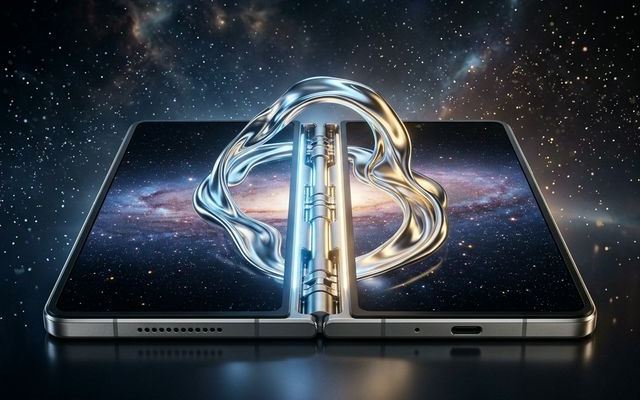
The aspiration of flatness has defined display technology for decades, from the curved glass of early televisions to the precision-polished panels of modern OLED screens. In the foldable smartphone era, this pursuit became paradoxical: every device that could bend had to carry the evidence of that bending. The crease was not a defect. It was the price of the form factor.
The OPPO Find N6, launched in March 2026, proposes that this price no longer needs to be paid. Its “Zero-Feel Crease” design is not a marketing phrase. It is a measurable engineering outcome, certified by TUV Rheinland and validated by the editors at ifanr who used it as a daily driver. This review breaks down exactly how OPPO achieved it, what else the Find N6 delivers, and whether its price justifies the ambition.
Zero-Feel Crease: Engineering the Impossible
The “Zero-Feel Crease” is not one technology but a system of three converging improvements. First, the third-generation Titanium Flexion Hinge now uses repeated 3D laser scanning combined with ultra-precision liquid injection printing and UV curing to eliminate microscopic surface irregularities on the hinge support plate. The crease depth is held within 0.15mm, increasing by less than 0.03mm after 200,000 fold cycles.
Second, the new “Skywing Memory Glass” (a custom ultra-thin glass substrate with an advanced composite lamination stack) reduces the stretch and creep that occur in the screen layers during folding. This is the physical root cause of visible creasing in most current foldables. Third, and most intriguingly, the memory glass has a self-correcting “rebound” behavior: when the device is left open on a flat surface, the inner display slowly re-flattens itself over several minutes, progressively reducing any residual crease depth. The fold is not just hidden at the moment of opening. It actively heals over time.
The result earns a TUV Rheinland “Imperceptible Crease” certification, with the device rated for 600,000 lifetime fold cycles. That is three times the standard durability benchmark and, assuming ten folds per day, translates to roughly 164 years of daily use.

Who does this actually matter for? According to ifanr’s editorial team, the true audience for the Zero-Feel Crease is not existing foldable users who have already accepted the compromise. It is the far larger group of premium smartphone buyers who looked at competing foldables, felt the ridge under their fingertip, and walked away. The Find N6 removes the last practical objection that group had.
Displays: Inner and Outer Calibrated as One System
The inner display is an 8.12-inch QXGA+ LTPO OLED panel (2480 x 2248 px, 120Hz adaptive, 2,500 nits peak brightness). The 6.62-inch outer cover screen is FHD+ AMOLED (2616 x 1140 px, 120Hz LTPO, 3,600 nits peak brightness). Both panels share the same color science calibration, so moving between them does not produce the jarring color shift that plagues cheaper foldables. The outer screen reaches an exceptional 3,600 nits, making it one of the most legible cover display panels available in direct sunlight. Both are TUV Rheinland low-blue-light certified for extended sessions. High-frequency PWM dimming is included, a detail that separates premium displays from their competition at the hardware level – something we also highlighted in our iQOO 15 Ultra review.
- Processor: Snapdragon 8 Elite Gen 5 (Custom 7-Core for foldable thermals)
- Inner Display: 8.12-inch QXGA+ LTPO OLED, 2,500 nits, 120Hz
- Outer Display: 6.62-inch FHD+ AMOLED, 3,600 nits, 120Hz
- Rear Cameras: 200MP main + 50MP ultrawide + 50MP 3x periscope + Danxia color sensor
- Self Cameras: Dual 20MP (inner + outer)
- Battery: 6,000mAh Silicon-Carbon | 80W wired | 50W wireless
- Durability: IP56 / IP58 / IP59 | TUV certified 600,000 folds
- Weight: 225g | Folded thickness: 8.93mm
- Storage: Up to 16GB RAM + 1TB UFS 4.1
- OS: ColorOS 16 (Android 16)
Performance: Why the Chipset Is Custom
The Snapdragon 8 Elite Gen 5 inside the Find N6 is not the same silicon used in bar-form flagships. OPPO worked with Qualcomm to produce a modified 7-core configuration specifically tuned for foldable thermal constraints. In a device with this form factor, sustained peak power is less useful than consistent mid-range performance that avoids throttling during hours of use. The result, according to a 2026 analysis by Gizmochina, is multi-core performance that benchmarks approximately 20% higher in Geekbench 6 (10,207 multi-core) than 2025 flagship baselines, while maintaining a claimed 35% reduction in platform power consumption versus the previous generation. AnTuTu 10 results exceed 3.74 million points.
In practical terms: 8K/60fps video recording, sustained without thermal throttling, and smooth 4K Dolby Vision output. RAM is LPDDR5X with UFS 4.1 storage. App switching across the large inner display is fluid. ColorOS 16 handles multi-window and free-flow windowing without the stutter that plagued first-generation foldable software implementations.
Watch MrMobile’s hands-on breakdown for a real-world performance perspective – filmed just hours after global launch:
Hasselblad Imaging: The Quad-Camera System Explained
The rear camera array represents the most significant hardware jump from the Find N5. The 200MP primary sensor uses a Hasselblad-tuned color profile and dual-axis OIS. The 50MP ultrawide captures a 120-degree field of view with improved low-light intake. The 50MP periscope telephoto delivers 3x native optical zoom, with an OPPO-computed 6x optical-quality intermediate zoom that performs credibly in real shooting conditions. The fourth lens is the Danxia spectral color sensor, a hardware component that captures actual light wavelength data to correct white balance across all three shooters simultaneously under mixed or artificial lighting, without relying on software generative reconstruction.
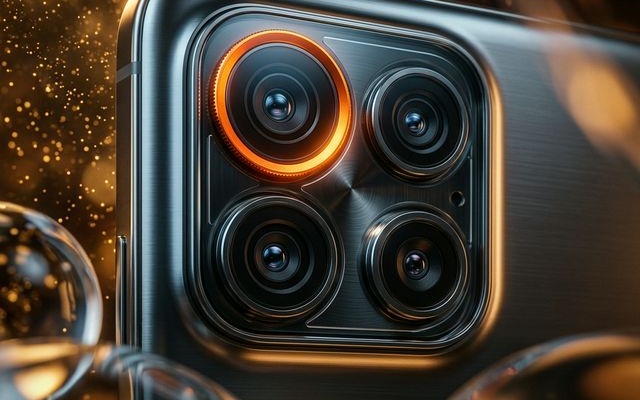
The results are competitive with current bar-form flagships in most scenarios. Blown highlights are better controlled than the Find N5 in difficult lighting due to Danxia’s hardware-level metering data. The XPAN panoramic mode now uses a different underlying compute path, closer to the Master Mode engine, producing more natural shadow transitions than before. Long-range shots at 6x show real compression and detail. Where the Find N6 camera system falls short: the uncompressed 200MP sensor requires significant storage and processing overhead, and previewing at 1x on the 8.12-inch inner screen still shows the resolution degradation typical of the entire foldable industry, because rendering a full-quality preview at that scale overwhelms the available processing budget. OPPO is not unique in this limitation.
For a closer look at how OPPO’s Hasselblad colour science compares with leading dedicated camera phones, our vivo X300 Ultra hands-on provides a useful baseline from MWC 2026.
Battery and Durability: No Compromises Here
The 6,000mAh silicon-carbon battery is the capacity record for the Find N series and substantially larger than competing foldables. The Samsung Galaxy Z Fold 7 ships with 4,400mAh. The expected Google Pixel Fold 2 is rumoured at 5,000mAh. At 80W wired and 50W wireless, the Find N6 charges faster than both as well. A 2026 endurance test by Digital Camera World logged an average of 14.5 hours under continuous 5G browsing load. The silicon-carbon chemistry, using 15% silicon content in the anode, enables this capacity without requiring a thicker or heavier chassis.
The IP rating is triple-certified: IP56, IP58, and IP59. IP59 is the highest standard available on any 2026 flagship and covers high-pressure water jet exposure, a scenario most IP68 devices do not address. The Armored Shield frame also adds structural protection beyond what most thin foldables offer.
| Feature | OPPO Find N6 | Samsung Galaxy Z Fold 7 | Pixel Fold 2 (Est.) |
|---|---|---|---|
| Inner Display | 8.12″ QXGA+ Zero-Crease | 8.0″ Dynamic AMOLED 2x | 7.8″ OLED (rumoured) |
| Battery | 6,000mAh (Si-C) | 4,400mAh | ~5,000mAh |
| Wired Charging | 80W SUPERVOOC | 25W | ~30W |
| Crease Visibility | Zero-Feel (TUV cert.) | Visible | Moderate |
| Water Resistance | IP56/58/59 | IP48 | IP68 (rumoured) |
| Fold Certification | 600,000 folds | 200,000 folds | N/A |
- Zero-Feel Crease passes both visual and tactile tests – genuinely imperceptible.
- 6,000mAh battery and 80W charging put it ahead of every competing foldable.
- IP59 triple-certified: the highest foldable water resistance available.
- Hasselblad Danxia color sensor solves mixed-lighting white balance at the hardware level.
- ColorOS 16 is clean, capable, and genuinely optimised for the large inner display.
- Not sold officially in the US, UK, or Europe – Asia and Australia only.
- Inner screen preview quality drops sharply at full 8.12-inch resolution when recording video.
- AI Pen stylus costs an additional 549 yuan (499 yuan at launch) and is not included.
- Starting price of 9,999 yuan (approx. $1,437 USD) is premium class.
Software and AI Pen: Where ColorOS Earns Its Reputation
ColorOS 16 on Android 16 is the smoothest large-screen Android implementation available on a foldable today. Free-flow windowing allows up to four simultaneous apps running in resizable windows across the inner display. AI Mind Space, accessible via the AI button, acts as a persistent capture layer: voice notes, screenshots, and clipped text are automatically categorised and made searchable. There is no equivalent in Samsung One UI 8.0 or any other current foldable OS.
The optional AI Pen integrates directly with this system. The pen-to-AI interaction is gesture-driven: press and hold the barrel button, circle any content on screen (handwritten tables, rough sketches, typed text), and the AI action menu appears. Handwriting beautification converts casual scrawl to clean formatted output. Sketch-to-image generation accepts a rough line drawing and converts it to a styled illustration. These features work specifically because the Find N6 screen is flat enough to write on naturally, without the ridge hesitation common to every other foldable pen input experience.
Verdict: The Foldable for Everyone Who Said “Not Yet”
The Find N6 succeeds on the specific axis OPPO chose to compete on. The crease is gone, in any meaningful practical sense. The battery is class-leading. The camera system, while not ahead of the absolute best dedicated camera phones, no longer represents the compromise it did two generations ago. ColorOS is polished. The build quality is exceptional.
What holds back a stronger recommendation globally is distribution. This device is not available in the US, UK, or Europe. For buyers in those markets, it requires grey-market sourcing, which removes warranty coverage and complicates software updates. For buyers in China, Singapore, Australia, and broader Southeast Asia, it is the obvious choice if budget allows.
If you have been waiting for a foldable that does not ask you to tolerate anything, the Find N6 is the first one that credibly delivers. For a frame of reference on what premium non-foldable audio ecosystem integration looks like, see our recent Redmi Buds 8 Pro review, where ColorOS ecosystem seamlessness is compared across devices.
Frequently Asked Questions
- Is the OPPO Find N6 available globally? The Find N6 is available in China, Southeast Asia, and Australia from March 2026. It is not officially sold in the US, UK, or Europe.
- What is the Find N6 starting price? In China, pricing starts at 9,999 yuan (12GB+256GB), rising to 11,999 yuan for the 16GB+1TB satellite variant.
- Does OPPO Find N6 support wireless charging? Yes. It supports 50W AIRVOOC wireless charging and 80W SUPERVOOC wired charging.
- Is the AI Pen included in the box? No. The AI Pen is a separately purchased accessory at 549 yuan (499 yuan at launch). The folding keyboard is also sold separately at the same price.
- How does the crease compare to the Samsung Galaxy Z Fold 7? The Find N6’s Zero-Feel Crease is TUV Rheinland certified as imperceptible both visually and tactilely. Independent reviewers, including MrMobile and Android Authority, rate it as the least visible crease on any current production foldable.

- Figure Helix 02 Review 2026: The AI Brain For Full-Body Autonomy - March 23, 2026
- OPPO Watch X3 Review: 5-Day Battery & Medical-Grade Health - March 21, 2026
- OPPO Find N6 Review 2026: Zero-Feel Crease, Hasselblad Imaging and 6000mAh Battery - March 20, 2026

