- The Market Gap: By 2026, competitors are retreating from “Flip” phones, but Apple is doubling down.
- Release Window: Reports point to an Autumn 2027 launch for the clamshell iPhone.
- The “Fix”: New patents suggest self-healing screens and thermal heating to solve fragility.
- The Strategy: The Flip is positioned as a “Stylist” device, distinct from the productivity-focused “Fold.”
The “Beautiful Waste” Problem: State of the Market in 2026
Let’s look at the scoreboard. It is 2026. The foldable phone market has settled into a predictable, boring rhythm.
On one side, you have the “Book” style foldables. These are productivity beasts that genuinely change how we work. Then, you have the “Flip” style clamshells.
The industry secret? Nobody really knows what to do with the Flip.
The market signals are clear:
- Oppo and Vivo: Effectively hit the pause button on small foldables to focus on big ones.
- Huawei: Currently chasing tri-folds.
- Samsung: Keeps iterating the Z Flip, but the excitement is gone.
The consensus among power users is brutal but accurate: clamshells are “beautiful trash.” They cost more than a slab phone, break easier, have worse cameras, and offer zero functional advantage when open.
You pay a premium for the privilege of folding your phone in half to fit in a small pocket. That’s it. So, naturally, Apple is planning to walk right into this burning building.
The 2027 Roadmap: Late, But Fixated
According to reports citing Bloomberg’s Mark Gurman, Apple isn’t just dipping a toe in; they are planning a two-pronged attack.
- The “iPhone Fold”: A book-style device resembling an iPad Mini that folds. This is the safe bet.
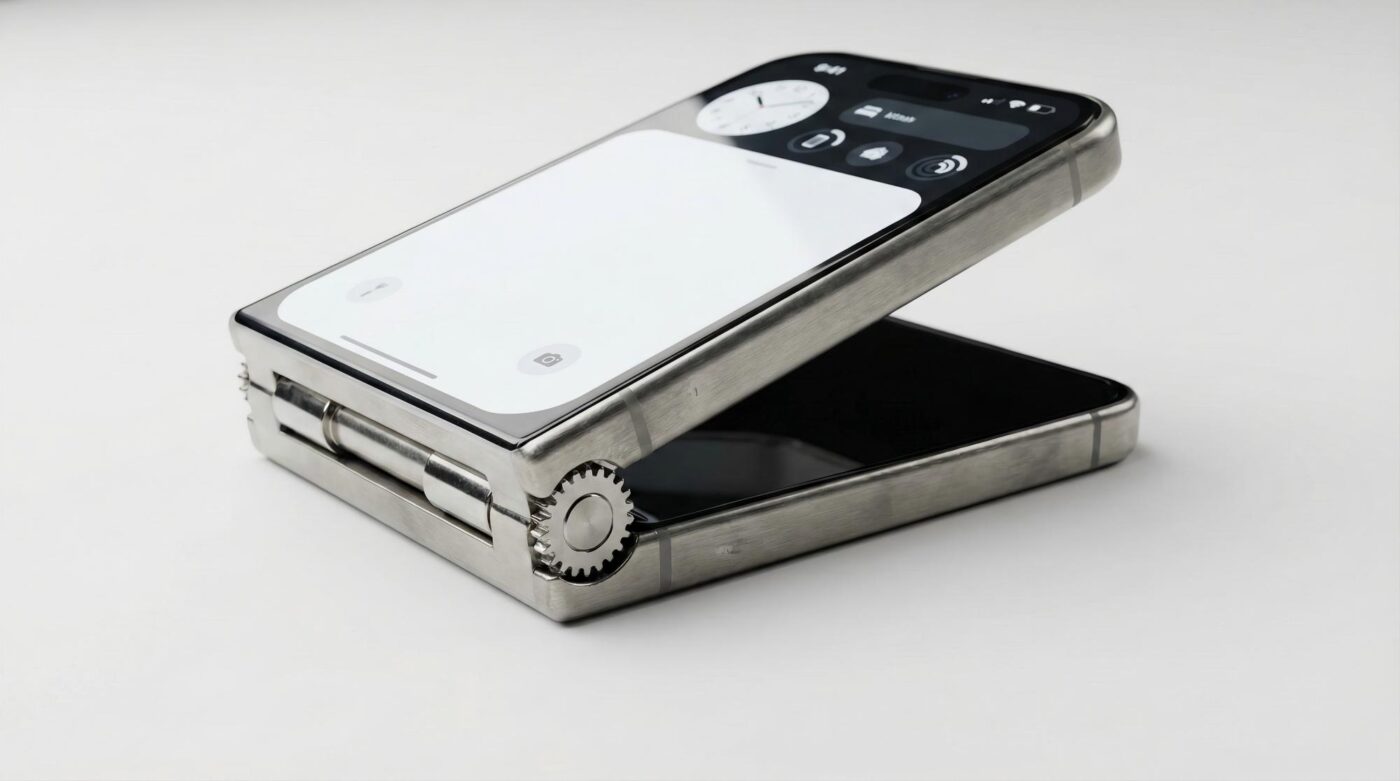
- The “iPhone Flip”: A clamshell device tentatively penciled in for autumn 2027.
If you are wondering why Apple would bother with a form factor that Android manufacturers are slowly backing away from, the answer lies in Apple’s “Air” philosophy.
They don’t view the Flip as a productivity machine. They view it as a fashion object. The goal isn’t to replace the Pro Max; it’s to offer an alternative to the user who values aesthetics and pocketability over raw specs.
Apple rarely enters a market unless they think they can fix the one thing everyone else hates about it. For foldables, that hate is directed at the crease and fragility. Recent patent filings reveal the solution:
- Variable Polymer Layer: Documentation describes a display layer with “self-healing” properties. In theory, this material could automatically fill in minor scratches and dents (like those from fingernails) over time.
- Thermal Management System: Cold weather kills flexible glass. Apple’s patent details a system that detects ambient temperature. If necessary, it runs a micro-current through a display mesh to heat the folding area before you open it.
It sounds over-engineered. It probably is. But if it stops the screen from cracking in a Chicago winter, it solves the reliability crisis that has plagued Samsung for years.
The New Hierarchy of Needs
The strategy here is clear, even if it feels risky. Apple is segmenting the future iPhone lineup into three distinct pillars:
- The Pragmatist: The standard iPhone (and Pro) for people who just want a phone that works.
- The Power User: The “iPhone Fold” (Book-style) for those who want an iPad in their pocket.
- The Stylist: The “iPhone Flip” for those who miss the satisfying snap of a Motorola Razr but demand iOS integration.
This mirrors the iPad strategy. You have the iPad Pro for work, and the iPad mini/Air for consumption and travel. The Flip is the “mini” of this equation.
I have used almost every foldable released in the last five years. I carry a large-format foldable daily because it changes my workflow. I can read documents, sign PDFs, and multitask.
I cannot say the same for Flip phones.
Opening a phone just to reply to a text—an action that takes zero seconds on a slab phone—gets old by week two. Unless Apple’s software team cooks up a way to make that outer screen genuinely useful (something no Android maker has perfected yet), the iPhone Flip risks being a very expensive novelty.
But betting against Apple’s hardware engineering is usually a losing game. If they can make a screen that heals itself and doesn’t crack in the cold, they might just be the only company capable of keeping the Flip form factor alive. Until then, stick to the slab.
Are you waiting for a folding iPhone, or do you think the technology is still too fragile? Drop a comment below.