
Xiaomi MiMo AI API Pricing & Token Usage: The Developer’s Guide (2026)
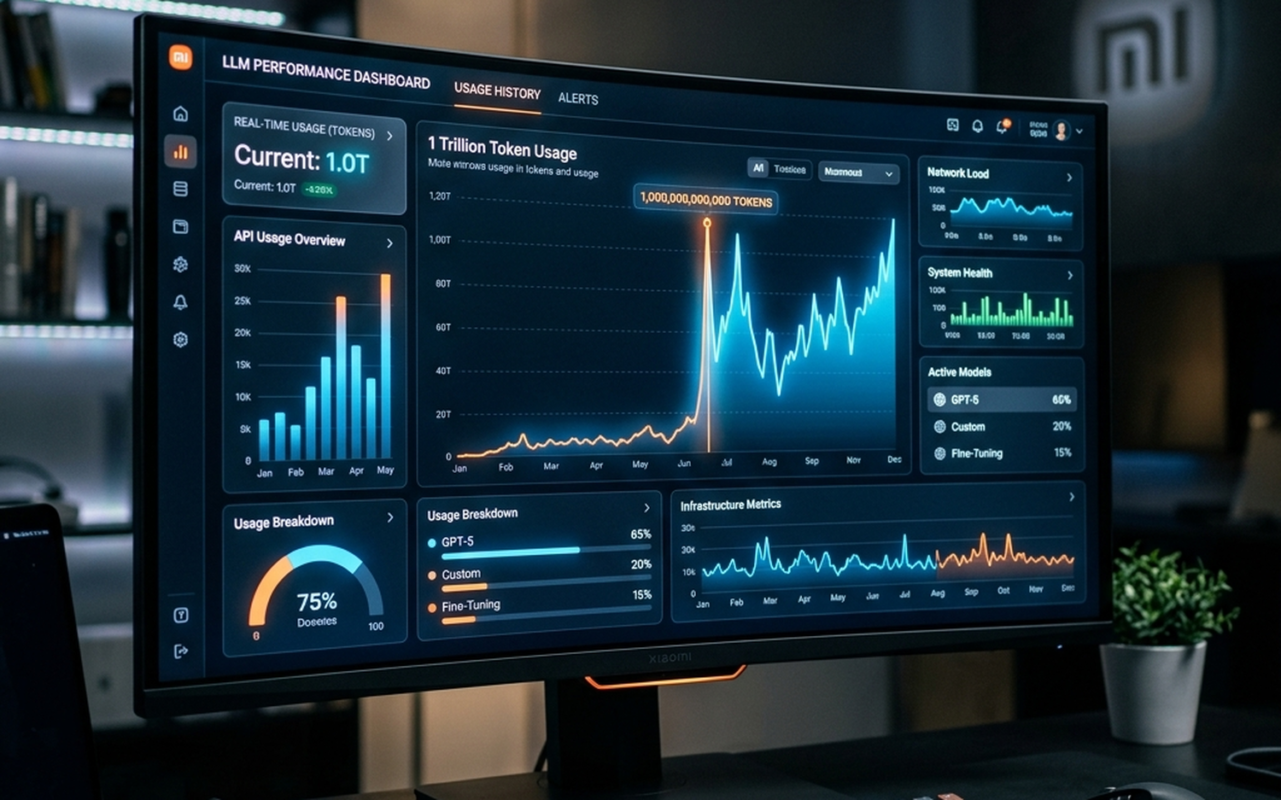
Xiaomi’s MiMo model just crossed 1 trillion total API tokens served, according to CEO Lei Jun’s public announcement. That milestone matters because it signals real developer adoption, not just benchmark theater. The question is whether the pricing structure behind that volume actually works for the people building on it.
This guide breaks down every tier, every credit multiplier, and every hidden constraint in the MiMo Token Plan, so you can calculate your actual monthly cost before committing.
What Is the Xiaomi MiMo Token Plan?
The MiMo Token Plan is a subscription-based API access system, not a traditional pay-as-you-go model. Each tier grants a fixed pool of Credits per month. Those Credits are consumed at different rates depending on which model you call and what context window you use.
This is a deliberate architectural choice. Xiaomi is betting that predictable monthly revenue from subscriptions beats the volatility of metered billing, and it pushes developers toward consistent usage patterns rather than burst-heavy workflows.
The base pay-as-you-go rates (for reference) are:
- MiMo-V2-Pro (under 256K context): $1.00 per 1M input tokens / $3.00 per 1M output tokens
- MiMo-V2-Omni: $0.40 per 1M input / $2.00 per 1M output
- MiMo-V2-Flash: $0.09 per 1M input / $0.29 per 1M output
The subscription tiers exist to undercut those rates for developers who can commit to a monthly volume.
MiMo Token Plan: Full Tier Breakdown
| Tier | Monthly Price (USD) | Monthly Price (RMB) | Credits Included | Approx. Complex Tasks |
|---|---|---|---|---|
| Lite | $6 | ¥39 | 60,000,000 | ~120 |
| Standard | $16 | ¥99 | 200,000,000 | ~400 |
| Pro | $50 | ¥329 | 700,000,000 | ~1,400 |
| Max | $100 | ¥659 | 1,600,000,000 | ~3,200 |
First-time subscribers receive an 88% discount on their initial month. The Lite tier drops to approximately $0.72 for month one. That entry point is clearly designed to reduce friction for developers evaluating the platform.
Key operational rules:
- Mid-month upgrades are supported (you pay the price difference).
- Downgrades are not permitted within a billing cycle.
- Unused Credits expire at month end. There is no rollover.
The no-rollover policy is the most punishing constraint for developers with uneven workloads. If you run a heavy agent pipeline for two weeks and go quiet for the rest of the month, you lose whatever Credits remain.
Credit Consumption Rates by Model
Not all Credits are equal. The multiplier system is where the real cost calculation lives.
| Model | Context Window | Credit Multiplier |
|---|---|---|
| MiMo-V2-Omni | Up to 256K | 1 Token = 1 Credit |
| MiMo-V2-Pro | Up to 256K | 1 Token = 2 Credits |
| MiMo-V2-Pro | 256K to 1M | 1 Token = 4 Credits |
| MiMo-V2-TTS (Voice) | N/A | 0 Credits (free, limited time) |
Running MiMo-V2-Pro at extended context (256K to 1M tokens) burns Credits four times faster than MiMo-V2-Omni at the same token count. A developer on the Standard tier ($16/month, 200M Credits) who runs long-context Pro calls will exhaust their allocation at roughly 50M actual tokens, not 200M.
This multiplier structure is not prominently advertised. Developers building AI-powered website generation pipelines or multi-step agent workflows that rely on large context windows need to account for this 4x drain before selecting a tier.
MiMo-V2-TTS being free (for now) is a genuine differentiator for voice-integrated applications, though the “limited time” qualifier means it should not be treated as a permanent cost assumption in any production budget.
Rate Limits and Agent Workflow Compatibility
One of the more practically significant claims Xiaomi makes is the absence of the 5-hour token rate limits found on competing APIs. For developers running autonomous agent workflows (what Chinese developer communities call “raising a lobster,” referring to long-running autonomous processes), hard rate ceilings are a serious operational problem.
MiMo-V2-Pro recently topped OpenRouter’s API usage rankings, surpassing Claude, Gemini, and DeepSeek in call volume. That ranking reflects real developer preference, not marketing claims.
The MiMo API is compatible with OpenCode, OpenClaw, and Claude Code toolchains, which means teams already using those environments can integrate without rebuilding their orchestration layer.
The practical ceiling is still the Credit pool. Some developers have reported burning through 100M+ tokens within a few days on intensive agent runs, which means even the Max tier ($100/month, 1.6B Credits) can be exhausted faster than expected when running MiMo-V2-Pro at extended context with the 4x multiplier active.
Verdict on the pricing structure: The Token Plan rewards developers with steady, predictable workloads. It penalizes anyone with spiky, burst-heavy usage patterns who doesn’t proactively upgrade their tier before the Credits run out. The subscription model is Xiaomi’s mechanism for capturing consistent revenue from the developer segment, and it works in the developer’s favor only when usage is calibrated to the tier.
The Rise of Xiaomi MiMo AI API
Surpassing Trillions of Tokens
Xiaomi CEO Lei Jun confirmed that the MiMo large model has crossed 1 trillion total API tokens processed, a milestone that signals something more significant than a marketing headline. For context, reaching that threshold requires sustained, high-volume developer adoption across production workloads, not just hobbyist experimentation.

The company most people associate with affordable smartphones and home appliances has quietly built a competitive AI inference platform. MiMo-V2-Pro’s position at the top of OpenRouter’s usage rankings, ahead of Claude, Gemini, and DeepSeek, is the clearest external validation of that shift. OpenRouter aggregates real developer traffic across dozens of models, so that ranking reflects actual call volume, not curated benchmarks.
[YOUTUBE_EMBED: Xiaomi MiMo AI demo]
The MiMo AI API currently exposes three distinct model classes to developers:
- MiMo-V2-Pro: The flagship reasoning model, supporting context windows up to 1 million tokens. Positioned for complex multi-step tasks, code generation, and long-document analysis.
- MiMo-V2-Omni: A multimodal model handling text, image, and audio inputs within a 256K context window. The lower Credit multiplier (1:1) makes it the cost-efficient default for most general workloads.
- MiMo-V2-TTS: A text-to-speech model currently available at zero Credit cost, enabling voice output integration without adding to the monthly billing calculation.
Each model follows standard REST API conventions, accepting JSON-formatted requests and returning structured completions, which means any developer already familiar with OpenAI-compatible endpoints can onboard without a significant learning curve.
What makes this moment strategically interesting is the timing. Chinese smartphone OEMs expanding aggressively into AI services, as covered in our Honor Magic V6 analysis, reflect a broader industry pattern where hardware margins are compressing and recurring software revenue is the target. Xiaomi is executing that pivot more visibly than most, using the MiMo API as the developer-facing entry point into a broader ecosystem play.
The 1 trillion token milestone is the proof point that the strategy is generating real traction.
How the New ‘Token Plan’ Pricing Works
Leaving Pay-As-You-Go Behind
Most major AI API providers, including OpenAI and Anthropic, bill on a strict pay-per-token basis. You call the API, tokens are consumed, you pay for exactly what you used. Simple, but it creates unpredictable invoices for teams running high-volume agent workflows.
Xiaomi’s approach with the MiMo Token Plan is structurally different. Instead of metered billing per call, developers purchase a monthly subscription tier that grants a fixed pool of abstract “Credits.” Those Credits are the internal currency that gets drawn down as API calls are made. The actual token consumption is converted into Credits at a rate that varies by model and context window size.
The practical consequence is cost predictability. A developer knows their ceiling before the month starts, which matters for teams budgeting infrastructure costs across multiple projects.
The other meaningful structural difference is the absence of rate limits. Competing APIs frequently impose 5-hour token caps that interrupt long-running autonomous agent processes. The MiMo Token Plan has no such ceiling. Developers running what Chinese developer communities call “raising lobsters” (sustained, autonomous multi-step agent loops) can push continuous high-volume calls without hitting a hard wall mid-task. The only constraint is the Credit pool itself.
The plan is also compatible with OpenCode, OpenClaw, and Claude Code toolchains, so teams don’t need to rebuild their orchestration layer to integrate.
The Exchange Rates: Token to Credit Conversions
The Credit system uses a tiered multiplier based on which model and which context window size is active:
| Model | Context Window | Tokens per Credit |
|---|---|---|
| MiMo-V2-Omni | 256K | 1 Token = 1 Credit |
| MiMo-V2-Pro | Up to 256K | 1 Token = 2 Credits |
| MiMo-V2-Pro | 256K to 1M (extended) | 1 Token = 4 Credits |
| MiMo-V2-TTS | N/A | 0 Credits (free, limited time) |
The multiplier logic reflects inference cost. Extended context on MiMo-V2-Pro is computationally heavier, so Xiaomi charges proportionally more Credits per token consumed.
Practical example: A developer running a coding workflow through Claude Code, using MiMo-V2-Pro at standard 256K context, processes roughly 500,000 tokens per session (input plus output combined). That session costs 1,000,000 Credits. On the Standard plan (200M Credits/month at $16), that’s approximately 200 sessions per month before the pool is exhausted.
Switch to extended 1M context on the same model and the 4x multiplier cuts that to roughly 50 sessions from the same Credit pool. For use cases like AI-assisted website generation, where long-context document processing is routine, that multiplier difference has a direct and significant impact on monthly costs.
Voice output via MiMo-V2-TTS currently costs zero Credits, making it a no-cost addition to any workflow that needs audio output alongside text completions.
Subscription Tier Breakdown
From Lite to Max
Xiaomi has structured the MiMo Token Plan across four tiers, each targeting a distinct usage profile. The numbers below are hard monthly ceilings, not soft suggestions.
Lite: $6 per month (60,000,000 Credits)
Entry-level access, designed for developers testing integrations or running low-frequency personal projects. At the standard MiMo-V2-Pro rate (1 Token = 2 Credits), 60M Credits translates to roughly 30 million tokens per month, or approximately 120 complex multi-step tasks. Enough to evaluate the API seriously, not enough for production-scale agent workflows.
Standard: $16 per month (200,000,000 Credits)
The mainstream choice for solo developers and small teams. 200M Credits supports around 400 complex tasks at MiMo-V2-Pro standard context rates. For teams running coding assistants, document summarization pipelines, or moderate agent loops, this tier covers typical monthly workloads without requiring constant budget monitoring.
Pro: $50 per month (700,000,000 Credits)
Aimed at professional workflow integration, where MiMo is embedded into CI/CD pipelines, automated review systems, or multi-agent orchestration. At 700M Credits, this tier supports roughly 1,400 complex tasks per month. The jump from Standard to Pro is steep in price but the Credit multiplier is proportional, making it the rational choice once Standard runs dry consistently before month-end.
Max: $100 per month (1,600,000,000 Credits)
Built for 24/7 developer usage and heavy autonomous agent operations. 1.6 billion Credits supports approximately 3,200 complex tasks monthly. This is the tier for teams running persistent agent loops, large-scale code generation, or multi-model pipelines that need uninterrupted throughput across the full month.
[IMAGE: A sleek pricing tier comparative table graphic showing Lite, Standard, Pro, and Max options in a futuristic developer UI]
First-Month Discount and Rollout Rules
First-time subscribers receive an 88% discount on their initial month. The Lite tier drops to approximately $0.72 for the first month, making the barrier to entry nearly negligible for evaluation purposes. The discount applies across all tiers proportionally.
Beyond that first month, the rules tighten considerably.
Credits do not roll over. Any unused Credits at the end of the billing cycle are forfeited. There is no banking of surplus capacity for a quieter month ahead.
Mid-cycle upgrades are permitted. If a developer exhausts their Standard Credits on day 18, they can pay the difference to move to Pro and continue working. The reverse is not available: you cannot downgrade within an active billing period.
This structure rewards predictable, consistent usage patterns. Developers with spiky or seasonal workloads will either over-provision or hit empty pools at the worst possible moment. For teams running AI agent tasks across the Xiaomi device ecosystem, understanding that ceiling before committing to a tier is not optional.
Are Developers Paying Too Much?
Before evaluating the subscription tiers, it helps to anchor the conversation in raw per-token pricing. The table below reflects Xiaomi’s base pay-as-you-go rates, which apply outside the Token Plan subscription. All figures are per 1 million tokens.
| Model | Input Price | Output Price | Context Limit | Cache Read Rate |
|---|---|---|---|---|
| MiMo-V2-Pro | $1.00 | $3.00 | Up to 256K | $0.20 |
| MiMo-V2-Omni | $0.40 | $2.00 | Up to 256K | Not listed |
| MiMo-V2-Flash | $0.09 | $0.29 | Up to 256K | $0.01 |
Comparative verdict: MiMo-V2-Flash is genuinely competitive at $0.09 input and $0.29 output, sitting in the same bracket as Google’s Gemini Flash and Anthropic’s Haiku-class models. MiMo-V2-Pro at $1.00 input and $3.00 output is priced comparably to GPT-4o-mini-class models but undercuts Claude 3.5 Sonnet’s $3.00 input rate. MiMo-V2-Omni occupies a mid-range position that makes sense for multimodal workloads where you need broader capability without paying full Pro rates.
The base pricing looks reasonable on paper. The friction emerges when you map real developer behavior onto the subscription structure.
Where the Community Backlash Is Coming From
The complaints circulating in developer forums are not about the model quality. They are about volume math.
A developer running autonomous agent loops, the kind of persistent multi-step workflows that Chinese developer communities describe as “raising a lobster,” can burn through 100 to 130 million tokens in four to five days. At that consumption rate, the Standard plan’s 200 million Credits evaporate before the halfway point of the billing cycle.
The Pro tier at $50 per month offers 700 million Credits, but developers hitting 130 million tokens in five days are projecting roughly 780 million tokens across a full month. That puts them above Pro and into Max territory at $100 per month, before accounting for any extended context multipliers.
For context on how other frontier providers handle this, Artificial Analysis tracks live pricing and throughput benchmarks across major API providers, and the comparison reveals that several competitors offer more generous free daily token allowances for evaluation, which softens the entry cost for high-volume testing.
Xiaomi’s structure rewards developers who know their monthly token budget in advance. It penalizes anyone whose workload scales unpredictably mid-cycle, particularly those building on top of the API for production services rather than fixed internal tooling.
Chinese smartphone OEMs like Xiaomi are increasingly competing not just on hardware but on AI services infrastructure. For a broader look at how this compares to Samsung’s approach to AI integration across its device lineup, the contrast in strategy is instructive: Samsung embeds AI features into hardware tiers, while Xiaomi is building a separate, developer-facing API economy on top of its model stack.
The no-rollover policy amplifies the frustration. A developer who under-uses Credits in month one cannot offset an over-run in month two. Every billing cycle resets to zero, which means the only rational response to uncertainty is to over-provision, which is exactly what Xiaomi’s pricing structure incentivizes.
The Final Verdict on MiMo Token Usage Pricing
Who Should Use Which Plan?
The right tier depends almost entirely on how predictable your monthly token consumption is. If you cannot answer that question with reasonable confidence, the Token Plan will cost you more than it saves.
Standard ($16/month) is the correct starting point for independent developers, solo coders, and casual agent builders running intermittent workflows. At 200 million Credits per month, it covers roughly 400 complex tasks using MiMo-V2-Pro at standard context lengths. That headroom is sufficient for developers who are not running persistent agent loops around the clock. The first-month discount (88% off, bringing it to approximately $1.92) makes the evaluation cost essentially zero.
Max ($100/month) is the only defensible choice for enterprise teams running multi-agent swarms through toolchains like OpenClaw or OpenCode. At 1.6 billion Credits, it provides the only realistic buffer for production-grade deployments where multiple agents operate concurrently. Teams building on top of the API for client-facing services, rather than internal tooling, should treat Max as the floor, not a premium option.
The one structural advantage Xiaomi holds over several competitors is the absence of a hard per-session or per-hour token rate cap. Providers that throttle queries at five-hour intervals create real friction for agent workflows that require sustained, high-intensity bursts. MiMo’s architecture allows those bursts without penalty, which is a genuine operational benefit for anyone building with Apple’s on-device constraints as a counterpoint and needing a cloud API that does not interrupt mid-task.
The distinction between “Token Usage” and “Credit Spending” is not semantic. MiMo-V2-Pro at extended context (256K to 1M) costs 4 Credits per token, not 1. A developer who subscribes to Standard assuming 200 million tokens of Pro capacity is actually getting 50 million tokens at extended context. Reading the consumption ratio table before committing to a tier is not optional.
Long-term outlook: MiMo-V2-Pro topping OpenRouter usage charts above Claude and Gemini signals genuine developer interest. But the no-rollover policy and the steep multiplier for extended context are structural friction points that cheaper, more flexible competitors will exploit. Xiaomi needs to introduce rollover credits or a true pay-as-you-go overflow option before the community goodwill from strong benchmark performance converts into locked-in enterprise contracts.
- Predictable monthly costs with subscription tiers.
- No hard rate limits, beneficial for long-running agent workflows.
- Competitive pricing for MiMo-V2-Flash model.
- No rollover of unused credits.
- Credit multipliers can significantly increase costs for certain models and context windows.
- Subscription model may not be ideal for burst-heavy usage patterns.
Frequently Asked Questions
What is the Xiaomi MiMo Token Plan?
The MiMo Token Plan is a subscription-based API access system where developers purchase a monthly tier granting a fixed pool of Credits, which are consumed at different rates depending on the model and context window used.
What are the different tiers in the MiMo Token Plan?
The MiMo Token Plan includes four tiers: Lite, Standard, Pro, and Max, each offering a different amount of monthly Credits at varying price points.
What happens to unused Credits at the end of the month?
Unused Credits expire at the end of the month. There is no rollover of Credits to the next billing cycle.
Can I upgrade or downgrade my subscription mid-month?
Mid-month upgrades are supported, where you pay the price difference to move to a higher tier. However, downgrades are not permitted within a billing cycle.
How does the Credit multiplier work for different models?
The Credit multiplier varies by model and context window. For example, MiMo-V2-Omni uses a 1:1 token-to-credit ratio, while MiMo-V2-Pro at extended context (256K to 1M tokens) uses a 1:4 ratio.
How does MiMo pricing compare to Claude and Gemini?
Xiaomi’s MiMo-V2-Pro costs $1.00/$3.00 (Input/Output) per 1M tokens, which makes it competitive with Claude 3 Haiku and Gemini Flash, but the rigid Token Plan subscription model heavily favors high-volume users over casual pay-as-you-go developers.

- Xiaomi MiMo AI API Pricing & Token Usage: The Developer’s Guide (2026) - April 12, 2026
- Google AI Edge Eloquent Review: On-Device Speech Recognition - April 11, 2026
- Lenovo Tianxi Claw: The AI Agent for PC That Actually Ships Without a Setup Guide - April 10, 2026