
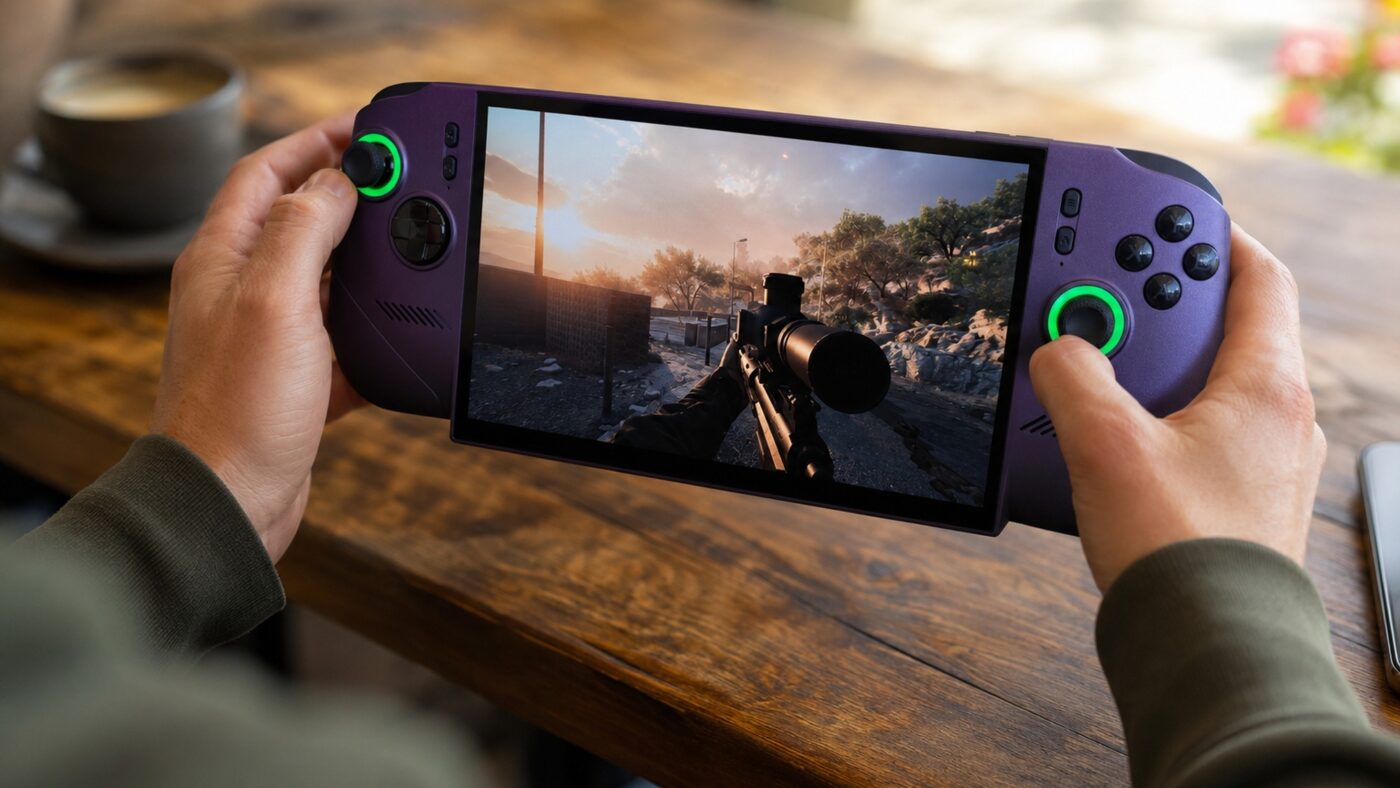
The handheld gaming PC market spent its first three years as an effective AMD monopoly. The MSI Claw 8 EX AI+ is the device that finally breaks it. This is the first handheld built around Intel’s Arc G3 Extreme, a Panther Lake chip that Intel engineered from the ground up for a device you cradle in two hands rather than a thin laptop. You can read the platform details on Intel’s official Arc G3 announcement. Intel’s pitch is unusually bold: gaming performance on par with AMD’s best handheld silicon while drawing roughly half the power. This Intel Arc G3 handheld review unpacks what that claim means once you start playing, how the hardware lines up against the Steam Deck and ROG Ally, and whether a handheld that starts near $1,499 can earn its price.
What Is the MSI Claw 8 EX AI+?
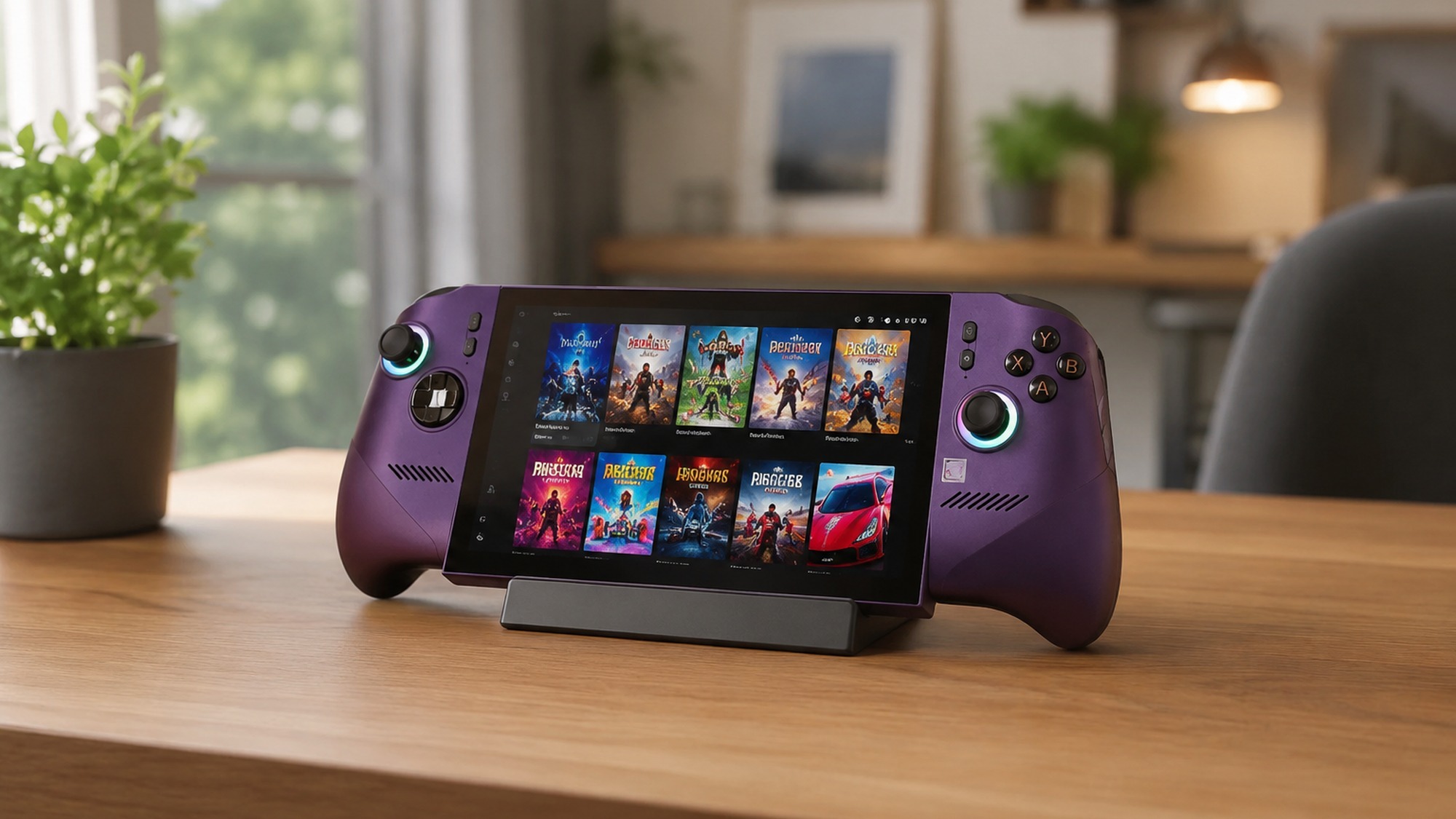
The Claw 8 EX AI+ is MSI’s flagship Windows 11 handheld for 2026, and it is the showcase device for Intel’s first handheld-only processor. According to the spec sheet published by Tom’s Hardware, it runs the Arc G3 Extreme with an integrated Arc B390 GPU, up to 32GB of LPDDR5x memory, and a single M.2 2280 PCIe Gen 4 SSD slot. The screen is an 8-inch, 1920 by 1200 touch panel with a 48 to 120Hz variable refresh rate, and the battery is an 80Wh pack. It launches on June 23, 2026 with a $1,499 starting price, though the first US retail listing on Best Buy appeared at $1,699.99 for the 1TB configuration.
That positions the Claw less as a Steam Deck rival and more as a portable gaming PC that happens to fit in a backpack. The headline question is not whether it is fast. It is whether the efficiency story holds up, because efficiency is what separates a handheld you actually carry from one that lives plugged into a wall.
What is the MSI Claw 8 EX AI+?
A premium 8-inch Windows 11 gaming handheld and the first device to ship with Intel’s Arc G3 Extreme, a chip built only for handhelds.
Intel Arc G3 Extreme (Panther Lake) with a 12-core Arc B390 GPU.
8-inch 1920 by 1200 touchscreen, 48 to 120Hz variable refresh.
80Wh pack, the same capacity as the ROG Ally X.
From $1,499, with a 1TB listing at $1,699.99, launching June 23, 2026.
Design and Ergonomics: Built to Be Held
MSI clearly listened to feedback on the first two Claw generations. The grips are deeper and more sculpted, and the bumpers now blend into the triggers instead of sitting as separate ridges, which makes the back of the device feel less busy under your fingers. Early hands-on reports praise the weight balance, though several note that the face buttons still feel a touch mushy compared to the crisp click of an Xbox controller. Worth noting: at 8 inches and with an 80Wh battery, this is a large handheld, so smaller hands may find it a stretch during long sessions.
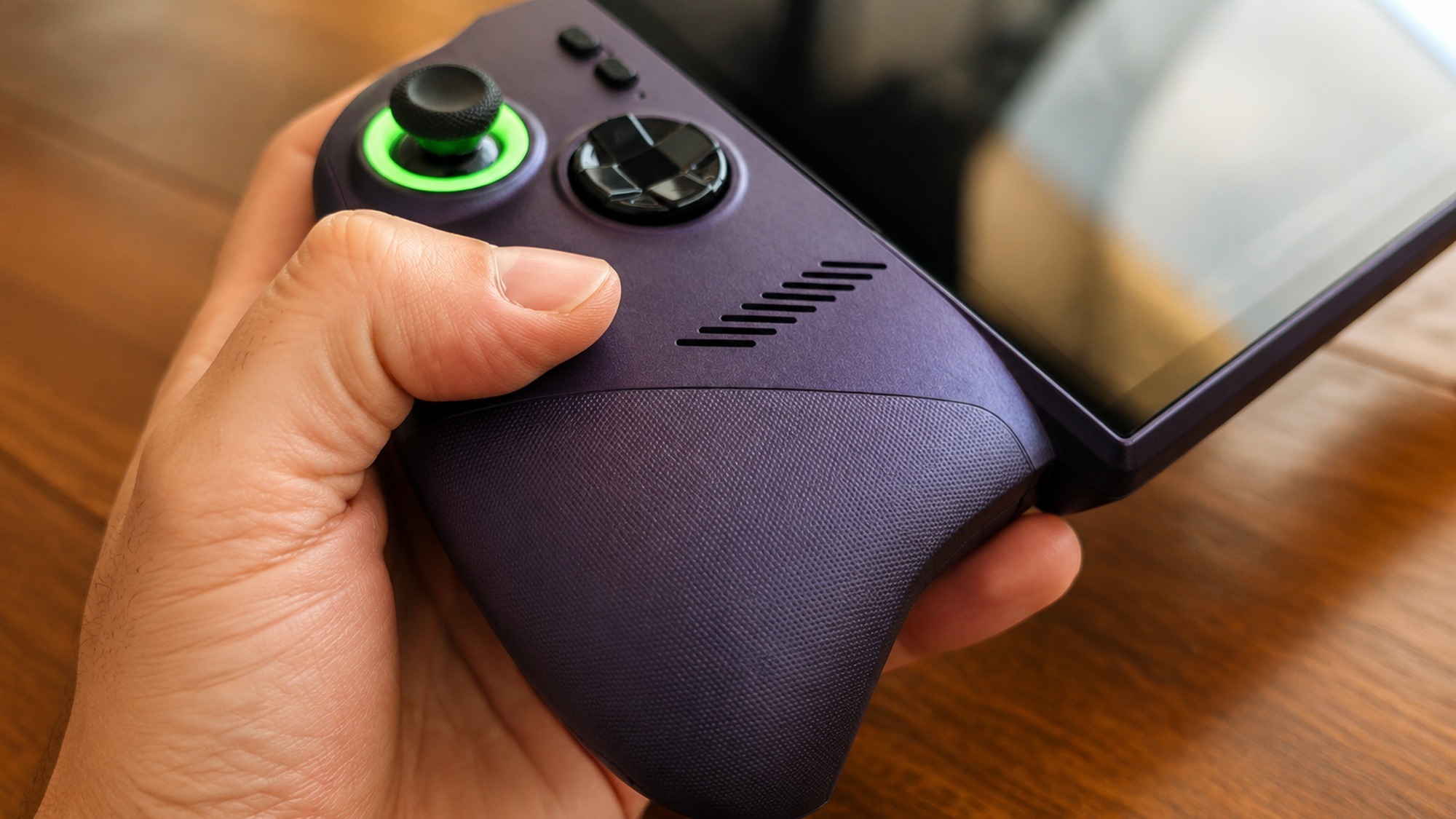
In practice, the textured shell and contoured palm rests matter more than any spec line. A handheld lives or dies on whether you can hold it for two hours without cramping, and the reshaped grips are the most obvious physical upgrade over the previous Claw. The RGB joystick rings remain, which is either a highlight or a gimmick depending on your taste.
Intel Arc G3 Extreme: A Handheld-First Chip
The Arc G3 Extreme is where this device gets interesting. It carries 14 CPU cores in an unusual split: 2 performance cores, 8 efficiency cores, and 4 low-power efficiency cores, paired with a 12-core Arc B390 GPU. Intel rates it at a 25W base that can climb to 80W once the handheld is docked or plugged in. That is the same Panther Lake family we examined in our Intel Core Ultra X9 388H Panther Lake review, tuned here for thermals and battery rather than raw laptop throughput.
The design philosophy is the real story. Rather than shrink a laptop chip, Intel optimized core count, input output, and power management specifically for handhelds. That is why a 2P plus 8E layout makes sense: a handheld iGPU does not need eight hungry performance cores to stay fed. Compared to AMD’s approach of reusing laptop-class silicon, Intel’s narrower, efficiency-led design is a genuinely different bet. The trade-off is software. Intel’s Arc drivers have improved dramatically, but they still lag behind AMD in some older DirectX 11 titles, which is the one area where an Intel-powered handheld can stumble that an AMD one rarely does.
The early reaction on Reddit captures the optimism and the skepticism in equal measure. A widely shared thread on the r/intel subreddit summarized leaked figures as offering “double the battery at the same performance as the Z2 Extreme,” while users on r/Handhelds cautioned that Intel’s early benchmarks were run on desktop hardware with similar specs rather than a shipping handheld. That caution is fair, and it is the lens we use for every number below.
XeSS 3 and How AI Boosts Frame Rates
Most of the AI gaming handheld performance story runs through XeSS 3, Intel’s upscaling and frame generation suite. According to Intel, XeSS 3 bundles three technologies: XeSS Super Resolution, which renders at a lower internal resolution and reconstructs detail, XeSS Multi-Frame Generation, which inserts AI-generated frames between rendered ones, and Xe Low Latency, which keeps input lag in check while those extra frames are produced. On a power-limited handheld, that combination matters far more than it does on a desktop, because every watt saved on native rendering is a watt returned to battery life.
What is XeSS 3 and how does AI lift handheld frame rates?
XeSS 3 is Intel’s AI graphics suite that raises frame rates by upscaling a lower-resolution image and generating extra frames, while a latency layer keeps controls responsive.
Renders the game internally at a lower resolution, then reconstructs a sharp image to save power.
Inserts AI-generated frames between rendered ones to multiply the on-screen frame rate.
Trims input lag so the extra frames do not make the controls feel floaty.
Lower native rendering means lower power draw, which directly extends handheld battery life.
Hands-On Frame Rates From the First Previews
This is where the efficiency claim gets tested. Intel says the Claw 8 EX AI+ at a sustained 17W matches or beats the AMD-powered Xbox Ally X running at 35W across a wide game suite, and that at a matched 35W it averages about 42 percent faster than the Ryzen Z2 Extreme with upscaling enabled. Those are Intel’s own first-party benchmarks, so treat them as a best case rather than a verdict.
The early independent previews are more grounded but still encouraging. In one preview, Forza Horizon 6 ran at 1200p between 60 and 74fps with no frame generation at all, and the same coverage put demanding titles like Cyberpunk 2077, Battlefield 6, and Red Dead Redemption 2 at a playable 60fps on 1080p high settings. With XeSS 3 active in desktop mode, F1 25 reportedly reached 90fps at 4K. For context, the same outlets noted a Steam Deck struggling to hold a smooth frame rate at 800p in the same scenes.
So can a PC gaming handheld really match PS5-level performance? Honestly, not in the way the marketing implies. A PS5 sustains a roughly 200W graphics budget, and no 35W handheld will match that natively. What the Claw can do is reach last-generation console frame rates at 1080p, and with XeSS 3 frame generation handheld upscaling it can push much higher numbers in supported titles. In our view, the right framing is not PS5 parity but a portable that plays current AAA games at 60fps, which two years ago was unthinkable in this form factor.
PC Gaming Handheld Battery Life in the Real World
Battery is the metric that decides whether all this efficiency is real, and it is the hardest one to verify before launch. The 80Wh cell is large, matching the ROG Ally X, and Intel’s whole 2x performance-per-watt argument is built around stretching it further. In preview testing the Claw drew as little as 12W for 1080p low-settings gaming and around 4W for very light titles in a battery-saver profile, with MSI estimating roughly 12 hours of light gameplay on a charge.
Those are promising numbers, but PC gaming handheld battery life rarely matches the marketing once you load a demanding game. The most useful reference points come from the previous generation and the competition. PCMag measured the older Claw 8 AI+ at an impressive 21 hours in a video rundown thanks to the same 80Wh battery, while owners on the r/MSIClaw subreddit report a more realistic 8 to 10 hours from lighter games with tuned settings, a bright screen, and Wi-Fi on. For heavier titles, The Verge found that the comparable ROG Ally X stretched to about 3 hours of medium-weight gameplay or roughly 9 hours of the lightest play. Expect the Claw to land in a similar band: a couple of hours for the heaviest games, a full afternoon for indies, and all-day endurance for video.
MSI Claw 8 EX AI+ vs Steam Deck and ROG Ally
The spec gap is wide, and so is the price gap. The table below sets the Claw against the two handhelds most buyers cross-shop in 2026.
| Spec | MSI Claw 8 EX AI+ | Asus ROG Xbox Ally X | Steam Deck OLED |
|---|---|---|---|
| Chip | Intel Arc G3 Extreme | AMD Ryzen Z2 Extreme | Custom AMD Zen 2 |
| GPU | Arc B390, 12 Xe3 cores | RDNA 3.5 | RDNA 2, 8 CUs |
| Display | 8-inch 1920×1200 120Hz | 8-inch 1080p 120Hz | 7.4-inch 800p 90Hz OLED |
| Memory | Up to 32GB LPDDR5x | Up to 24GB LPDDR5x | 16GB LPDDR5 |
| Battery | 80Wh | 80Wh | 50Wh |
| Storage | M.2 2280, up to 1TB | M.2 2280 | M.2 2230 |
| Starting price | $1,499 | About $999 | $549 |
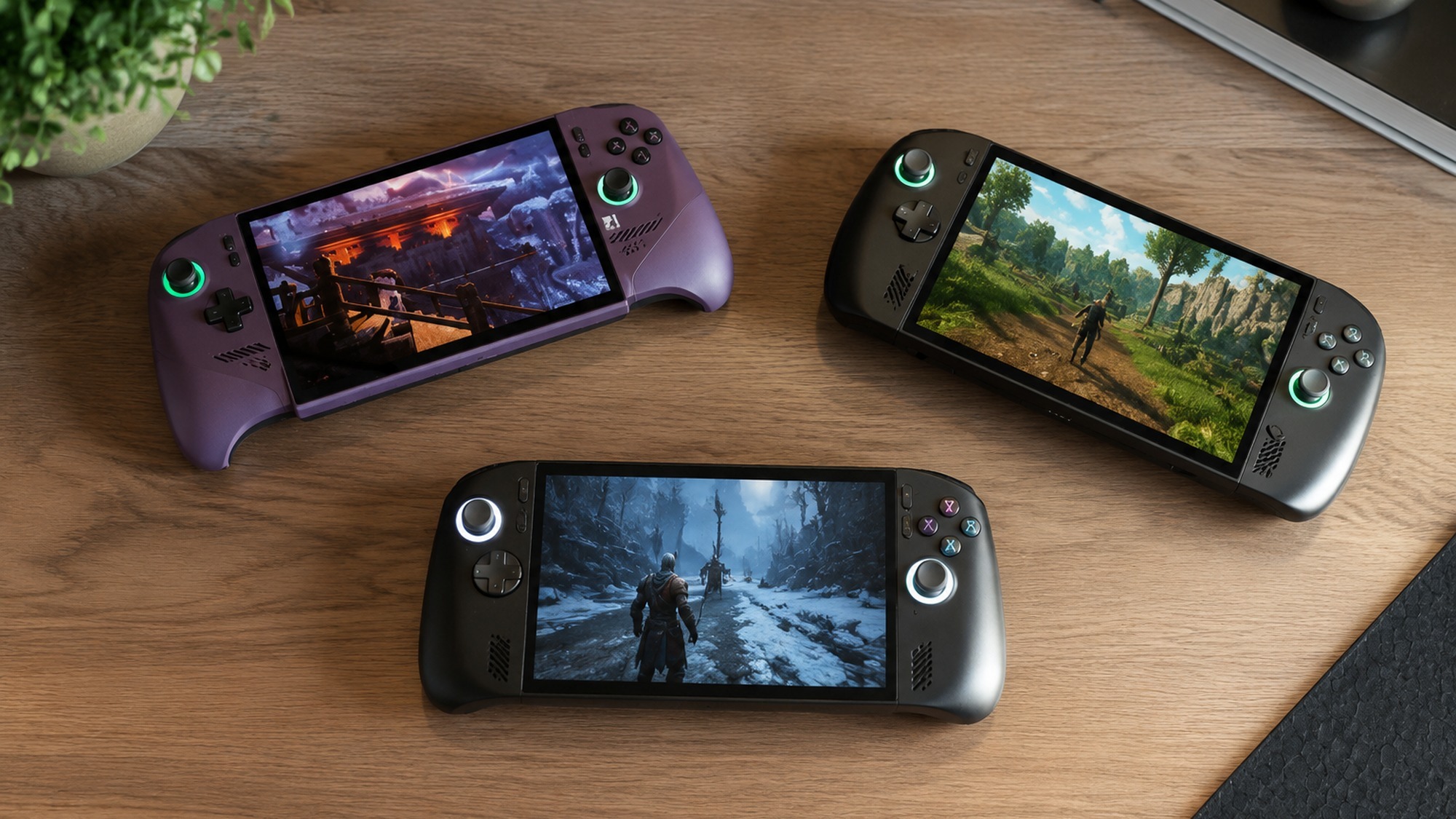
The story the table tells is straightforward. The Steam Deck OLED is less than half the price and still the value champion, but its aging RDNA 2 graphics fall short on the newest AAA games. In one hands-on, TechRadar described its own Steam Deck wheezing through a recent release that the Claw handled comfortably, which is the practical difference between a 2022 chip and a 2026 one. The ROG Xbox Ally X is the closest competitor on hardware and far cheaper than the Claw, so MSI is betting that Intel’s efficiency edge and the brighter, higher-resolution screen justify a premium of several hundred dollars. That is a tough sell, and it is the single biggest risk to this launch.
The Best PC Gaming Handhelds in 2026
If you are shopping for the best PC gaming handhelds right now, the honest answer is that the right pick depends entirely on budget. For most people the Steam Deck OLED remains the smartest buy because of SteamOS, price, and a mature library. Buyers who want raw Windows flexibility and the strongest balance of price and power gravitate to the ROG Xbox Ally X. The Claw 8 EX AI+ sits at the top of the stack as the enthusiast option, the one you choose if you specifically want Intel’s new efficiency platform and the best display, and you are willing to pay for it.
Are PC gaming handhelds better than traditional consoles for the long term? It depends on what you value. A handheld plays your existing PC library, supports every storefront, and gets faster every year. A console is cheaper, simpler, and backed by a stable platform. The PC handheld is a hardware business with annual refreshes, while a console is a platform business designed to last seven years, and those two models reward very different buyers.
Is the MSI Claw 8 EX AI+ Worth It?
At $1,499 and up, the Claw 8 EX AI+ is not trying to be your only gaming device. It is a premium portable PC for people who already spend at that tier on laptops. The technology is genuinely impressive, and if Intel’s efficiency claims survive independent testing, this could be the most important handheld since the original Steam Deck. The early community reaction reflects exactly that tension. The most upvoted YouTube comments on the reveal were not about specs at all but about cost, with one viewer bluntly noting that without the right price, no chip is “about to change handheld gaming forever.”
Market context explains the caution. Total PC handheld sales sit near 10 million units, most of them Steam Decks, against roughly 140 million for the original Nintendo Switch, so this is still a niche fighting for mainstream attention. Rising component costs are pushing prices up across the board, which is why even console makers have raised prices recently. In our view, the Claw 8 EX AI+ is a showcase of where the category is heading rather than the device that takes it mainstream. The future of these handhelds looks less like a single killer product and more like steady annual gains in efficiency, AI upscaling, and pairings with AR glasses for a bigger virtual screen. Intel finally being in the race makes that future arrive faster.
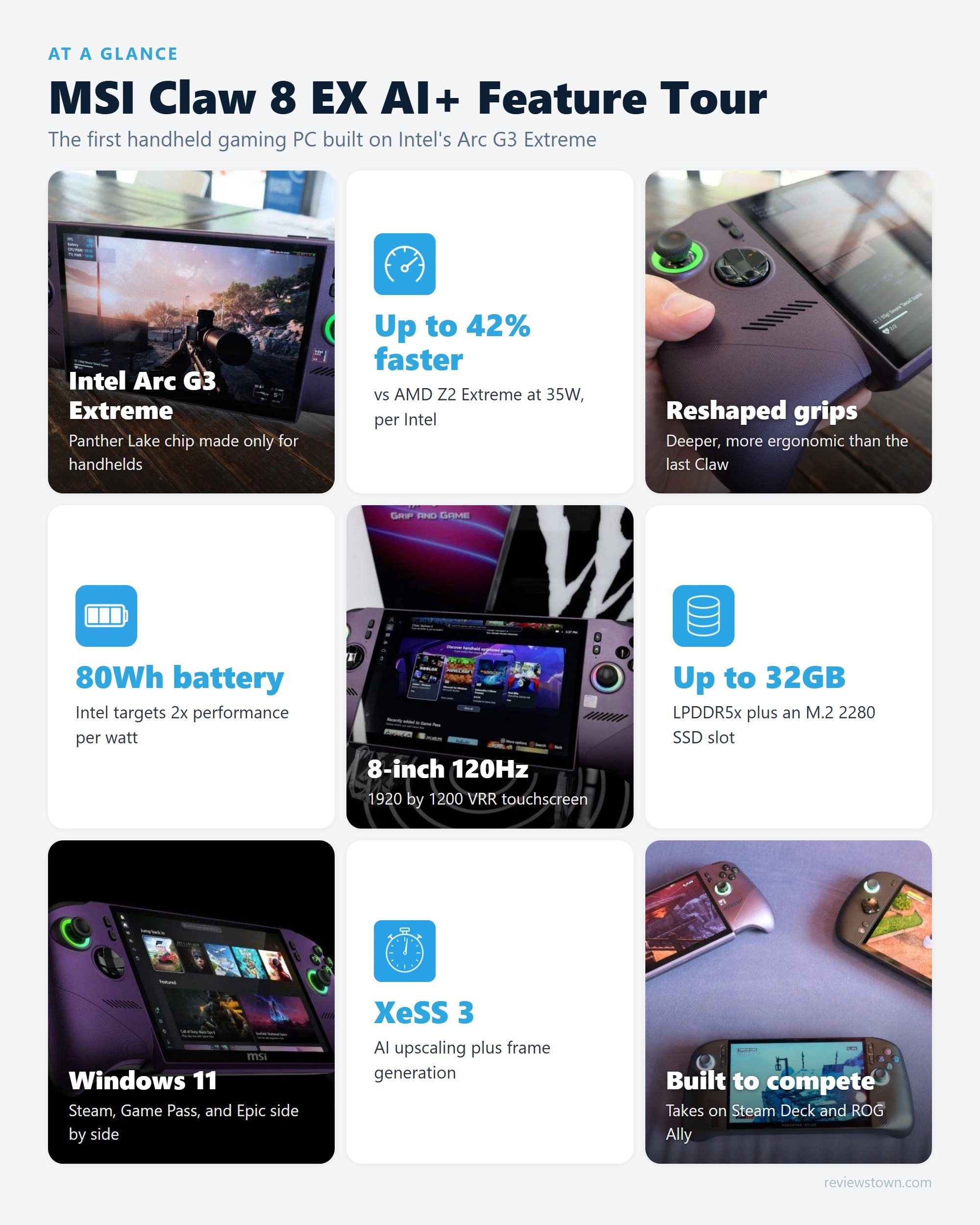
- First handheld built on Intel’s Arc G3 Extreme, a chip designed only for this form factor
- Intel claims roughly 2x performance per watt versus the AMD Ryzen Z2 Extreme
- 80Wh battery paired with an 8-inch 1920×1200 120Hz VRR display
- XeSS 3 adds super resolution, multi frame generation, and lower input latency
- Tool free M.2 2280 SSD upgrade and up to 32GB of LPDDR5x memory
- Reshaped grips and integrated triggers improve on the previous Claw
- Starting price near $1,499 sits far above the Steam Deck
- Real gaming battery life is not yet independently verified
- Headline performance numbers were run by Intel rather than third parties
- Intel Arc drivers still carry a mixed reputation in older games
- Heavier and more expensive than most current rivals
Frequently Asked Questions
Does the MSI Claw 8 EX AI+ run Windows or SteamOS?
It ships with Windows 11, which lets it run Steam, the Epic Games Store, Xbox Game Pass, Battle.net, and emulators side by side. MSI leans on a Windows 11 Xbox full screen mode to cut desktop overhead and make the handheld feel more console like at boot.
Can you upgrade the storage on the Claw 8 EX AI+?
Yes. MSI moved to a standard M.2 2280 PCIe Gen 4 SSD slot, so owners can swap in a larger drive without the cramped 2230 modules earlier handhelds used. Base configurations reach 1TB, and the larger 2280 form factor makes high capacity upgrades much cheaper.
How is the Claw 8 EX AI+ different from the older Claw 8 AI+?
The previous Claw 8 AI+ used Intel’s Lunar Lake Core Ultra 7 258V with Arc graphics. The new EX AI+ moves to the Arc G3 Extreme, a Panther Lake part built specifically for handhelds with more Xe3 GPU cores and Intel’s claimed 2x efficiency gain over AMD.
Does XeSS 3 frame generation work in every game?
No. XeSS 3 super resolution and multi frame generation only work in titles that add support, similar to how AMD FSR and Nvidia DLSS roll out. Older or smaller games may run at native resolution only, so the headline frame rates depend heavily on per game support.
Will there be cheaper Intel Arc G3 handhelds?
Likely. Intel splits the line into the standard Arc G3 and the higher end Arc G3 Extreme inside the Claw 8 EX AI+. The standard G3 carries fewer GPU cores, so partner handhelds using it should land at lower prices than MSI’s flagship over time.