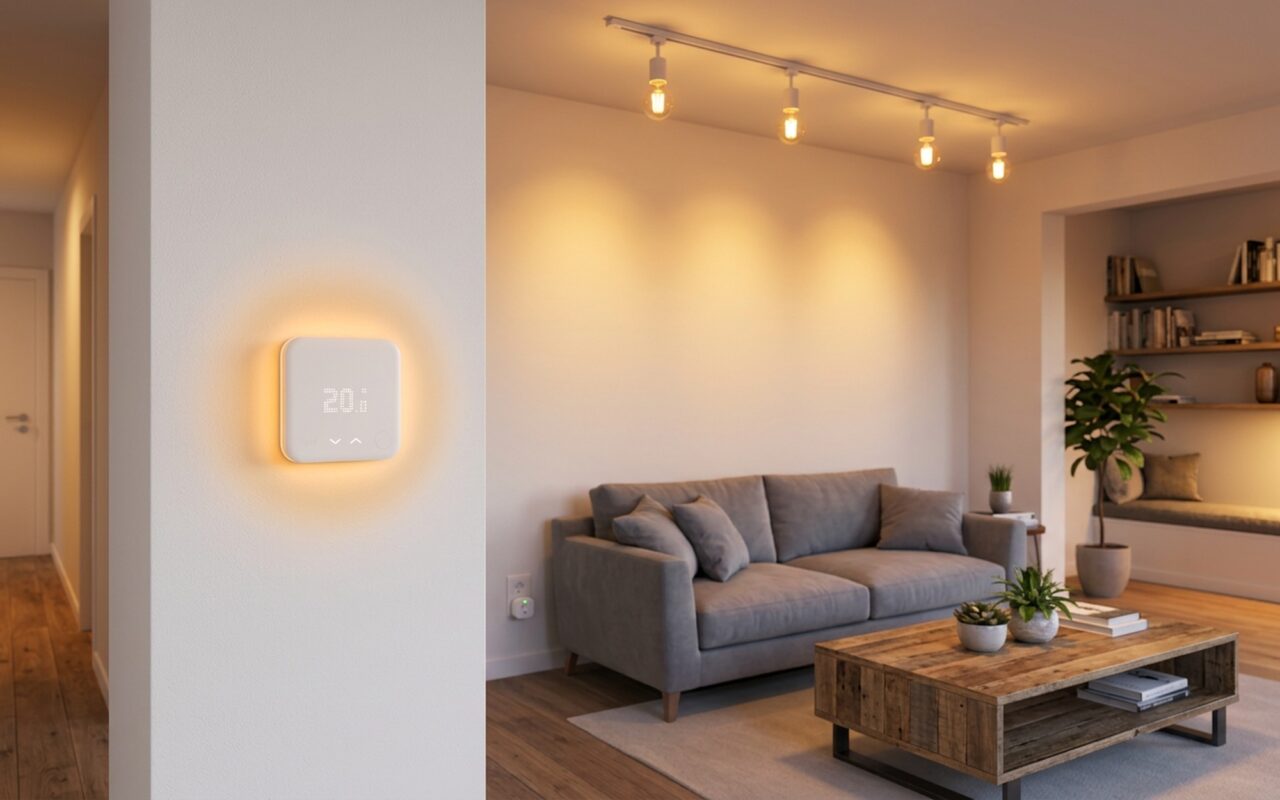
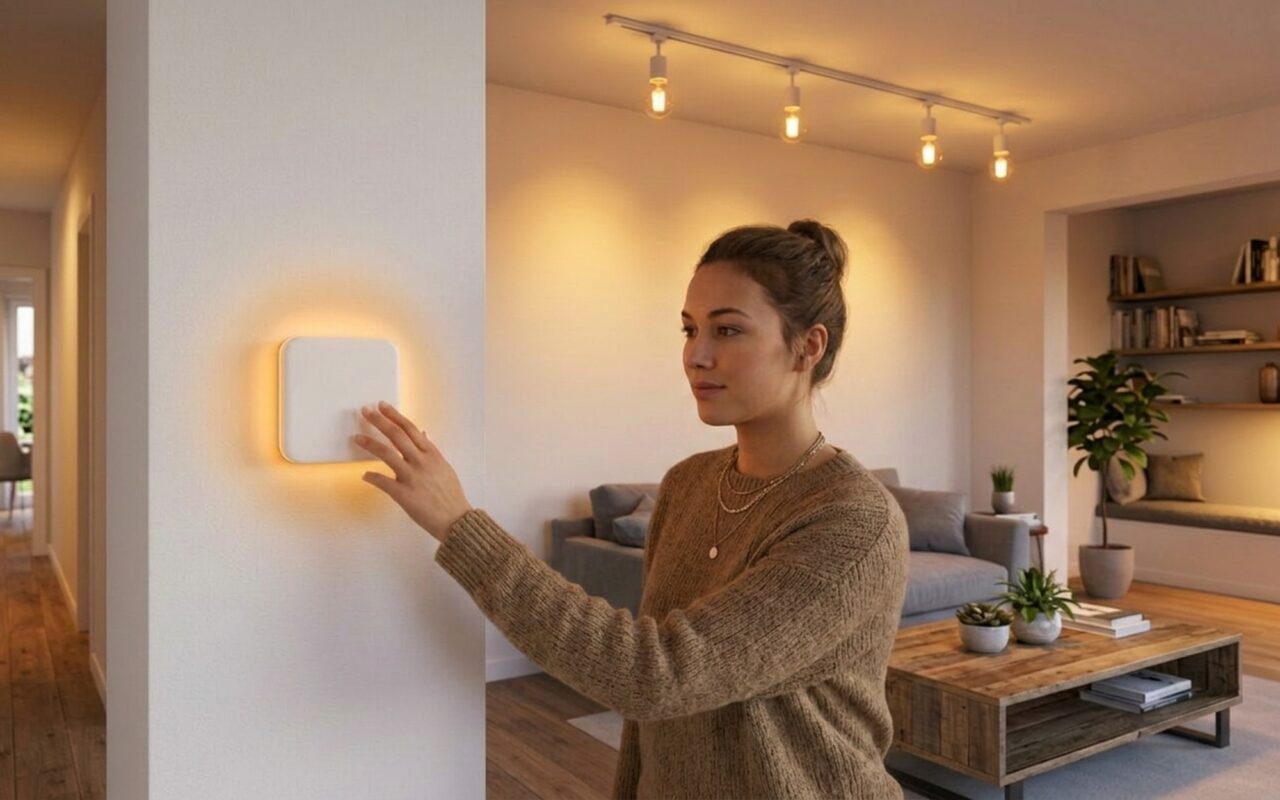
The best smart thermostats in 2026 do far more than follow a schedule. They learn your habits, track who’s home via geofencing, monitor indoor air quality, and connect to every major smart home platform – all from a device smaller than a tablet on your wall.
Whether you’re replacing an aging Nest 3rd Gen, a manual programmable thermostat, or still running a basic dial, this guide cuts through the noise. We compare four leading models across energy savings, smart home compatibility, room sensing, and value – so you can match the right thermostat to your specific home and ecosystem.
Why Upgrade to a Smart Thermostat in 2026
Heating and cooling account for nearly half of the average US household’s annual energy bill – over $900 per year. A smart thermostat addresses this directly by learning your daily schedule, using geofencing to detect when you leave home, and directing comfort to occupied rooms rather than heating empty hallways.
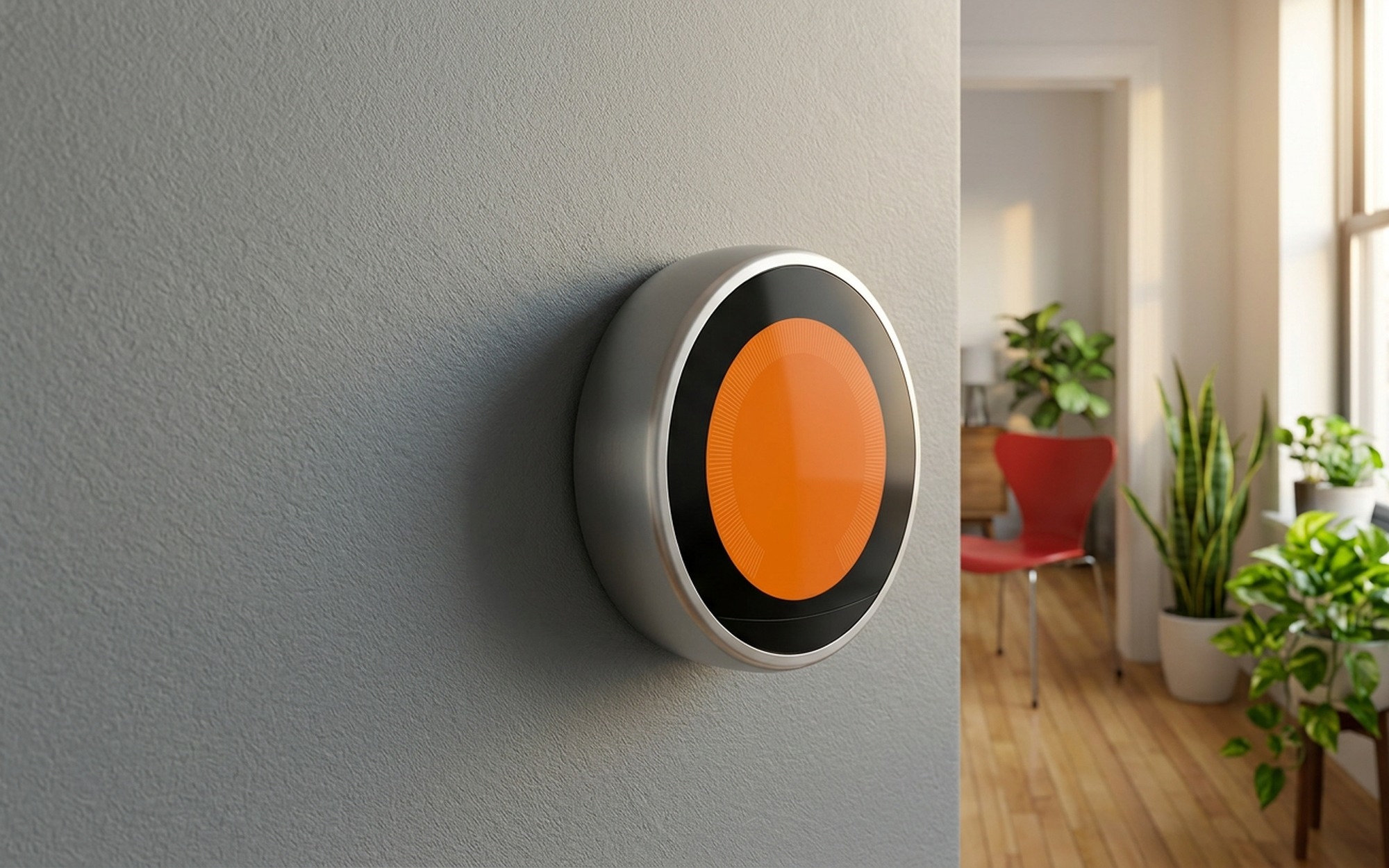
ENERGY STAR certifies that qualifying smart thermostats save an average of 8% on HVAC costs annually. Ecobee and Google report real-world savings of 10–26% depending on prior heating habits. For a home spending $1,500 per year on HVAC, that translates to $150–$390 in annual savings – enough to recover the cost of most premium thermostats within two years.
Three major shifts have defined the 2026 smart thermostat market:
- Matter support is now standard across flagship models, allowing a single thermostat to connect to Apple Home, Google Home, Alexa, and SmartThings simultaneously – no ecosystem lock-in.
- Room sensors are bundled with most flagship models rather than sold separately, solving the classic “cold bedroom, warm hallway” problem out of the box.
- Smarter AI scheduling means newer models adapt within 3–5 days rather than the 1–2 weeks required by earlier generations, and handle irregular schedules and remote work patterns more gracefully.
Quick Comparison: Best Smart Thermostats at a Glance
| Model | Price | Best For | Apple Home | Energy Savings |
|---|---|---|---|---|
| Ecobee Smart Thermostat Premium | $249 | Overall best | Native | Up to 26% |
| Google Nest Learning Thermostat (4th Gen) | $280 | Hands-off self-learning | Via Matter | 12–15% |
| Honeywell Home T9 | $150–$180 | Budget + multi-room sensors | No | 10–15% |
| Tado V4 | ~$200 | European radiator heating | Via Matter | 22–28% |
Ecobee Smart Thermostat Premium – Best Overall
The Ecobee Smart Thermostat Premium ($249) earns the top spot in 2026 by excelling across every category: platform compatibility, energy savings, room sensing, and build quality.
The bundled SmartSensor detects temperature and occupancy in any room you place it in – not just the hallway where the thermostat is mounted. This solves a fundamental problem in conventional thermostat design: heating or cooling to satisfy a sensor that no one is near. Ecobee’s occupancy-driven approach means the system prioritizes the rooms you’re actually using.
It’s the only flagship model with native Apple HomeKit support, making it the definitive choice for Apple Home users who want Siri control and full automation without workarounds. It also works natively with Google Home, Amazon Alexa, and Samsung SmartThings – all simultaneously.
The built-in air quality monitor is a unique addition at this price point. It tracks PM2.5 particulates, VOCs, and CO₂, alerting you when air quality degrades and prompting HVAC filter maintenance before problems develop.
Ecobee reports real-world energy savings of up to 26% – approximately $284 per year for the average US household. A Power Extender Kit (PEK) is included for homes without a C-wire.
Key specs: 3.9-inch touchscreen · Built-in Alexa speaker · SmartSensor included · HomeKit / Google Home / Alexa / SmartThings · ENERGY STAR certified
Google Nest Learning Thermostat 4th Gen – Best Self-Learning Design
The Google Nest Learning Thermostat (4th Gen, ~$280) represents the most significant redesign since the original launched in 2011. The display is 60% larger than its predecessor on a substantially slimmer body, available in Polished Obsidian, Polished Gold, and Polished Silver finishes.
The 4th Gen eliminates the C-wire requirement, making it easier to retrofit in older homes without running new wiring. It ships with a Nest Temperature Sensor (2nd Gen) included – addressing the room sensing gap that made earlier Nest models less competitive against Ecobee.
Learning algorithms have improved substantially. Reviewers report the thermostat adapts within 3–5 days and handles irregular schedules more gracefully than previous generations. Google claims average savings of 12% on heating and 15% on cooling, and independent testing by Tom’s Guide found real-world results aligned closely with these figures.
Matter support resolves the longstanding Apple HomeKit gap: the 4th Gen Nest connects to Apple Home, Alexa, and SmartThings via Matter, alongside native Google Home integration.
Note for Apple users: Nest operates via the Matter bridge, not native HomeKit. For Siri control and Apple Home automations with full feature depth, Ecobee still offers a more seamless integration. The Google Nest Learning Thermostat (4th Gen) is available direct from the Google Store.
Key specs: 60% larger display vs previous gen · No C-wire required · Nest Temperature Sensor included · Matter support · ENERGY STAR certified
Honeywell Home T9 – Best Budget Smart Thermostat with Room Sensors
At $149–$179, the Honeywell Home T9 undercuts both Ecobee and Nest while delivering the feature that matters most for multi-room comfort: remote room sensors with exceptional range.
The T9’s optional room sensors stand out in the category. Each sensor includes motion, temperature, and humidity detection with a range of up to 200 feet from the thermostat – significantly farther than Ecobee’s SmartSensors. You can deploy up to 20 sensors across the home, making the T9 the most scalable option for larger properties or homes with complex layouts.
Setup is as straightforward as Ecobee or Nest. Honeywell includes a C-wire adapter kit in the box, and the companion Total Home Comfort app handles remote scheduling and control reliably.
The T9 works with Amazon Alexa and Google Assistant but does not offer native Apple HomeKit support. For households not invested in Apple’s ecosystem, this is a non-issue – and the $70–$100 price gap versus Ecobee is meaningful.
For homes with complex HVAC configurations – heat pumps, multi-stage systems, or dual-fuel setups – Honeywell’s thermostat lineup generally offers the broadest compatibility, supporting 2H/2C and 3H/2C configurations that Nest and Ecobee handle less cleanly.
Key specs: 7-inch touchscreen · Up to 20 room sensors · 200ft sensor range · Alexa and Google Assistant · ENERGY STAR certified
Tado V4 – Best Smart Thermostat for European Homes
For European homes with gas boilers, combi-boilers, and radiator heating systems, the Tado V4 is the specialist choice. Its deep compatibility with European HVAC infrastructure gives it an advantage that US-centric brands like Ecobee and Nest simply cannot replicate – particularly following Google’s withdrawal from the European thermostat market in October 2025.
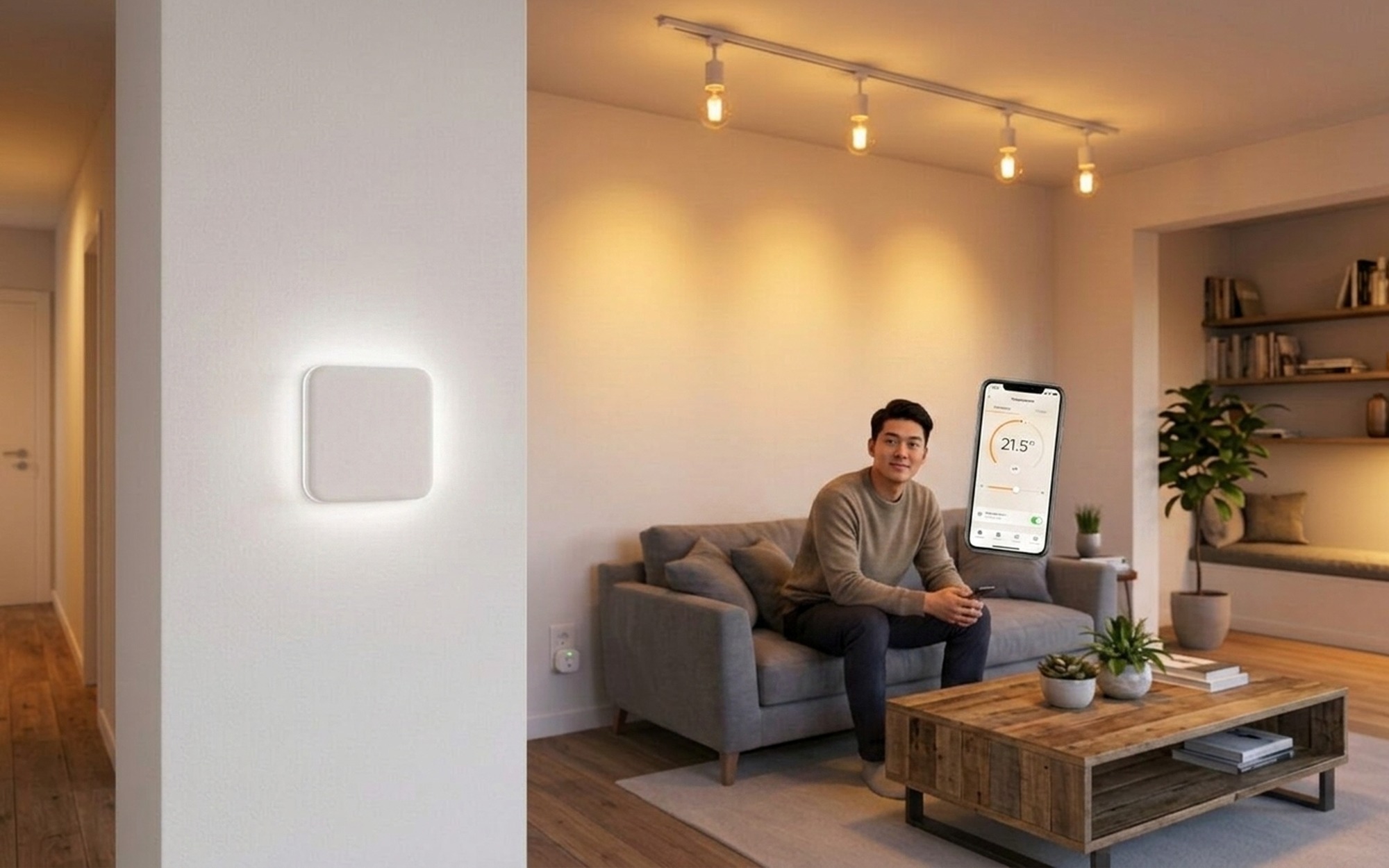
The V4 update (2025) adds Thread and Matter support, enabling integration with Apple Home, Google Home, Alexa, and SmartThings. The design is more refined than previous Tado generations, and the Starter Kit (thermostat + Internet Bridge) costs approximately €200.
Tado’s geofencing is particularly effective in practice. The system monitors all household members’ phone locations and begins warming the home approximately 30 minutes before the first person returns. This automatic away mode eliminates passive energy waste from heating an empty home – and it’s the primary driver behind Tado’s reported savings of 22–28% on European heating bills, among the highest of any thermostat tested.
For multi-zone radiator control, Tado sells individual Smart Radiator Thermostats (TRVs) that integrate with the central system, allowing room-by-room temperature management without a full HVAC overhaul.
Key specs: Thread + Matter support · Combi-boiler and radiator compatible · Multi-zone TRV support · Geofencing with all household members · iOS and Android app
How to Choose the Right Smart Thermostat for Your Home Type
Apple ecosystem households: The Ecobee Smart Thermostat Premium is the only native HomeKit option with full Siri automation support. The Aqara W200 (2026) also supports Apple Home Adaptive Temperature – a unique feature for fully automated setpoint adjustments.
Hands-off learning with minimal setup: Google Nest 4th Gen is the most autonomous option. Install it, use your home normally for a week, and let the learning algorithm handle the rest.
Larger homes or multi-room comfort issues: Ecobee (1 SmartSensor included) or Honeywell T9 (up to 20 sensors at 200ft range) outperform Nest for balancing temperature across multiple zones.
European homes with radiator or boiler heating: Tado V4 is purpose-built for these systems and now the strongest-supported option in the European market.
Budget-conscious buyers: Honeywell T9 at $150 delivers room sensing, smart scheduling, and Alexa/Google integration without approaching the $250–$280 price of premium models.
Complex HVAC systems (heat pumps, dual-fuel, multi-stage): Honeywell Home thermostats offer the broadest professional-grade compatibility for non-standard configurations.
Smart Home Platform Compatibility Guide
Matter certification has simplified cross-platform compatibility significantly since 2024. Here’s how the top thermostats compare across major smart home ecosystems:
| Thermostat | Apple Home | Google Home | Amazon Alexa | SmartThings | Matter |
|---|---|---|---|---|---|
| Ecobee Premium | Native | Native | Native | Native | Yes |
| Nest 4th Gen | Via Matter | Native | Via Matter | Via Matter | Yes |
| Honeywell T9 | No | Native | Native | Yes | No |
| Tado V4 | Via Matter | Native | Native | Via Matter | Yes |
| Aqara W200 | Native (Adaptive) | Yes | Yes | Yes | Yes |
For Apple Home users: Ecobee and Aqara W200 offer native integration with full automation depth, including Siri voice control and Adaptive Temperature. Matter-connected thermostats like Nest 4th Gen work but with limited Siri functionality.
For Alexa-first households: Ecobee, Nest 4th Gen, Honeywell T9, and Tado V4 all work reliably with Alexa. The Amazon Smart Thermostat ($60) is a budget-only Alexa option, but lacks room sensing and self-learning capabilities.
For Google Home users: The Nest 4th Gen integrates most deeply with Google Home, including real-time presence sensing via Android and Google Account location. Other brands work via Google Home but without the same level of first-party integration.
- Saves 10–26% on annual heating and cooling bills
- Easy DIY installation under 30 minutes for most models
- Ecobee works natively with Apple Home, Google Home, Alexa, and SmartThings
- Room sensors prevent hot and cold spots throughout the home
- Geofencing automatically adjusts temperature when you leave or return
- Premium models cost $150–$280 before professional installation if needed
- Learning algorithms take 1–2 weeks to fully optimize your schedule
- Nest 4th Gen connects to Apple Home via Matter only, not native HomeKit
- Some older homes may need a C-wire adapter for compatibility
Frequently Asked Questions
What is the best smart thermostat for home energy savings?
The Ecobee Smart Thermostat Premium is the top pick for energy savings in 2026, with documented reductions of up to 26% on heating and cooling costs — roughly $284 per year for the average US household. Its SmartSensor monitors occupied rooms rather than a fixed hallway location, eliminating wasted energy from heating empty spaces.
Which smart thermostat works best with Apple Home?
The Ecobee Smart Thermostat Premium is the only flagship thermostat with native Apple HomeKit support, making it the clear choice for Apple Home users. The Google Nest 4th Gen also connects to Apple Home via Matter. The new Aqara W200 (2026) is the only model that supports Apple Home Adaptive Temperature for fully automated setpoint adjustments.
Can a smart thermostat work with both Google Home and Alexa at the same time?
Yes — the Ecobee Premium and Tado V4 connect to Google Home, Amazon Alexa, Apple Home, and Samsung SmartThings simultaneously. Models with Matter certification (including Nest 4th Gen and Tado V4) can connect to all four platforms at once without a dedicated hub.
How long does it take to install a smart thermostat?
Most smart thermostats take 20–45 minutes to install as a DIY project. The Nest 4th Gen no longer requires a C-wire, making it easy to retrofit in older homes. The Ecobee includes a Power Extender Kit (PEK) for homes without a C-wire. You only need a Wi-Fi connection and a compatible HVAC system — no professional electrician required in most cases.
Are smart thermostats worth the investment?
Yes, for most homes. ENERGY STAR data shows certified smart thermostats save an average of 8% on HVAC costs annually, while Ecobee and Nest report real-world savings of 10–26%. For a home spending $1,200 per year on heating and cooling, a $249 Ecobee pays for itself within 1–2 years. Over a 10-year lifespan, savings of $1,000–$2,500 are realistic.