Smart glasses spent the last three years trying to convince people that wearing a camera on your face was reasonable. Meta Ray Ban broke a million units in 2024 by hiding the camera inside a Wayfarer. Then TCL RayNeo, the AR spin out of TCL, used its May 27, 2026 launch event to ship something more ambitious. The V4 is the first AI camera glasses with a 1:1 square sensor, the first wearable to combine Qualcomm AR1 with a Hengxuan BES2800 co processor, and the lightest pair in its class at 38 grams. This RayNeo V4 review covers what the hardware actually delivers, how the daily workflow holds up, and whether it dethrones Meta Ray Ban for English speaking content creators and commuters.
What Is RayNeo V4 and What Makes It Different from Previous AI Camera Glasses?
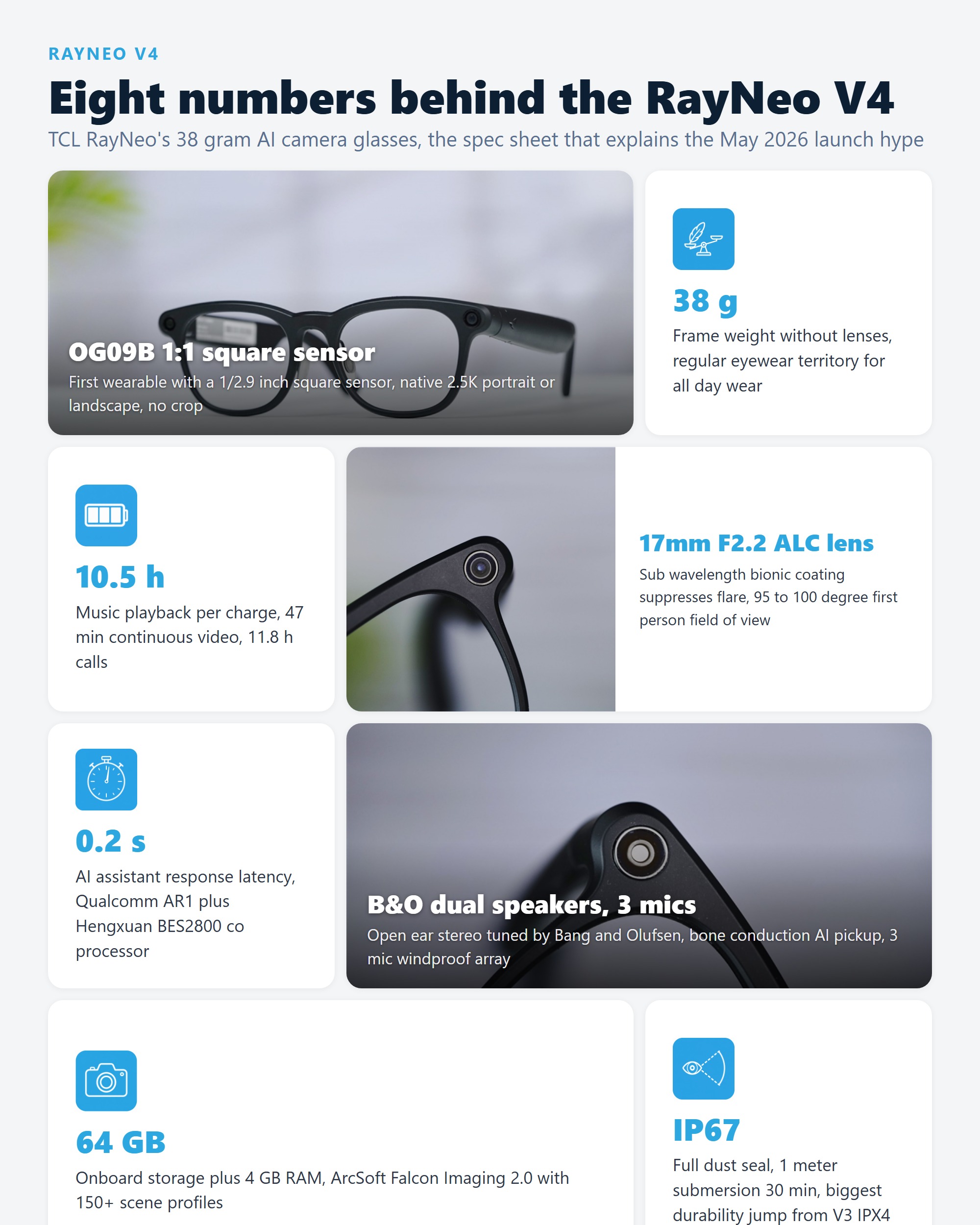
The V4 is the third generation in RayNeo’s V series of camera first smart glasses. The V3 used a Sony IMX681 sensor at 1/3.57 inches and capped video at a single horizontal orientation. The V4 swaps in OmniVision’s new OG09B, a 1:1 square sensor measuring 1/2.9 inches, which is roughly 50 percent more sensor area. The square aspect ratio is the unlock, because the glasses can crop to landscape or portrait at full resolution without throwing away pixels, which is exactly what creators shooting for Reels, TikTok and YouTube Shorts in the same week have wanted from a wearable.
The second change is the chip. Where the V3 relied on a single Qualcomm AR1 to handle imaging and AI together, the V4 adds a Hengxuan BES2800 audio plus AI co processor. That offloads voice wake, on device speech recognition and the lightweight reasoning loop the assistant uses for everyday queries. In practice, the result is the 0.2 second response time RayNeo claims for the launch unit, fast enough that asking the glasses about the weather feels like asking a person rather than tapping a phone.
The third change is the body. The V3 weighed 39 grams without lenses and carried an IPX4 sweat rating. The V4 is one gram lighter at 38 grams, sits behind an IP67 dust and water seal, and uses an ALC sub wavelength bionic structural coating on the lens to suppress flare and reflection, the same anti glare approach Sony cinema lenses use.
How Do AI Camera Glasses Capture First Person Photos and Videos Without Holding a Device?
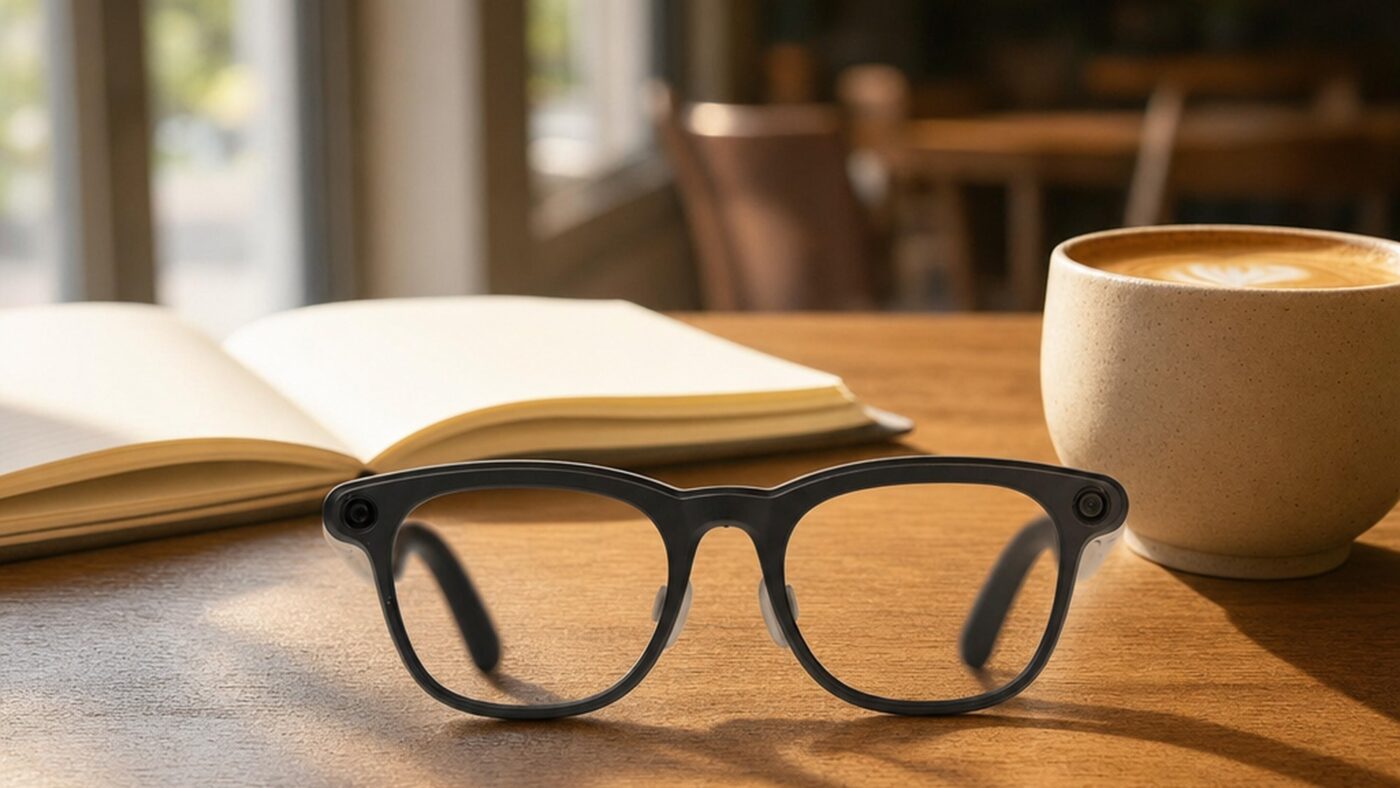
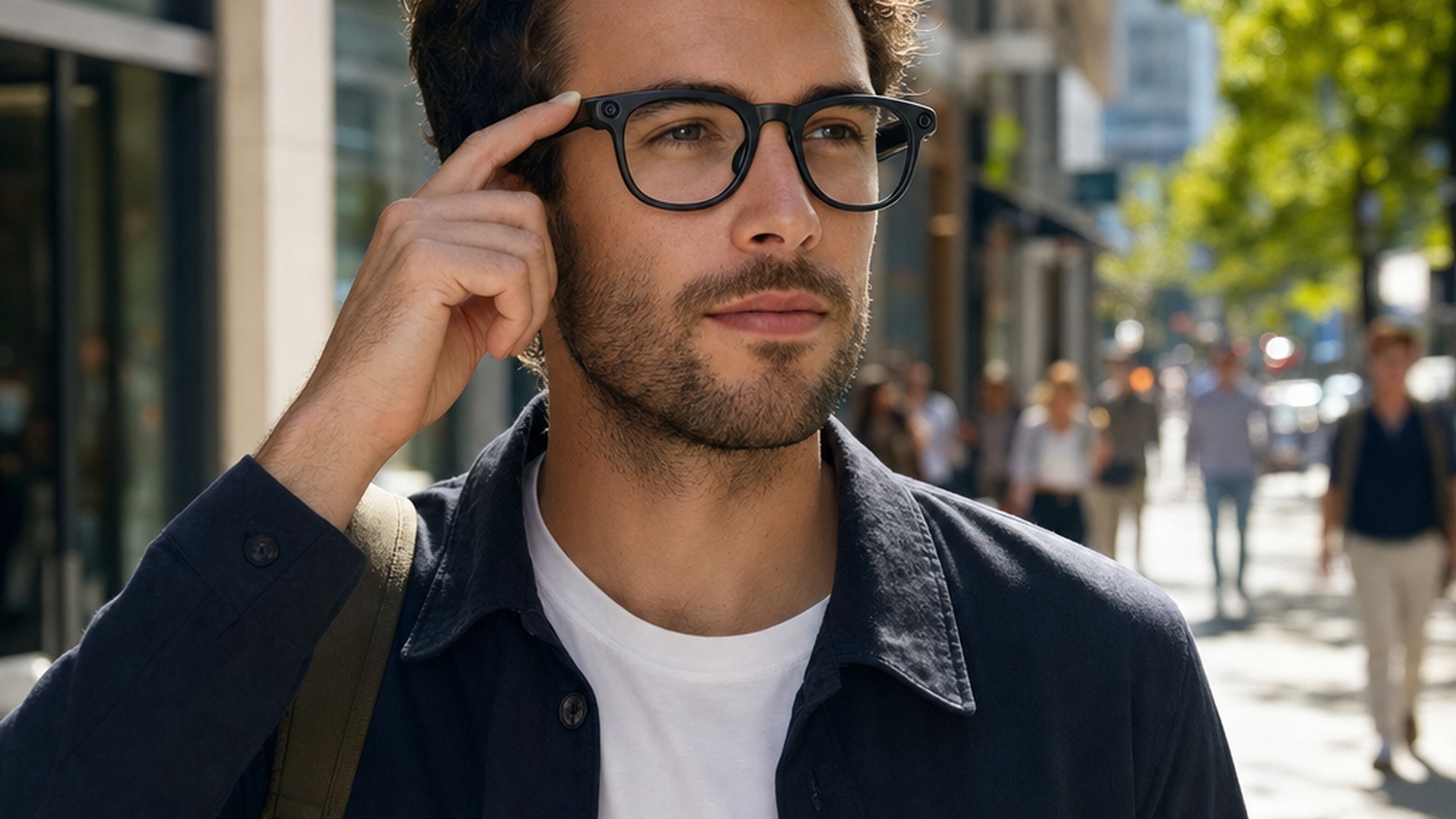
The right temple of the V4 carries the camera, the shutter button, and a touch pad. A single press fires a still, a one second long press starts or stops video, and a three second long press handles power. Touch gestures cover music, volume, voice assistant and playlist recommendations. The lens itself sits on the outer edge of the right temple, angled so its center matches the line of sight from your right eye.
The practical effect is that first person POV recording glasses finally produce footage your viewers expect. Action cameras mounted on a chest harness sit too low and shoot up your face. Phones held in front of you reveal the hand. Glasses cameras put the lens within an inch of your real eye line, which means the frame matches what the wearer was actually looking at. RayNeo’s 17mm equivalent F2.2 lens covers roughly a 95 to 100 degree field of view, wider than the human focal cone but narrower than the 130 degree fish eye most action cameras default to.
Walking, eating, cooking and driving (in jurisdictions where it is legal) all become recordable without a third hand. The pivot point from the V3 is image stabilization. The V4 uses dynamic electronic image stabilization plus a horizon lock, which RayNeo demonstrated on a handheld walk through a rainy Beijing street at night and which independent hands on coverage from Kuai Technology confirmed produces watchable handheld footage at a normal walking pace.
What are AI smart glasses with a camera?
Lightweight eyewear that combines an outward facing image sensor, a voice assistant, open ear speakers and a cellular or Bluetooth connection, so you can capture first person photos and videos, take calls and query an on board AI agent without using your phone.
The camera sits beside your eye, so the photo or video matches what you were actually looking at, not a chest level GoPro angle.
An always listening wake phrase routes weather, payments, parcel tracking and calendar queries through the temple speakers in 0.2 seconds on the V4.
Open ear speakers tuned by Bang and Olufsen play music and calls without blocking ambient sound, safer for cycling and street walking than in ear buds.
At 38 grams the V4 feels like a regular plastic frame, the threshold where wearers stop noticing the hardware after the first hour.
How to Set Up and Use RayNeo V4 Smart Glasses for Daily Vlogging and Life Logging
The out of box workflow takes about five minutes. Charge the glasses on the included magnetic cradle to a 25 minute, 80 percent fast charge. Install the RayNeo companion app, sign in or create a cloud account, and pair over Bluetooth. Grant calendar and location permissions so the assistant can fire context aware reminders. Confirm the voice payment pin code if you intend to use that feature.
For lightweight AI glasses for everyday wear, the daily loop is straightforward. Press once to capture a still. Long press to roll video, long press again to stop. Tap and hold the temple to wake the assistant, then ask for navigation, weather, a payment, a translation or a parcel status. Music and calls flow through the dual B&O speakers without occupying your ears, which is the genuine upgrade over earbuds for cyclists and runners who need to hear traffic.
For vlogging and life logging, the workflow gets more interesting. Set the companion app to auto offload every clip to your phone over Wi Fi when the glasses dock. Use the AI assistant’s scheduled trigger to fire a daily morning capture, a child pickup capture, or a meeting walk in capture without remembering to press a button. The result is a passive log of the day’s visual signal, which you can later filter and edit. Heavy users will hit the 64 GB onboard storage ceiling within a week of full life logging, which is the V4’s biggest hardware limitation relative to the workflow it enables.
RayNeo V4 vs Meta Ray Ban Smart Glasses: Detailed Comparison for Content Creators
The relevant comparison for English speaking buyers is Meta Ray Ban Gen 2, the category leader. The two products choose different trade offs in almost every dimension that matters for content creators.
| Spec | RayNeo V4 | Meta Ray Ban (Gen 2) |
|---|---|---|
| Weight | 38 g | 52 g |
| Sensor | OG09B 1:1 square, 1/2.9 in | 12 MP, 1/2 in class |
| Max video | 2.5K landscape or portrait | 3K at 30 fps, 1080p at 60 fps |
| Lens | 17 mm F2.2, ALC sub wavelength coating | Ultra wide F2.0 |
| Audio | Dual B&O speakers, 3 mic + bone conduction | Dual speakers, 5 mic array |
| Battery | 10.5 h music, 47 min continuous video | ~3 h glasses, 36 h with case |
| Storage | 64 GB | 32 GB |
| Voice payment | Yes, in app | No |
| IP rating | IP67 | IPX4 |
| Launch price | TBC (China May 2026) | $379 USD |
In practice, Meta Ray Ban outperforms the V4 on resolution and ecosystem reach, and its 5 microphone array makes its podcast tier audio capture the best in any wearable. However, RayNeo V4 wins on weight, storage, water sealing, battery life for music, and the integrated payment plus services layer. Compared to the V3, every one of those V4 advantages is a step up rather than a side step. For a US or EU creator working in English, Meta Ray Ban Gen 2 remains the safer choice in 2026. For a creator who wants the lightest frames on the market, native portrait recording for vertical video, and the integrated assistant tasks RayNeo built around the Chinese super app stack, the V4 is the more interesting tool. The right way to think about it is that the two products are no longer copying each other, they are diverging.
What are AI smart glasses with a camera?
AI smart glasses with a camera are wearable eyewear that records first person photos or video while running an on device assistant that answers questions about your view.
A 1 over 2.9 inch sensor sits on the right temple, aligned with your line of sight, so the frame matches what you actually see.
A Qualcomm AR1 chip plus a Hengxuan BES2800 co processor answer voice queries in 0.2 second, no phone in the loop.
Bang and Olufsen tuned speakers fire toward the ear canal without sealing it, so you still hear traffic and conversation.
A visible indicator light on the rim tells people nearby when recording is active, now mandatory in EU and CN markets.
Are AI Powered Camera Glasses Worth Buying for Everyday Commuters and Creators?
For commuters, the math is simpler than it was a year ago. The V4 weighs less than a pair of polycarbonate sunglasses, runs 10.5 hours of music, takes calls in wind and rain, accepts voice payments at a checkout counter, and captures a quick photo or short clip without breaking step. For someone who already wears glasses or who buys non prescription frames for sun protection, replacing them with the V4 is a one for one upgrade. The decision is harder for non glasses wearers, because the V4 still asks you to wear a frame all day, which is a real social and ergonomic ask.
For creators, the worth it answer depends on the platform mix. Short form vertical video is the V4’s home turf, the square sensor and native portrait recording remove the worst friction in the entire mobile creator workflow. Long form sit down content does not benefit, because 47 minutes of continuous recording at 2.5K is below the threshold where a dedicated camera becomes optional. Street photography, vlog B roll, family documentation and live event capture all gain from a 38 gram body that fades from the wearer’s attention within an hour.
The community of early AI glasses users on r/SmartGlasses and r/WearableTech has spent the last six months arguing about exactly this trade off. The recurring observation from owners of both Meta Ray Ban and earlier RayNeo models is that the second pair always gets used more than the first. The hardware becomes invisible only after you have spent enough days wearing it that you stop reaching for the phone. The V4’s 38 gram weight is the first body in the category that crosses that threshold within a single day rather than a single week.
What Is the Best Lightweight Smart Glass with a Large Sensor for Low Light Recording?
Low light is the spec sheet question that separates serious creator hardware from gimmicks. The V4’s 1/2.9 inch OG09B sensor is the largest in any glasses class shipping in 2026. By comparison the Sony IMX681 inside the V3 measured 1/3.57 inches, which captured roughly 60 percent less light per exposure. The OG09B’s square aspect ratio also lets it use a wider central pixel grid for low light rather than the narrower strip a 16:9 sensor of similar diagonal would expose.
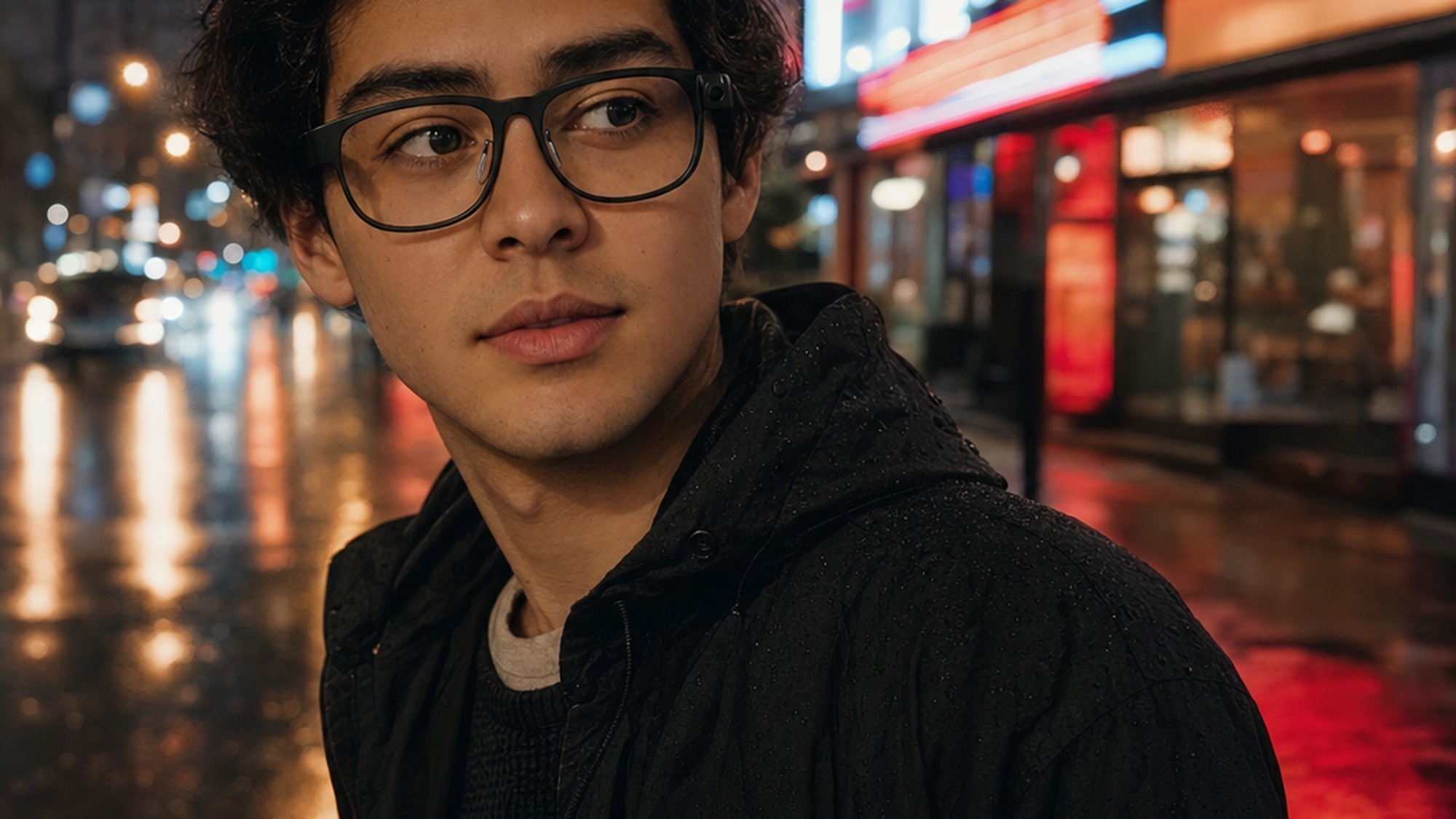
RayNeo paired the sensor with a 17mm F2.2 lens, the ALC sub wavelength bionic structural coating mentioned earlier, and an ArcSoft imaging stack tuned with over 150 scene optimization profiles plus the second generation Falcon Imaging algorithm. The result in launch demonstrations is clean exposure of mixed light scenes, bright neon signs against dark wet pavement at night without the highlight clipping or shadow noise that dogged the V3. Independent night samples from the iFanr launch event coverage showed the V4 holding detail in storefront signage and street lamps at the same time, which the V3 could not do in a single frame.
For the night mode and image stabilization question specifically, the V4 combines the larger sensor with dynamic electronic image stabilization plus a horizon lock. The pairing matters because low light video amplifies handshake. Without the horizon lock the V3’s night footage tilted with every step, which made it hard to share on social platforms that auto crop. The V4’s horizon lock holds the frame upright through normal walking motion, which makes night vlogging actually viable for the first time on a wearable.
Can You Make Contactless Payments Using Voice Commands on AI Smart Glasses Like RayNeo V4?
Yes, this is one of the V4’s headline features and the part of the product that diverges most sharply from Meta Ray Ban. The voice flow is short. Trigger the assistant, say the wake phrase plus the amount, for example small RayNeo, pay 38 yuan, and confirm. The glasses generate the contactless payment token through the RayNeo companion app’s integration with Alipay and WeChat Pay, the merchant scans the token from your phone or a paired RayNeo wallet device, and the transaction closes.
The practical use cases are subway gates, coffee counters, convenience stores and street vendors, the moments where reaching for a phone is friction. For commuters in cities that already run mobile payment as the default, the V4 closes a real gap. The limitation is geography. The Alipay and WeChat Pay integration works inside China today. RayNeo has said it intends to add Apple Pay and Google Pay support through the same voice flow for international markets, but neither integration is live at launch, and there is no firm timeline.
This is the area where the China first ecosystem story most directly affects English speaking buyers. The hardware will accept the payment command, the assistant will respond in 0.2 seconds, but the global payment rails are not yet plumbed.
What Are the Main Pros and Cons of Wearing AI Camera Glasses All Day Long?
The daily benefits are immediate and easy to list. Hands free music and calls without occupying your ear canal, instant voice queries that handle weather, calendar, parcel tracking and navigation, quick photo or video capture without breaking conversation, voice payments at point of sale, and the small but real satisfaction of leaving your phone in a pocket more often. The 38 gram body and 10.5 hour music battery make a full work day realistic without a midday charge.
The friction is also worth naming. The continuous video budget is 47 minutes, which is shorter than a creator might want for a sit down vlog. The onboard storage is 64 GB, which fills up faster than expected once you settle into a daily capture habit. The voice assistant is currently half duplex like most of the category, so you cannot interrupt a long answer. The privacy etiquette of wearing a camera on your face indoors is still unresolved socially, and the V4 like Meta Ray Ban relies on a small visible indicator to signal recording, which polite bystanders may not notice. And the prescription lens story is real, the V4 ships with non prescription lenses, and prescription lens fitting requires the RayNeo China partner network at launch.
The community sentiment from owners of earlier AI glasses, drawn from r/SmartGlasses, r/WearableTech and the Twitter conversation around the Meta Connect 2025 keynote, is that the second week is the inflection point. The first week the hardware feels novel, the second week the use cases settle in, and the third week the phone moves to a back pocket more often than to the table. The V4’s weight and battery make that adoption arc shorter than any previous RayNeo product.
How Good Is the Night Mode and Image Stabilization on RayNeo V4?
Four parts answer this question. First, the OG09B sensor’s larger pixel area is the foundation, more light per exposure means lower ISO at the same brightness, which means less noise. Second, the F2.2 lens with ALC coating reduces flare from point light sources like street lamps and neon, which keeps the highlight roll off clean. Third, the ArcSoft Falcon Imaging 2.0 algorithm applies scene specific tone mapping, the launch demo showed it handling a rainy night street with neon reflections without crushing the shadows. Fourth, the dynamic electronic image stabilization combined with the horizon lock keeps the frame steady at a walking pace, which night footage especially needs because amplified noise reveals every handshake.
The limitation worth flagging is that this is still a smartphone class sensor, not a mirrorless or even an action camera sensor. Although the OG09B is impressive for a wearable, in reality it still falls short of a dedicated camera below about 5 lux of ambient light, which is roughly the level of a dim restaurant interior, where the V4 will produce noise visible on a phone screen and unacceptable on a TV. For the outdoor city night use case it was designed around, it holds up. For a candle lit dinner or a club interior, you still want a dedicated camera.
Is RayNeo V4 Waterproof and Durable Enough for Outdoor and Rainy Day Use?
IP67 is the right answer to the durability question. The first digit, 6, certifies full dust ingress protection. The second digit, 7, certifies submersion up to one meter for 30 minutes. For everyday outdoor use, that envelope covers heavy rain, splash from a beach or pool side, accidental dunks in a sink, and the most stressful rainy day commute most users will face. Compared with the V3’s IPX4 sweat rating, the V4 is in a different durability class.
What IP67 does not authorize is swimming or extended water sports. The lenses fog, the speakers muffle underwater, and prolonged pool chlorine will damage the seals over months even within the IP67 envelope. For a sweaty cycling commute, a rainy umbrella less walk to the subway, or an outdoor festival in light rain, the V4 is the most durable AI camera glasses pair in 2026. For genuine water activities, you still want a GoPro or a dedicated action camera. According to Tom’s Guide’s roundup of the best smart glasses in 2026, the IP67 plus 38 gram combination is the most everyday wearable spec mix any AI camera glasses brand has shipped to date, which lines up with what owners report after a week of daily use.
For anyone weighing the V4 against the rest of the increasingly crowded consumer AI hardware companion category, the answer comes down to the form factor question. If you already wear glasses or are willing to start, the V4 is the lightest, most durable, and longest running pair on the shelf. If you do not, the Meta Ray Ban ecosystem is broader, and products like the Guangfan AI camera earbuds hint at a future where the camera moves to the ear instead of the eye. The category is real, and the next eighteen months will sort out which body location wins.
Should You Buy RayNeo V4?
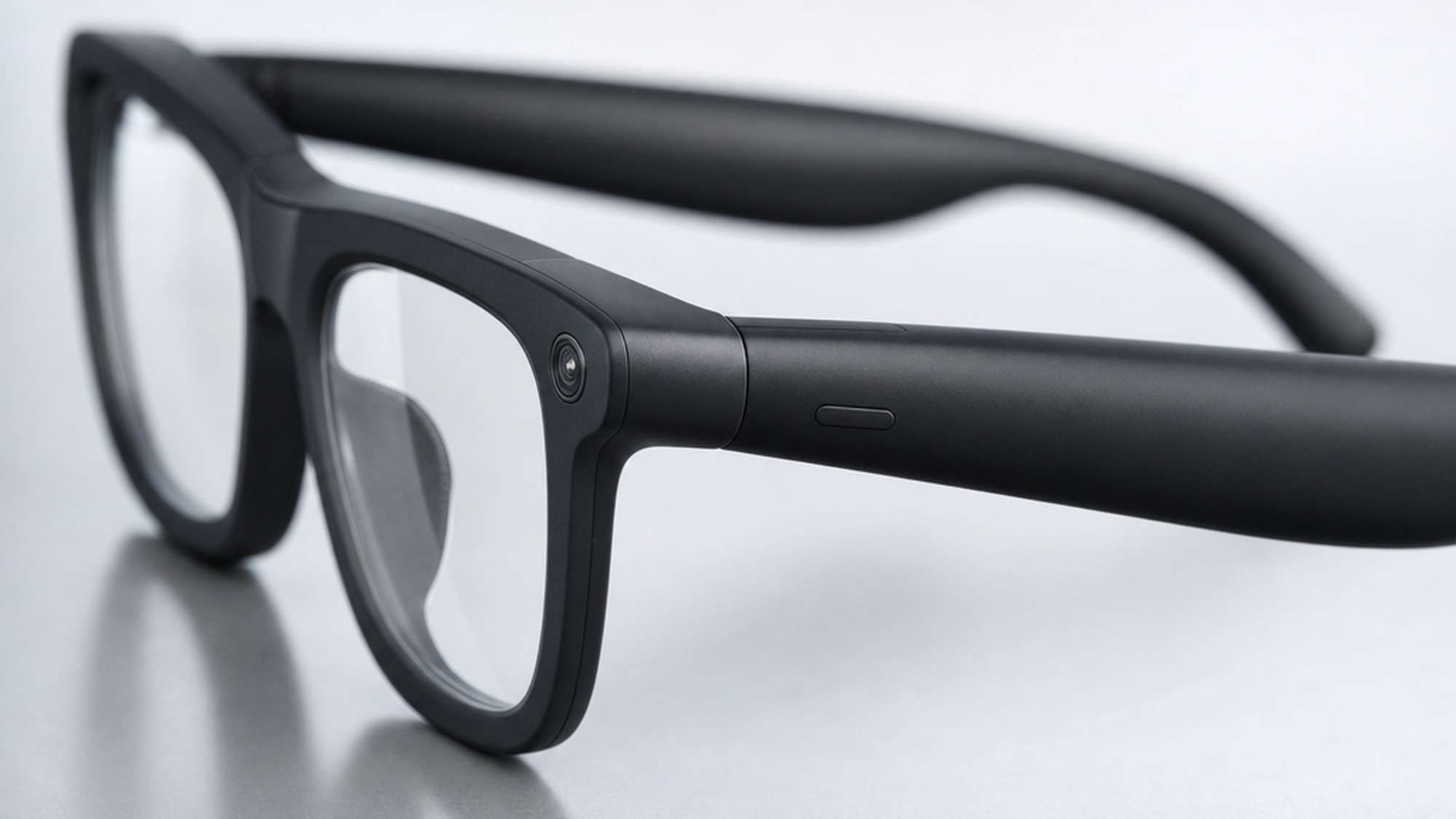
Buy the V4 if you want the lightest AI camera glasses on the market, you are comfortable with an app ecosystem that skews China first at launch, you do short form vertical video or first person POV recording glasses style content, and you value voice payments plus integrated services more than the absolute peak of camera resolution. Skip the V4 if you record long form video, you live primarily inside the US or EU app stack, or you want a glasses brand catalogue as broad as Ray Ban’s. The Meta Ray Ban Gen 2 remains the better global default in 2026, but for the first time, RayNeo is shipping a piece of hardware that is genuinely lighter, more durable, and more deeply integrated than the category leader at the same weight class.
The story the V4 tells about the next year of smart glasses is the more interesting one. The chase for camera resolution is converging, every major brand will ship 2.5K to 3K capture by the end of 2026. The differentiation is moving to weight, durability, sensor geometry and integrated services. RayNeo bet that 38 grams and IP67 and voice payments mattered more than catching Meta on megapixels. On the evidence of the launch hardware, that bet looks correct.
- Industry first 1:1 square OG09B sensor (1/2.9 inch) shoots 2.5K video natively in portrait or landscape with no cropping
- 38 grams of weight feels indistinguishable from regular eyewear for full day commute and creator use
- Bang and Olufsen co tuned dual speakers plus a 3 microphone array with bone conduction AI pickup
- Voice payments, weather, parcel tracking and calendar all respond within 0.2 seconds via the on board assistant
- IP67 dust and water rating with a semi solid battery good for 10.5 hours of music or 47 minutes of continuous recording
- 47 minutes of continuous video is short for long form vloggers who do not want to swap to a phone mid shoot
- Voice payment, parcel tracking and many lifestyle services are tied to a China first app ecosystem at launch
- No global English pricing yet, and the official RayNeo storefront still lists the older X3 Pro as the AI camera flagship
- 2.5K maximum video is one step behind the 3K capture mode Meta Ray Ban Gen 2 introduced in 2025
- Only 64 GB of onboard storage, half of what most action cameras offer for the same recording bitrate class
Frequently Asked Questions
What is RayNeo V4 and what makes it different from previous AI camera glasses?
RayNeo V4 is TCL RayNeo’s third generation AI camera glasses, launched on May 27, 2026. Three things separate it from the V3 and from rivals like Meta Ray Ban. First, it is the first wearable to use a 1:1 square image sensor, the OG09B at 1/2.9 inches, which lets the glasses record native 2.5K in both portrait and landscape with no letterboxing. Second, it pairs a Qualcomm AR1 chip with a dedicated Hengxuan BES2800 co processor so the AI assistant returns answers in 0.2 seconds rather than the 1 to 2 second wait that defined the first wave of AI glasses. Third, the body weighs 38 grams and carries IP67 protection, putting it in regular eyewear territory rather than action camera territory.
How do AI camera glasses capture first person photos and videos without holding a device?
RayNeo V4 mounts the camera at the right temple, aligned with your line of sight, so the image the lens sees is close to the image your eyes see. A single press of the temple button takes a photo, a one second long press starts or stops 2.5K video, and a three second long press cycles power. Touch gestures on the temple handle music and voice assistant control. The 17mm F2.2 lens covers roughly the same field of view as a smartphone main camera, which is wider than human central vision but narrower than a GoPro, so the frame matches what a viewer expects from a first person POV recording without the fish eye distortion most action cameras produce.
How do you set up and use RayNeo V4 smart glasses for daily vlogging and life logging?
Unbox, pair the glasses to the RayNeo companion app over Bluetooth, sign in to the cloud account, and grant calendar plus location permissions. From there the daily flow is simple. Press the temple button once for a still, long press for video, or say the wake phrase to ask the assistant to start recording with a context tag like a city name or a meeting label. Footage offloads to the app over Wi Fi when the glasses sit on the charging contacts, then you trim, voice over, and share. For life logging, the assistant can schedule a recurring capture trigger, for example a daily morning commute clip, so you never have to remember to start the camera.
RayNeo V4 vs Meta Ray Ban smart glasses: which is better for content creators?
According to Meta’s published spec sheet, Meta Ray Ban Gen 2 records 3K at 30 frames per second with a 12 megapixel sensor, weighs about 52 grams, and lives inside Meta’s app and Ray Ban frame catalogue. RayNeo V4 records 2.5K in landscape or portrait, weighs 38 grams, ships in four colorways including a sunglass variant, and runs a voice assistant that handles payments and parcel tracking out of the box. For creators in the US and EU, Meta Ray Ban still wins on ecosystem and resolution. For creators who want lighter glasses, native portrait video for short form platforms, and integrated voice payments and life services, RayNeo V4 is the more interesting tool, with the caveat that the broader app integration is China first at launch.
Are AI powered camera glasses worth buying for everyday commuters and creators?
The honest answer in 2026 is conditional. For commuters who already wear glasses or who would happily wear a 38 gram pair of frames, RayNeo V4 replaces a phone for music, navigation prompts, weather, payments and quick capture, which is a real quality of life upgrade. For creators, the value depends on the platform mix. Short form vertical video, vlog B roll and street photography benefit immediately. Long form sit down content does not, because 47 minutes of continuous recording and a phone tier sensor cannot replace a dedicated camera. The category passed the experimental phase, but it has not yet replaced anything more than the convenience layer of a smartphone.
Is RayNeo V4 waterproof and durable enough for outdoor and rainy day use?
RayNeo V4 carries an IP67 dust and water rating, a major step up from the IPX4 sweat resistance on the V3. IP67 means full dust protection and submersion up to one meter for 30 minutes, which covers heavy rain, splash from a beach or pool side, and accidental drops in a sink. The frame uses an adjustable silicone nose pad and a matte composite finish that resists scratching on a desk or in a bag. RayNeo does not recommend swimming with the glasses on, the lenses fog and the speakers muffle underwater, but for any outdoor or rainy day commute, IP67 is best in class for AI camera glasses in 2026.