⏱ 30-Second Verdict
The RayNeo Air 4 Pro is the first AR glasses to support HDR10, pairing a 1200-nit Micro-OLED display with Bang and Olufsen-tuned four-speaker audio at approximately $299-$319. It leads on display hardware but trails XREAL on software maturity.
✓ Pros
- World’s first HDR10 AR glasses with 1200-nit peak brightness – the most capable display hardware in this price category
- Bang and Olufsen-tuned four-speaker array with Whisper Mode reducing sound leakage by approximately 80% for shared-space use
- Lightest in class at 76.2g with broad USB-C compatibility covering Steam Deck, ROG Ally, Nintendo Switch, and USB-C iPhones
✗ Cons
- RayNeo OS software ecosystem is less mature than XREAL’s Nebula platform – a real gap for productivity-oriented users
- IPD calibration and initial fit require patience, with user-reported friction during setup that competitors handle more smoothly
- Nintendo Switch compatibility requires a USB-C adapter depending on model, adding a minor but notable friction point before purchase
The Pocket Cinema Realized
AR glasses have spent years promising a private cinema experience while consistently underdelivering on picture quality. The RayNeo Air 4 Pro changes that calculus in one specific, measurable way: it is the world’s first pair of AR glasses to support HDR10.
That is not a marketing claim borrowed from a spec sheet footnote. It represents a genuine hardware milestone in a category where most competitors are still shipping standard dynamic range displays at premium prices.
The question worth asking is whether HDR10 support alone justifies the purchase, or whether the full package, including audio, weight, and connectivity, earns the price tag.
Check out the hardware in action via ShortCircuit’s hands-on review:
Design & Comfort: The 76g Sweet Spot
At 76.2g (approximately 0.16 lbs, per official RayNeo specifications), the Air 4 Pro sits in a weight class that makes extended wear genuinely comfortable. Most competing AR glasses hover between 80g and 90g, and that gap matters across a two-hour film session.
Weight distribution is equally important. RayNeo has balanced the chassis so the nose bridge does not bear a disproportionate load, which is a common failure point in heavier designs.
Batman Edition (Justice) Aesthetics
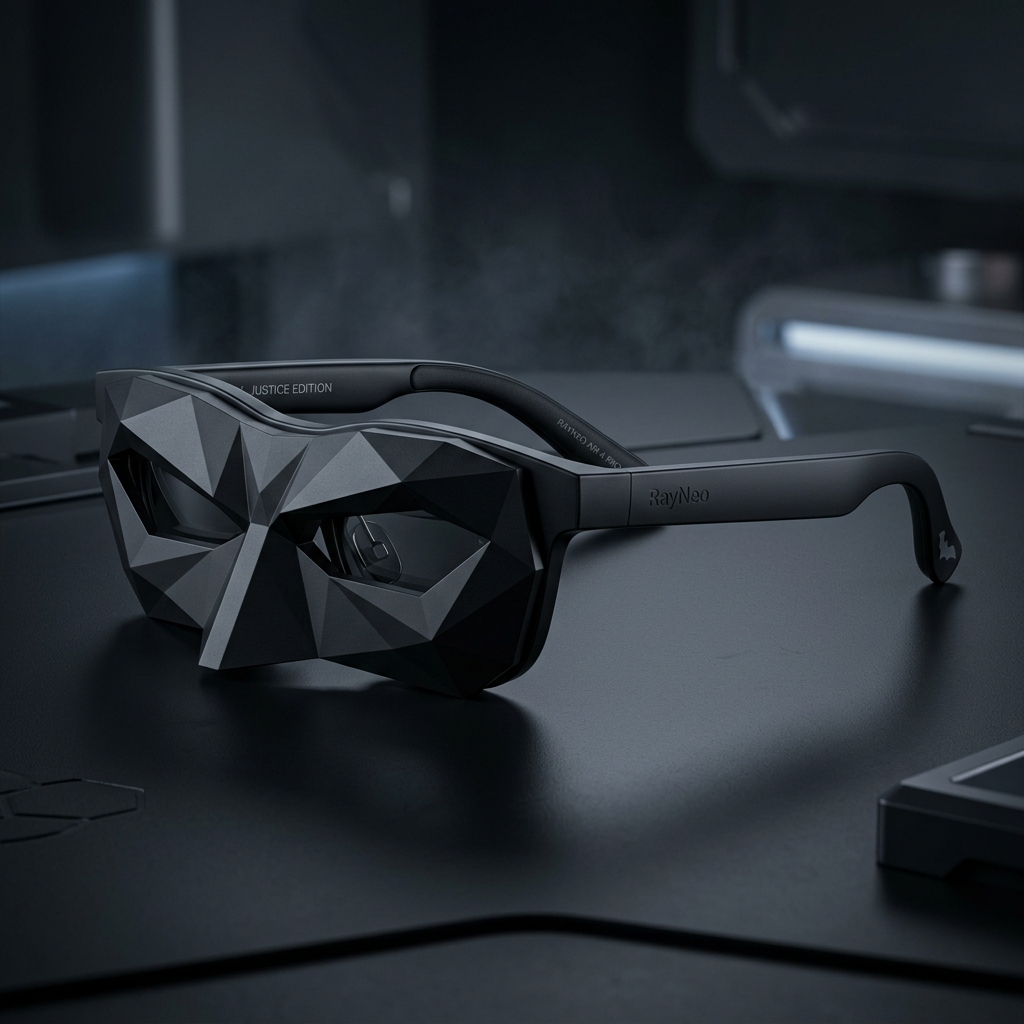
The Justice Edition is a licensed Batman collaboration, and the execution is more restrained than you might expect from a superhero tie-in.
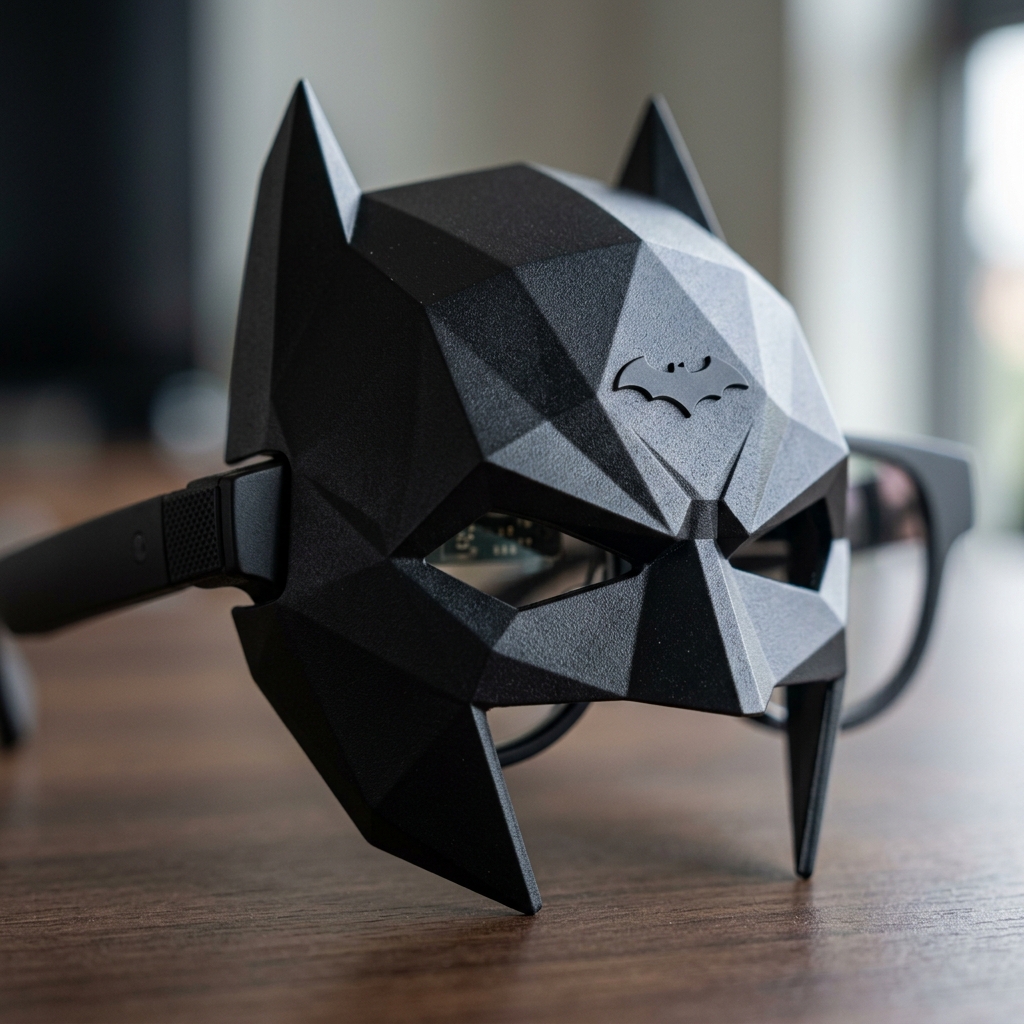
The frame uses a matte black deep coating. The removable light shield is styled as a low-polygon Batman mask, which functions as a practical light blocker while doubling as the edition’s signature visual element.
Accessories include a themed stand, Justice branding, and custom logo detailing. The overall aesthetic reads as premium rather than novelty, which is the right call for a device people will wear in public.
Display & Performance: HDR10 and 120Hz
The display hardware here is the 5.5-generation dual-layer Micro-OLED panel, one per eye, running at 1920×1080 resolution with full 3D support. These figures come from official RayNeo product documentation.
Peak brightness reaches 1200 nits, which RayNeo positions as an industry-leading figure for AR glasses. That claim holds up against current publicly available competitor specs.
Eye Protection: 3840Hz PWM Dimming
The panel uses 3840Hz PWM dimming, marketed under RayNeo’s Eye Comfort 2.0 designation. High-frequency PWM dimming reduces the flicker that causes eye strain during long sessions, a meaningful consideration for anyone planning extended use.
The 120Hz refresh rate keeps motion smooth during gaming and video playback. Combined with HDR10, the display pipeline is the most capable currently available in this form factor, based on publicly announced competitor specifications.
This level of display ambition in a wearable is comparable to what we are seeing in cutting-edge mobile display technology, as covered in our OPPO Find N6 Review: The Best Foldable of 2026?, where large-screen portability is pushing similar boundaries in a different device category.
Audio Immersion: Bang & Olufsen-Tuned Precision
The Air 4 Pro uses a four-speaker array tuned in partnership with Bang & Olufsen. That collaboration is confirmed in official product materials.
Open-frame AR glasses face an inherent audio challenge: sound leaks. RayNeo addresses this with two distinct modes.
Whisper Mode and Surround Mode
Whisper Mode is designed for shared spaces. According to RayNeo’s official claims, it reduces sound leakage by approximately 80%, making private viewing in a library or on public transit a realistic use case rather than an aspirational one.
Surround Mode prioritizes immersion over privacy, using the four-speaker layout to create a wider soundstage. For solo gaming sessions or home use, this is the mode that demonstrates what the B&O tuning actually contributes.
The combination of these two modes gives the Air 4 Pro practical flexibility that single-mode audio systems cannot match.
Practical Connectivity: Handhelds, Phones, and Handheld Consoles
The Air 4 Pro connects via USB-C, which keeps the setup simple and broadly compatible. No proprietary dongle is required for the core use cases.
Confirmed compatible devices include the Steam Deck, Nintendo Switch (via USB-C adapter), and iPhones with USB-C ports. This covers the primary handheld gaming and mobile viewing scenarios that the target audience cares about.
The Steam Deck and ROG Ally Use Case
User sentiment from early adopters is particularly strong around the Steam Deck pairing. The combination of the Air 4 Pro’s 120Hz panel and HDR10 output creates a portable gaming setup that is difficult to replicate at this price point.
The ROG Ally is similarly compatible. For context on how advanced sensor and display processing works in high-performance handheld contexts, our coverage of advanced vision-based sensor fusion in the vivo X300 Ultra illustrates how rapidly display and processing pipelines are converging across device categories.
Nintendo Switch compatibility requires a USB-C adapter depending on the Switch model, which adds a minor friction point worth noting before purchase.
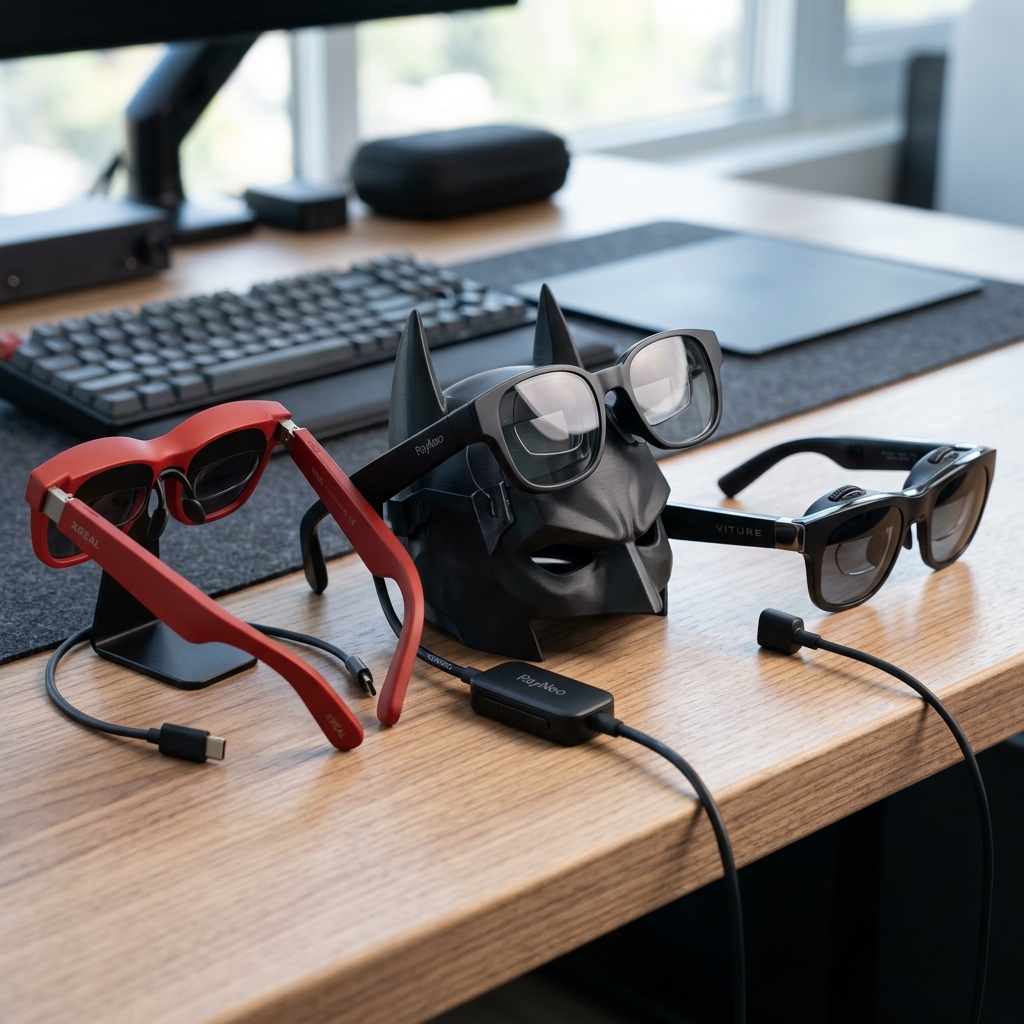
Direct Comparison: RayNeo Air 4 Pro vs. XREAL Air 2 vs. VITURE Pro XR
The table below compares the three primary competitors in the consumer AR glasses market. Source confidence is explicitly noted for each data point.
| Feature | RayNeo Air 4 Pro | XREAL Air 2 | VITURE Pro XR |
|---|---|---|---|
| Display Type | 5.5-gen Dual Micro-OLED | Micro-OLED | Micro-OLED |
| Resolution (per eye) | 1920×1080 | 1920×1080 | 1920×1080 |
| Refresh Rate | 120Hz | 120Hz | 60Hz / 120Hz (mode-dependent) |
| Peak Brightness | 1200 nits | ~600 nits | ~1000 nits |
| HDR10 Support | Yes (world’s first) | No | No |
| PWM Dimming | 3840Hz | Not specified | Not specified |
| Audio | 4 speakers, B&O tuned | 2 speakers | 2 speakers |
| Weight | 76.2g | ~79g | ~83g |
| Software Ecosystem | RayNeo OS | Nebula (stronger) | VITURE Space |
| Diopter Adjustment | Standard | Standard | Better range (estimated) |
| Price (USD, approx.) | ~$299-$319 | ~$349-$379 | ~$379-$429 |
| Batman Edition | Yes (Justice) | No | No |
Remark: Comparison data is based on official product specifications (RayNeo) and combined third-party retail estimates/benchmarks.
Comparison Verdict
The RayNeo Air 4 Pro wins on display technology and price. HDR10, 1200 nits, and 3840Hz PWM dimming are not available on either competitor at any price point, based on current official documentation.
XREAL Air 2 retains a meaningful advantage in software. The Nebula ecosystem is more mature, and for users who want a desktop-style spatial computing experience rather than a pure media viewer, that gap is real.
VITURE Pro XR offers better diopter adjustment range, which matters for users with stronger prescriptions. It is also the heaviest and most expensive of the three, which narrows its appeal.
On raw value, the RayNeo Air 4 Pro delivers the most capable display hardware at the lowest price. That is a straightforward conclusion supported by the spec data above.
Final Verdict: The Dark Knight of AR Glasses
The RayNeo Air 4 Pro is the most display-capable AR glasses available at this price point. The HDR10 milestone is real, the 1200-nit brightness is measurably ahead of competitors, and the Bang & Olufsen audio partnership produces a four-speaker system with genuine privacy utility.
The Justice Edition adds a well-executed Batman aesthetic without inflating the price beyond the standard model’s range.
Who Should Buy the RayNeo Air 4 Pro
Best overall pick for anyone prioritizing display quality. If you watch films, play on a Steam Deck or ROG Ally, or want the sharpest private screen available in this form factor, this is the correct choice.
Best value in the AR glasses category at approximately $299-$319 USD (third-party retail estimate), given the hardware specifications it delivers.
Buy if you: – Prioritize HDR10 and high-brightness display performance above all else. – Use a Steam Deck, ROG Ally, Nintendo Switch, or USB-C iPhone as your primary source device. – Want a lightweight (76.2g) frame for extended sessions. – Are a Batman fan who wants the Justice Edition’s aesthetic without paying a novelty premium.
Who Should Skip the RayNeo Air 4 Pro
Skip if you: – Need a mature spatial computing software ecosystem. XREAL’s Nebula is the better platform for productivity-oriented use. – Have significant diopter correction needs. VITURE Pro XR’s adjustment range may serve you better, per third-party user reports. – Require precise IPD alignment out of the box. Fit and IPD calibration are user-reported friction points that require patience during initial setup. – Are not primarily using this as a media viewer or gaming display. The Air 4 Pro’s strengths are display-centric, not compute-centric.
Frequently Asked Questions
Are the RayNeo Air 4 Pro the first AR glasses to support HDR10?
How does the RayNeo Air 4 Pro connect to the Steam Deck and Nintendo Switch?
What is the difference between Whisper Mode and Surround Mode on the Air 4 Pro?
How does the RayNeo Air 4 Pro compare to the XREAL Air 2 in price and features?
Is the Batman Justice Edition significantly more expensive than the standard RayNeo Air 4 Pro?
What is 3840Hz PWM dimming and why does it matter for AR glasses?
Should I buy the RayNeo Air 4 Pro or the VITURE Pro XR?

- RayNeo Air 4 Pro Review: World’s First HDR10 AR Glasses - April 4, 2026
- Floatboat AI Review: The 2026 ‘Agent-Native’ Workspace Guide - April 2, 2026
- PixVerse V6 Review: Testing 2026’s Fastest AI Video Generator - April 1, 2026