

DJI Lito X1 Review: A Beginner Drone That Actually Lets You Fly
Every new drone pilot faces the same paralysis: you’ve researched carefully, spent real money, and then – standing in an open field on a perfect day – you refuse to fly anywhere near the treeline. Not because the drone can’t handle it. Because you know a single collision ends everything.
Obstacle avoidance changes that calculus. And the DJI Lito X1, released in April 2026, delivers the most capable obstacle avoidance system ever put into an entry-level drone – combining omnidirectional visual sensing with a front-facing LiDAR sensor at a price that entry-level flyers can actually reach.
This review covers everything a first-time buyer needs to know: how the obstacle avoidance works in practice, whether the camera holds up at night, what the real battery life looks like, and how the X1 stacks up against its cheaper sibling (the Lito 1) and the established Mini 4 Pro benchmark.
What Is the DJI Lito X1?
The DJI Lito X1 is the high-end variant of DJI’s new Lito series – a purpose-built beginner line that replaces the Mini series as DJI’s entry point for aspiring aerial photographers. Where the base Lito 1 targets pure budget buyers, the X1 upgrades the sensor to 1/1.3-inch 48 megapixels, adds a front-facing LiDAR to the obstacle avoidance system, and extends video recording to 4K/60fps HDR.
At 249 grams, the Lito X1 sits just below the 250-gram registration threshold that applies in China and simplifies recreational flying rules in several other markets. The sub-250g targeting is deliberate: DJI wants new pilots to open the box, charge the battery, and fly – with no paperwork between them and their first flight.
Key specifications:
| Specification | DJI Lito X1 |
|---|---|
| Weight | 249 g |
| Sensor | 1/1.3-inch, 48 MP |
| Video | 4K/60fps HDR, 4K/100fps |
| Battery | 36 min rated / 26–30 min real-world |
| Max Speed | 18 m/s (Sport mode) |
| Transmission | O4, up to 15 km |
| Obstacle Avoidance | Omnidirectional + front-facing LiDAR |
| Built-in Storage | 42 GB + Micro SD |
| Transfer Speed | Wi-Fi 6, ~50 MB/s |
| Color Mode | 10-bit D-Log M |
| Charging | USB-C fast charge |
The Flight Combo (畅飞套装) bundles three batteries and the RC2 screen remote at approximately ¥3,988 (~$550 USD). For most buyers, this is the right configuration – three batteries cover a full morning shoot, and the RC2’s built-in screen eliminates the phone-mounting step that adds friction to every pre-flight routine.
Obstacle Avoidance: How the LiDAR + Omnidirectional System Works
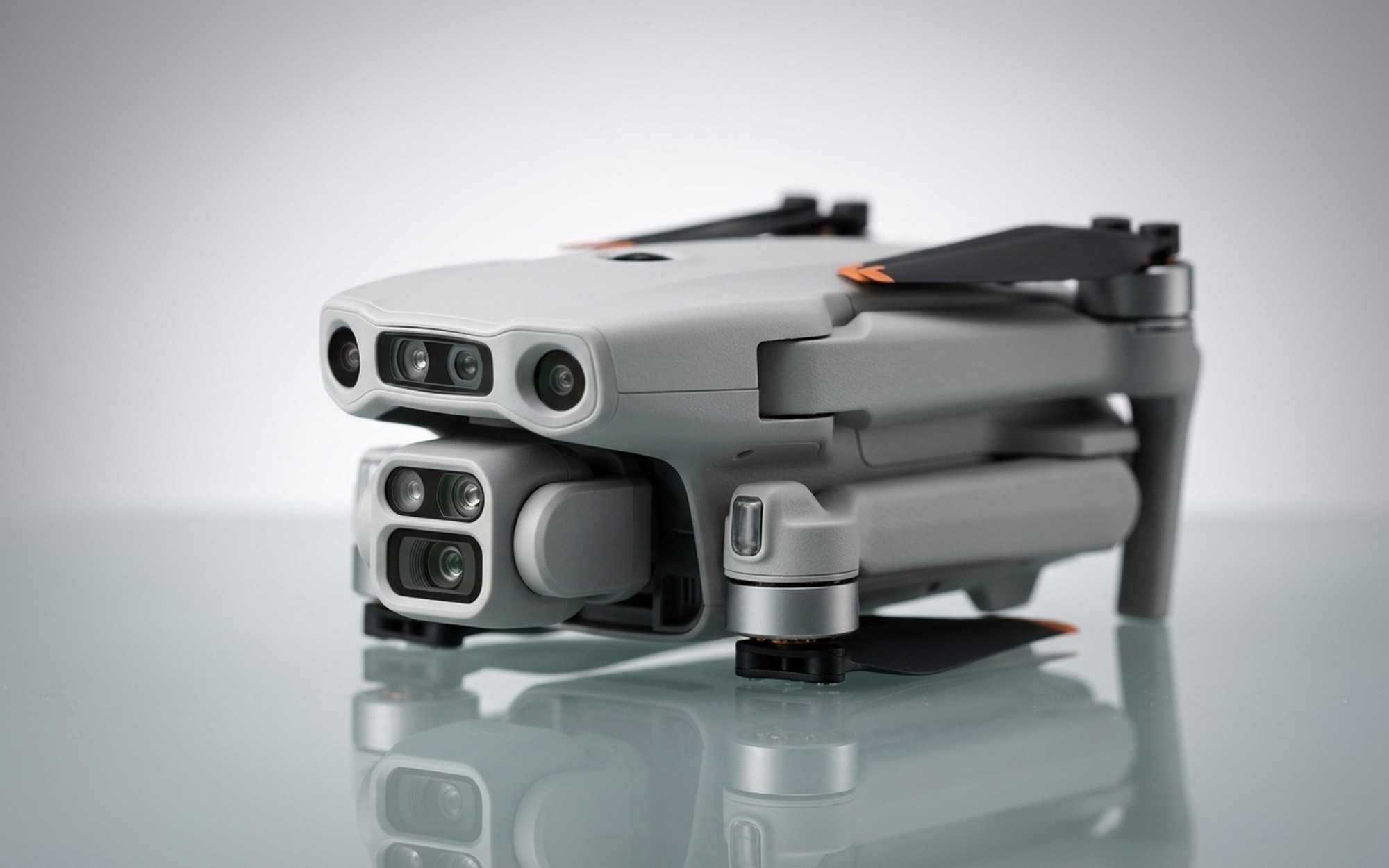
Most beginner drones offer obstacle avoidance. The DJI Lito X1 offers better obstacle avoidance – and the difference comes down to one sensor: the front-facing LiDAR.
Omnidirectional visual sensing covers all six directions: front, rear, left, right, up, and down. Camera-based sensors on each face capture depth information and trigger automatic braking when objects enter the safety margin. This system is well-established on DJI drones and handles the majority of crash scenarios – flying into a building, drifting into overhead power lines, or backing into a tree during a tracking shot.
Front-facing LiDAR does something cameras cannot: it measures distance by firing laser pulses and timing their return, producing accurate depth readings regardless of lighting conditions. When you’re flying at dusk and the camera sensors struggle to distinguish a dark branch from a dark sky, the LiDAR reads the physical gap with the same precision it would at noon.
For the beginner drone audience specifically, this matters more than it might on a professional aircraft. New pilots fly in more varied and less planned conditions. They lose track of ambient light levels while focused on a tracking shot. They push boundaries they don’t fully understand yet. The front LiDAR is a hardware safety net that operates when conditions work against the pilot – not just when conditions are ideal.
In AI tracking mode, both systems run simultaneously at subject follow speeds up to 12 m/s. When an obstacle enters the drone’s path during a tracking sequence, the Lito X1 routes around the obstruction rather than stopping in place – continuing the shot rather than interrupting it. For solo creators filming themselves, this means the tracking sequence that would have crashed a lesser drone simply continues.
One important limitation: obstacle avoidance is disabled in Sport mode, consistent with DJI’s policy across its lineup. At 18 m/s, the processing latency between detection and braking would be insufficient to prevent collision – so Sport mode is for open-sky flight only.
Camera: 4K/60fps HDR and Night Flying
The 1/1.3-inch sensor is the Lito X1’s camera story in one number. A larger sensor captures more light per pixel, produces cleaner shadows, and handles the high-dynamic-range scenes – bright sky, dark ground – that define most outdoor aerial photography.
Video capabilities:
– 4K/60fps HDR – the primary recording mode for content creation
– 4K/100fps – standard recording at higher frame rate for slow-motion edits
– 10-bit D-Log M – flat log format for maximum post-processing latitude
– 48-megapixel stills
The 10-bit D-Log M inclusion is worth flagging specifically. Log color recording is a professional workflow feature that was unavailable on entry-level drones until very recently. It records in a compressed, desaturated color space that preserves tonal information that standard color profiles clip. For creators who edit their footage rather than posting it straight from the drone, D-Log M provides a meaningfully wider starting point for color grading.
Night flying is where the LiDAR and sensor work together. The 1/1.3-inch sensor gathers more photons per pixel than smaller units, producing cleaner footage when ambient light is low. The LiDAR simultaneously maintains full obstacle detection accuracy even when the visual sensors’ reliability is degraded by darkness. The combination makes the Lito X1 specifically capable in the blue-hour window – the 30 minutes before and after sunset that produces the most dramatic aerial footage but is also when most crash incidents with camera-only obstacle avoidance occur.
According to DJI’s official Lito series product page, night scene performance is rated comparable to DJI Mini 4 Pro – the previous benchmark for beginner-tier image quality.
Flight Performance: 249g, Real Battery Life, and 15km Reach
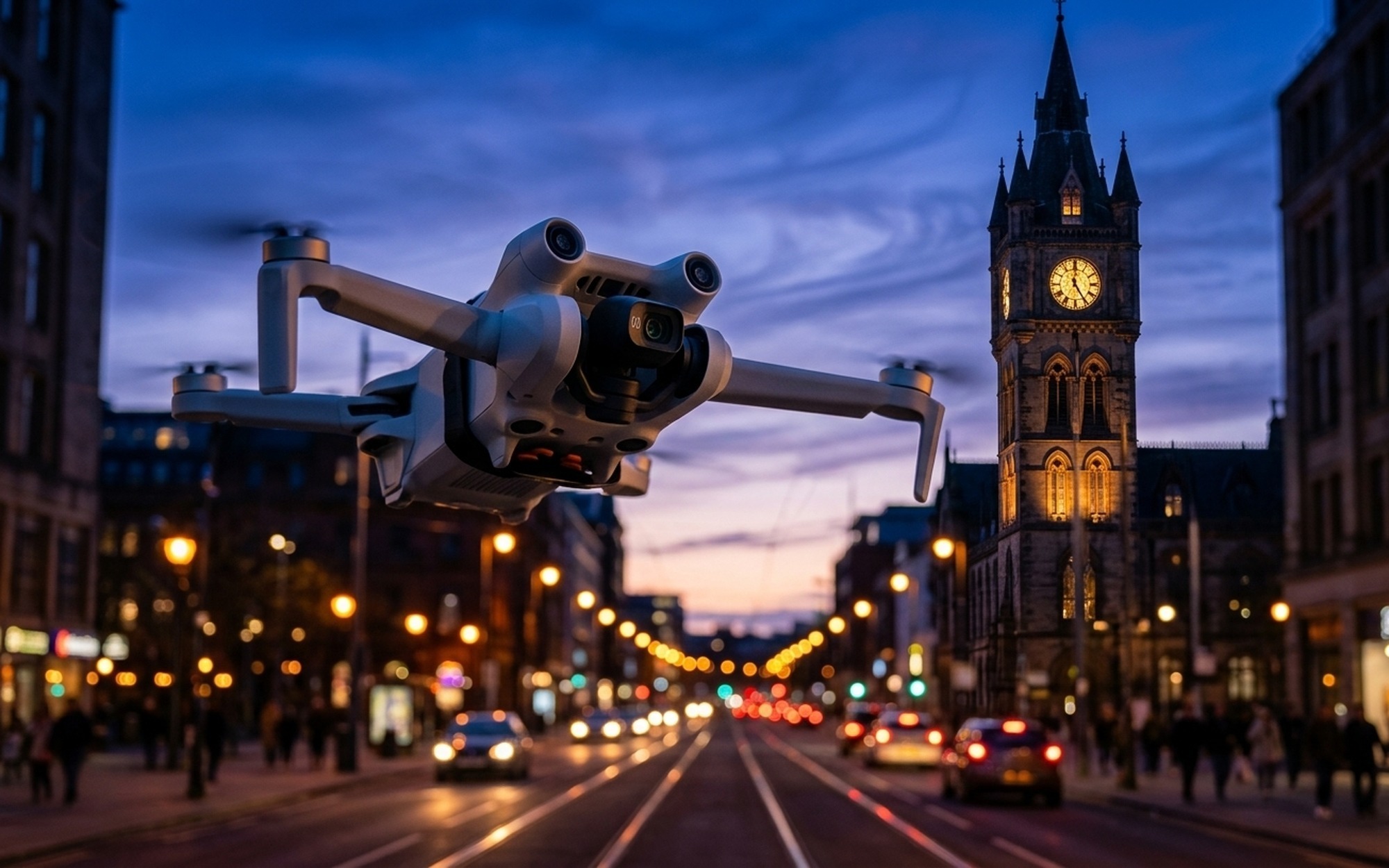
The 249-gram weight is a practical number before it is a regulatory one. A 249g drone in a shoulder bag adds almost no carry burden – you’ll bring it because it costs nothing not to, which is exactly the frequency of use that justifies a camera drone purchase.
Battery life: The 36-minute rated figure assumes hover, no wind, no active AI tracking, no obstacle avoidance processing load, and no fill light. In realistic flying – tracking mode active, some directional movement, light breeze – expect 26 to 30 minutes. Three batteries from the Flight Combo give approximately 80–90 minutes of real flight time. Charging from empty takes roughly 60–75 minutes via USB-C; no proprietary hub is required.
Transmission: O4 protocol provides up to 15 kilometers of maximum transmission range and streams live video to the RC2 remote at low latency. The RC2 remote’s built-in display eliminates phone mounting at launch – a friction point that’s easy to underestimate until you’ve fumbled with a clamp in cold weather or when you have 10 minutes before golden hour ends.
Built-in storage: The 42GB of onboard flash is one of the Lito X1’s most practical features for beginners. Running out of Micro SD space mid-session has derailed more first flights than low battery warnings. The built-in storage ensures the drone keeps recording even when you forget the card or fill it with sample footage you forgot to clear. Wi-Fi 6 transfer at ~50 MB/s makes offloading the storage faster than most laptop SD card readers.
AI tracking and smart modes run from the drone’s onboard processor without continuous app dependency. Subject recognition covers people, vehicles, animals, and arbitrary objects – broader than the face-only tracking on older DJI entry-level drones. The DJI Fly app unlocks additional creative shooting modes including automated hyperlapse, orbit, and waypoint programming.
DJI Lito X1 vs. Lito 1 vs. DJI Mini 4 Pro
| Feature | DJI Lito X1 | DJI Lito 1 | DJI Mini 4 Pro |
|---|---|---|---|
| Sensor | 1/1.3-inch, 48 MP | Smaller sensor | 1/1.3-inch, 48 MP |
| Video | 4K/60fps HDR | 4K/30fps | 4K/60fps HDR |
| Obstacle Avoidance | Omnidirectional + front LiDAR | Basic omnidirectional | Omnidirectional |
| Front-Facing LiDAR | Yes | No | No |
| Weight | 249 g | 249 g | 249 g |
| Battery (rated) | 36 min | ~30 min | 34 min |
| Built-in Storage | 42 GB | Limited | None |
| Transmission | O4, 15 km | O3 | O4, 20 km |
| 10-bit Log Color | Yes (D-Log M) | No | Yes (D-Log M) |
| Flight Combo Price | ~¥3,988 (~$550) | ~¥1,999 (~$275) | ~¥4,599 (~$630) |
| Best For | Beginner wanting top safety + quality | Budget-first entry level | Intermediate upgrade |
The comparison with the DJI Mini 4 Pro is instructive. Both drones share the same sensor class and 249g frame. The Mini 4 Pro has a longer transmission range (20km vs. 15km) but lacks the front LiDAR. For a beginner deciding between them, the Lito X1’s safety hardware advantage is more relevant than the Mini 4 Pro’s range extension – most beginners will never push 15 kilometers, but most beginners will encounter an obstacle they misjudged.
The Lito 1 is the right choice only if budget is the overriding constraint. At ¥1,999, it offers a beginner-friendly body and basic omnidirectional avoidance, but gives up the 1/1.3-inch sensor, LiDAR, 4K/60fps HDR, and the 42GB storage. For anyone who intends to actually use the footage, the step up to the X1 is worth it.
Who Should Buy the DJI Lito X1?
The Lito X1 is the right drone for a specific type of buyer: someone entering aerial photography with genuine creative intent, enough budget to do it properly, and no interest in paying a professional to follow them around.
The Lito X1 is the right choice if:
– You are new to drone flying and want the safest possible system for the learning phase
– You plan to fly in varied conditions – forested areas, urban environments, low-light sessions
– You intend to edit your footage rather than post it straight from the drone
– Solo self-filming with AI tracking is a regular use case
Consider the Lito 1 instead if:
– Budget is the hard constraint and you’ll fly only in open, low-risk environments
– You don’t need 4K/60fps or log color recording
Consider the Mini 4 Pro instead if:
– You already have drone experience and don’t need the beginner safety feature set
– Long-range transmission beyond 15km is specifically required
Final Verdict
The DJI Lito X1 is the best drone for beginners in 2026, and it earns that title specifically because of what it does when things go wrong. The omnidirectional + front LiDAR obstacle avoidance system is the most capable safety hardware at this price, the 249g frame removes the first barrier (registration), and the 1/1.3-inch sensor gives the footage real value beyond learning flights.
For anyone standing at the drone market’s entry point in 2026, the choice used to be: buy a capable drone and accept real crash risk, or buy a safer drone and accept a worse camera. The DJI Lito X1 removes that trade-off. It is both the safest beginner drone and one of the best-imaging ones – a combination that simply did not exist at this price before this launch.
- Omnidirectional obstacle avoidance + front-facing LiDAR for safer low-light flying
- 1/1.3-inch 48MP sensor with 4K/60fps HDR and 10-bit D-Log M color
- 249g frame stays below registration thresholds in multiple markets
- 42GB built-in storage eliminates mid-session card swap worries
- AI subject tracking at up to 12 m/s with simultaneous obstacle avoidance active
- Real-world flight time (26–30 min) significantly lower than DJI’s 36-min rated figure
- Obstacle avoidance disabled in Sport mode — a common DJI limitation worth noting
- Global pricing and availability not yet confirmed at time of writing
- 10-bit D-Log M requires post-processing knowledge to use effectively
Frequently Asked Questions
What is the best beginner drone with obstacle avoidance?
In 2026, the DJI Lito X1 is the best beginner drone with obstacle avoidance. It combines omnidirectional visual sensing with a front-facing LiDAR sensor — a hardware combination previously only found on higher-end drones. The LiDAR is especially important for low-light flying, where visual sensors alone struggle to detect dark obstacles like tree branches against a shadowed background. Paired with a 249g frame, 4K/60fps HDR camera, and 36-minute rated battery, it offers the most complete safety and imaging package available at its price point.
Does the DJI Lito X1 have obstacle avoidance?
Yes — the DJI Lito X1 has a full omnidirectional obstacle avoidance system covering front, back, left, right, up, and down directions. It also adds a front-facing LiDAR sensor on top of the standard visual sensing array. The LiDAR uses laser pulses to measure distances regardless of lighting conditions, making it effective even at dusk or dawn when camera-based sensors lose accuracy. Obstacle avoidance is active during autonomous tracking modes up to 12 m/s, but is disabled in Sport mode — consistent with DJI’s broader product lineup.
Is there a beginner drone that is safe to fly at night?
Yes — the DJI Lito X1 is currently the most beginner-friendly drone for low-light and near-dark conditions. Two features specifically address night flying safety: the front-facing LiDAR sensor detects obstacles by laser measurement rather than image analysis, maintaining obstacle detection accuracy in low light where camera-based sensors fail; and the 1/1.3-inch 48MP sensor collects significantly more light per pixel than smaller sensors, producing usable footage at dusk and early dawn. Note that legal night flying requirements vary by country and aviation authority — always verify local regulations before flying at night.
Is the DJI Lito X1 good for beginners?
The DJI Lito X1 is designed specifically for beginners with serious ambitions. The 249g weight means no registration paperwork in many markets, letting new pilots get airborne the same day the drone arrives. The omnidirectional + LiDAR obstacle avoidance system is the most capable safety net available at this price, catching errors that would destroy a lesser drone. The 4K/60fps camera, 10-bit D-Log M, and AI tracking give the drone meaningful room to grow with the pilot’s developing skills — you won’t outgrow the camera before you outgrow the drone.
How long does the DJI Lito X1 battery last?
DJI rates the Lito X1 at 36 minutes per charge under controlled conditions (hovering, no wind, no active tracking or fill light). In real-world use — active AI tracking, varied speed, typical wind — expect 26 to 30 minutes per battery. The 畅飞套装 (Flight Combo) includes three batteries, giving approximately 80–90 minutes of total flight time per outing. The drone uses USB-C fast charging; no proprietary charging hub is required.