

Augmented reality was once science fiction, reserved for Iron Man’s heads-up display or the holographic maps of Minority Report. In 2026, it is a practical, commercially proven technology embedded in your smartphone apps, your workplace, and an expanding range of consumer glasses. The global AR market is valued at over $140 billion this year and is projected to reach $2.3 trillion by 2034.
Whether you are curious about what AR actually is, looking for the best AR apps to try today, or researching AR glasses and enterprise use cases, this guide covers everything you need to know.
What Is Augmented Reality?
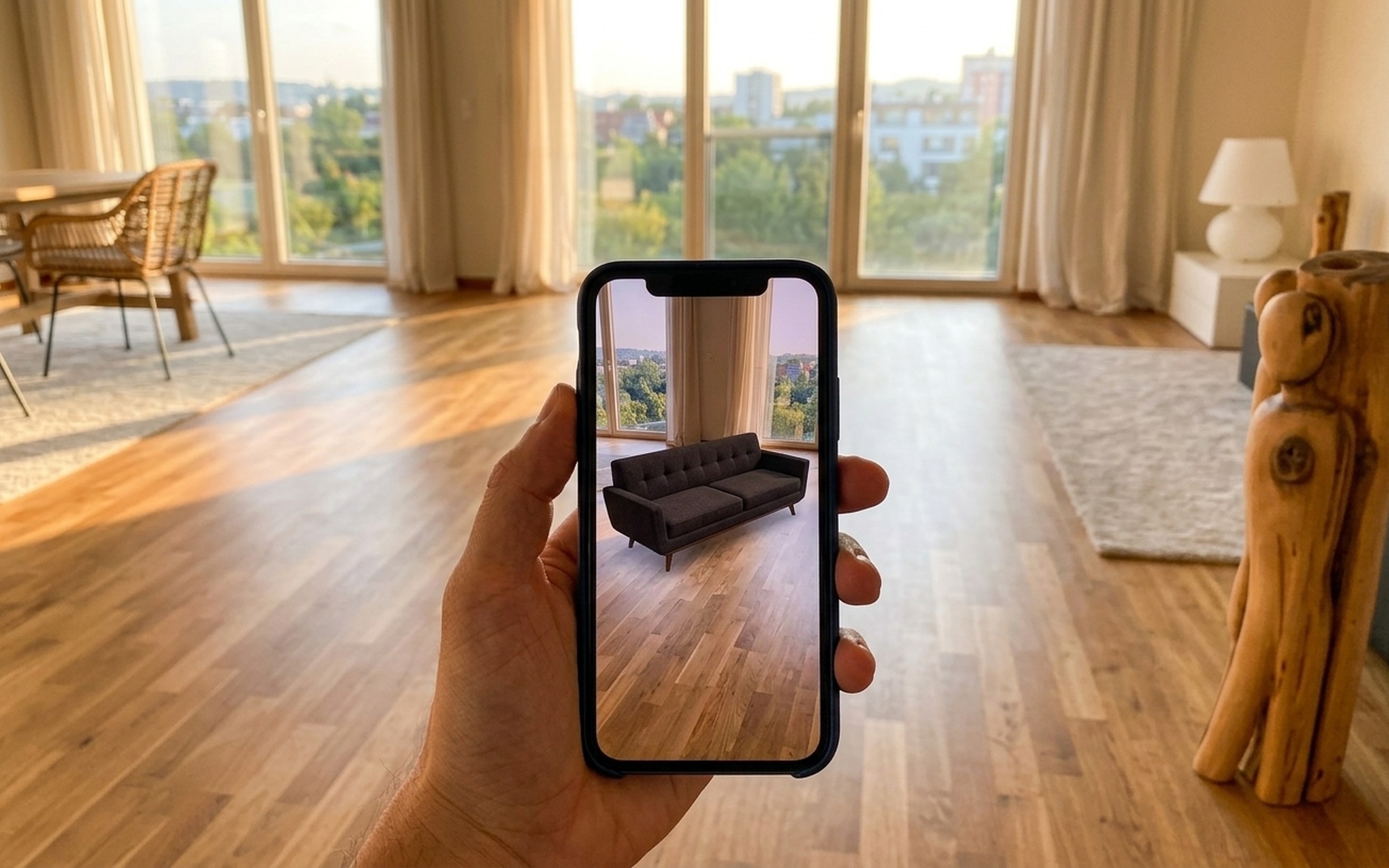
Augmented reality is technology that overlays digital content, such as images, text, 3D models, or audio, onto the real physical world. Unlike virtual reality (VR), which immerses you in a completely digital environment, AR keeps you grounded in your surroundings and simply adds a layer of information or visual enhancement on top.
You experience AR through several types of hardware:
- Smartphones and tablets: The most accessible entry point. Your camera feed becomes the canvas for AR content.
- Smart glasses: Lightweight wearables like Meta Ray-Ban Display or Xreal One that project visuals into your field of view.
- AR headsets: More powerful devices like Microsoft HoloLens 2 or Apple Vision Pro 2 used in enterprise and spatial computing.
- Heads-up displays (HUD): Built into vehicles, military equipment, or industrial machinery.
The underlying technology typically involves computer vision, simultaneous localization and mapping (SLAM), depth sensing, and GPU rendering to align virtual objects with real-world surfaces in real time.
AR vs. VR vs. Mixed Reality: Key Differences
These three terms are often used interchangeably, but they describe meaningfully different experiences.
| Technology | What You See | Real World Visible? | Example Devices |
|---|---|---|---|
| AR (Augmented Reality) | Real world + digital overlay | Yes | Xreal One, Meta Ray-Ban |
| VR (Virtual Reality) | Fully virtual environment | No | Meta Quest 3S, PlayStation VR2 |
| MR (Mixed Reality) | Digital objects anchored to real surfaces | Yes | Microsoft HoloLens 2, Apple Vision Pro 2 |
Spatial computing is the broader umbrella term emerging in 2026, describing how computers understand and interact with three-dimensional physical space. Apple popularized the phrase with Vision Pro, but the concept applies across the entire XR spectrum.
If you want a deeper look at immersive VR hardware, check out our PlayStation VR Tips and Setup Guide.
How Augmented Reality Works
AR systems fall into four main categories based on how they detect and anchor digital content:
- Marker-based AR: Uses QR codes or image targets. The camera reads the marker and places a 3D object on top of it. Common in packaging, business cards, and print media.
- Markerless (location-based) AR: Uses GPS, accelerometers, and compasses to place content based on your physical location. Pokémon Go is the most famous example.
- Surface detection AR: Computer vision identifies flat horizontal or vertical surfaces and anchors objects to them. IKEA Place uses this so a virtual sofa sits realistically on your actual floor.
- Face and body tracking AR: Recognizes facial features or body pose to apply filters and effects. This powers every Snapchat lens and Instagram AR filter.
Developer platforms like Apple ARKit and Google ARCore have standardized how AR is built for iOS and Android, making it easier than ever for developers to ship high-quality AR experiences.
A Brief History of Augmented Reality
AR is older than most people realize. Ivan Sutherland created the first head-mounted display at Harvard University in 1968, a bulky device called the Sword of Damocles that superimposed wireframe geometry onto a user’s view of a room.
Research expanded through the 1980s and 1990s, primarily in military, aerospace, and surgical applications. The term “augmented reality” was coined by Boeing researcher Tom Caudell in 1992 to describe a digital display system used in aircraft assembly.
The smartphone era changed everything. When Apple released the iPhone in 2007, it delivered the processing power, camera quality, and GPS accuracy needed to make mobile AR commercially viable. The 2010s brought ARKit, ARCore, Pokémon Go’s viral moment in 2016, and the first wave of consumer smart glasses.
The 2020s have seen AR graduate from novelty to infrastructure, used in Fortune 500 factories, operating theatres, and retail apps serving hundreds of millions of users.
Augmented Reality Examples in 2026
AR is no longer a futuristic demo. Here are the most impactful real-world augmented reality examples across different industries:
Retail and shopping: IKEA Place lets you point your phone at any room and drop in true-to-scale 3D furniture models before you buy. Retailers using AR report up to 94 percent higher conversion rates and a 30 to 40 percent reduction in product returns.
Navigation: Google Maps Live View uses AR to overlay arrows and street names directly onto your camera feed while walking, eliminating the confusion of trying to reconcile a 2D map with a 3D street.
Healthcare: Surgeons use AR headsets to overlay real-time anatomical scans, patient vitals, and surgical plans directly onto the operating field. This enhances precision and reduces the need to look away from the patient.
Education: Apps like Complete Anatomy let medical students virtually dissect human body systems in 3D. Star Walk 2 turns any ceiling or open sky into a navigable star map.
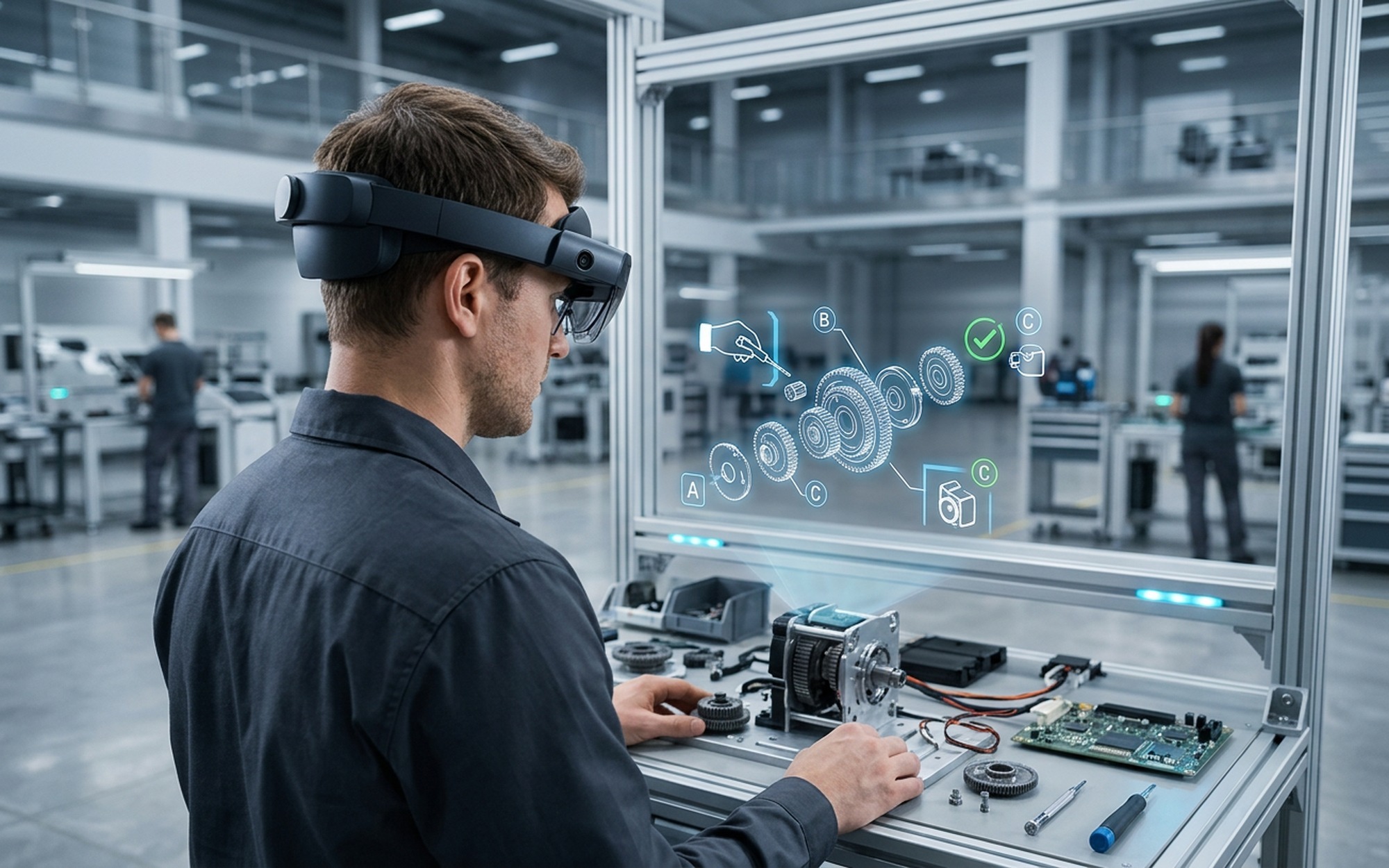
Manufacturing: Boeing and Airbus use AR to guide aircraft wiring assemblies, reducing preparation time from hours to minutes and cutting errors significantly. XR device shipments for industrial use grew over 40 percent year-over-year in 2025.
Top AR Apps You Can Use Right Now
You do not need specialized hardware to experience augmented reality today. These are among the best AR apps available in 2026:
- IKEA Place (iOS, Android): Visualize furniture in your home with accurate scale and lighting.
- Google Translate (iOS, Android): Point your camera at text in any language for instant AR translation.
- Star Walk 2 (iOS, Android): Identify stars, planets, and constellations in real time by pointing at the sky.
- Mondly AR (iOS, Android): Language learning with 3D characters and conversational AR scenarios.
- Pokémon Go (iOS, Android): Still the most played location-based AR game worldwide with regular updates.
- PianoVision (Meta Quest, Vision Pro): Mixed-reality piano teaching app that overlays notes onto real piano keys.
- Measure (iOS): Apple’s built-in AR ruler that measures real-world objects with your camera.
See also our hands-on review of Xreal One AR Glasses with Screen Stabilization for the next level beyond smartphone AR.
AR Glasses and Hardware in 2026
Consumer AR glasses have moved from prototype to product category. Here is where the hardware landscape stands in 2026:
Xreal One: Launched in late 2024, the Xreal One features proprietary screen stabilization (Micro-SLAM) that keeps the display fixed in space as you move your head. It connects to smartphones, laptops, and gaming consoles. Priced around $500.
Meta Ray-Ban Display: Building on the successful Ray-Ban Smart Glasses, Meta’s display model adds a small transparent screen to familiar sunglass frames. Designed for everyday wear with an integrated AI assistant. Priced around $400.
Asus ROG x Xreal R1: Announced at CES 2026, targeting gamers with a 240Hz display for smooth motion and low latency. The most performance-focused consumer AR glasses to date.
Apple Vision Pro 2: The M5-powered second generation is Apple’s premium spatial computing platform at $3,499. Approximately 3,000 apps are built specifically for visionOS, covering productivity, entertainment, and enterprise. The Vision Pro 2 delivers up to 2x faster AI workloads than its predecessor.
Microsoft HoloLens 2: The enterprise benchmark for hands-free AR in manufacturing, surgery, and field operations. Not consumer-priced, but the device most widely deployed in large organizations.
For budget buyers, personal cinema glasses from Xreal, Viture, and others offer a large virtual screen experience starting around $200, though these lack the full spatial AR capability of higher-end models.
Enterprise Augmented Reality: Business Use Cases
Enterprise AR is arguably the most mature and economically significant segment of the market today. Businesses adopting AR report measurable gains across multiple functions:
Manufacturing and assembly: AR overlays step-by-step instructions in a worker’s field of view, reducing assembly errors and training time by up to 50 percent. Companies like Boeing, Volkswagen, and Walmart have deployed AR at scale.
Remote assistance: Field technicians can share their camera feed with remote experts who annotate what they see in real time using AR markers. This replaces expensive on-site visits for routine repairs.
Quality inspection: AR systems highlight defect zones on physical products by comparing the real object to its CAD model, flagging anomalies automatically.
Logistics and warehousing: Warehouse workers wearing AR glasses receive real-time pick-path navigation and inventory information, reducing picking errors and speeding fulfillment.
Medical training and surgery: Surgical teams use AR to overlay 3D anatomy scans onto patients during procedures. Medical students train with virtual patient simulations before touching a real patient.
The global AR market is projected to grow at a CAGR of over 31 percent through the late 2020s, with enterprise applications driving the majority of revenue.
Spatial Computing and the Road Ahead
The phrase “spatial computing” reflects a fundamental shift: computers are no longer confined to flat screens. They are beginning to understand and inhabit three-dimensional space alongside us.
Apple Vision Pro popularized the term, but the concept spans all XR hardware. As devices become lighter, more powerful, and more affordable, spatial computing will progressively replace many interactions we currently have with phones and monitors.
Key trends shaping AR’s near future:
- AI integration: Large language models are being embedded into AR glasses, enabling voice-driven contextual information about whatever you are looking at.
- Android XR: Google’s platform, developed with partners including Xreal and Samsung, aims to bring a standardized Android ecosystem to AR glasses by late 2026, making affordable options more plausible.
- Lightweight optics: Waveguide display technology is improving rapidly, enabling thinner lenses that look closer to ordinary glasses.
- 5G and edge computing: Offloading heavy computation to edge servers reduces the processing burden on the glasses themselves, extending battery life and shrinking device size.
AR is no longer a question of whether it will become mainstream. The question is how quickly the hardware can reach the form factor and price point that will make AR glasses as natural a purchase as smartphones.
- Enhances the real world without full isolation from your surroundings
- Massive app ecosystem available on iOS and Android right now
- Consumer AR glasses are becoming more affordable and stylish in 2026
- Proven, measurable ROI in enterprise, healthcare, and manufacturing
- Premium AR headsets like Apple Vision Pro 2 remain expensive at $3,499
- Battery life on wearable AR glasses is still limited to a few hours
- Privacy concerns persist from persistent camera and location tracking
- Field of view on most consumer AR glasses remains narrower than expected
Frequently Asked Questions
What is augmented reality in simple terms?
Augmented reality (AR) is technology that adds digital visuals, sounds, or information on top of what you see in the real world, usually through a smartphone camera or smart glasses. Unlike virtual reality, which replaces your surroundings entirely, AR keeps you aware of the physical world while enhancing it with useful or entertaining digital content.
What are some popular augmented reality examples?
Well-known AR examples include IKEA Place (visualize furniture in your home), Pokémon Go (location-based AR gaming), Snapchat and Instagram AR filters, Google Translate’s live camera translation, and Star Walk 2 for stargazing. In enterprise settings, Boeing uses AR for aircraft wiring, and Walmart uses AR glasses for warehouse navigation.
How is augmented reality different from virtual reality?
AR overlays digital content onto the real world, so you can still see and interact with your physical environment. VR replaces your surroundings with a fully virtual environment, requiring a headset that blocks out the real world. Mixed reality (MR) sits in between, anchoring digital objects to real-world surfaces so they respond to your physical space.
What AR glasses are available in 2026?
In 2026, notable AR glasses include the Xreal One (with screen stabilization technology reviewed on Reviewstown), the Asus ROG x Xreal R1 (240Hz gaming-focused display), Meta Ray-Ban Display (fashion-forward with AI assistant), and Apple Vision Pro 2 (premium spatial computing at $3,499). Budget options start around $200-$300 for personal cinema-style glasses.
How is augmented reality used in business?
Enterprises use AR for guided assembly and quality inspection in manufacturing, remote expert assistance in field operations, surgical planning in healthcare, virtual try-ons in retail, and employee training simulations. Companies report 30 to 60 percent productivity gains in assembly tasks using AR-guided instructions, and retailers see up to 94 percent higher conversion rates with AR product visualization.