
Smart home technology gets sold on convenience and design. But for most homeowners, the real question is simpler: does it actually cut my bills?
The answer is yes – if you buy the right devices. The wrong ones collect dust. The right ones pay for themselves within a year and keep saving money for a decade. This guide covers every category that delivers measurable returns, with real numbers on annual savings and payback periods updated for 2026.
Smart Thermostats: The Highest-ROI Upgrade
Heating and cooling accounts for roughly 50% of the average American home’s energy bill. That makes your thermostat the single most impactful device to upgrade – nothing else comes close per dollar spent.
Modern smart thermostats go well beyond simple scheduling. The Ecobee Smart Thermostat Premium ($249) uses remote room sensors and occupancy detection to learn which spaces are actually used and when. According to Ecobee’s verified data, users save an average of 23% on HVAC costs – roughly $100–$145 per year for a typical home. It also integrates with Amazon Alexa, Google Home, and Apple HomeKit out of the box.
The Nest Learning Thermostat (4th Gen, $279) learns your routine by watching your manual adjustments for the first week, then automates from there. Google reports 10–12% savings on heating and 15% on cooling, averaging around $130 per year. Its Auto-Schedule and Home/Away Assist features work without any manual setup after the initial learning period.
For budget-conscious buyers, the Amazon Smart Thermostat ($59–$80) delivers basic scheduling and geofencing at a fraction of the price, with a payback period of just 6–12 months.
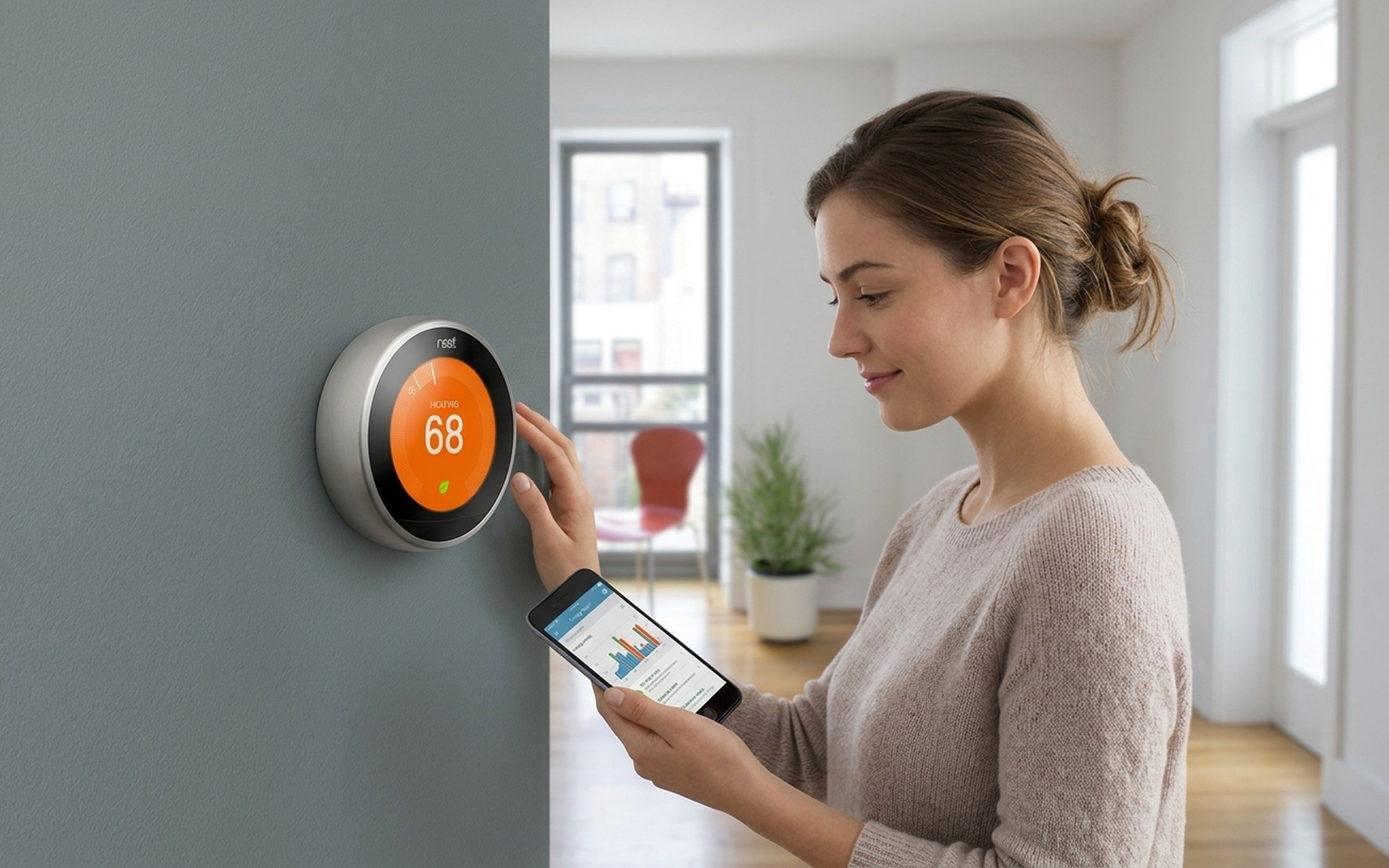
Both Ecobee and Nest qualify for ENERGY STAR rebates from most US utilities – typically $25–$100 per unit. Factor that in and the payback period drops to under 12 months for many households.
Compatibility check: Confirm your HVAC system supports a C-wire connection before purchasing. Most forced-air systems do; electric baseboard heating and some older heat pumps have limitations. Both Ecobee and Nest include compatibility tools on their websites.
Smart Plugs and Power Strips: Kill Vampire Power
Standby power – the electricity devices draw while switched off – is a silent budget drain. TVs, game consoles, phone chargers, microwaves with digital clocks: they all draw continuous current even when idle. This vampire load accounts for up to 16% of the average household electricity bill.
Smart plugs cut this passively. Set a schedule to cut power to your entertainment center after midnight and it stops drawing current until morning – no manual effort required. The TP-Link Kasa EP25 ($18) and Meross Smart Plug ($14) both include built-in energy monitoring, so you can see exactly what each appliance costs per month before deciding whether to automate it.
Data from Emporia Energy shows households using smart plugs to manage standby loads save $80–$150 per year. At $15–$20 per plug, payback happens in 2–3 months. That’s the fastest return of any smart home device category.
High-impact setup: Plug your TV, game console, and soundbar into a smart power strip. Schedule it to cut power from 1 AM to 6 AM. That single automation eliminates 5 hours of standby draw every night across 3–5 devices simultaneously.
Smart LED Lighting: Cut the Lighting Bill by 75%
Smart lighting’s savings come from two sources: the LED technology itself (75–80% less energy than incandescent), and automation that prevents lights from running in empty rooms.
Philips Hue remains the premium benchmark – their bulbs last 25,000+ hours and integrate with every major platform. At roughly $12–$15 per bulb in multipacks, each one saves $7–$12 per year over a 60W incandescent. A 10-bulb home sees $70–$120 in annual savings.
For budget-conscious buyers, IKEA Tradfri ($8–$12 per bulb) and TP-Link Kasa smart bulbs ($8–$10) deliver identical LED savings without the premium ecosystem pricing. If you still have incandescent or CFL bulbs anywhere in your home, this is the most immediate upgrade – savings start from day one.
Automation multiplier: Pair smart bulbs with motion sensors to automatically switch off lights in rooms nobody is using. Philips Hue motion sensors ($25–$30) add another 10–15% on top of the LED baseline savings.
Smart Energy Monitors: Find What You’re Missing
Before you can cut consumption, you need to see where your money is actually going. Whole-home energy monitors clamp directly onto your electrical panel and track consumption in real time – down to the individual circuit or appliance.
The Sense Home Energy Monitor ($299) identifies individual appliances by their unique electrical fingerprint and gives you a monthly breakdown: your refrigerator costs $8/month, your EV charger $45/month, your aging water heater $32/month. That visibility consistently drives $150–$300 per year in savings through behavioral changes and targeted upgrades, according to published user data.
The Emporia Vue 3 ($100) is a more affordable option that tracks usage by circuit. Both devices surface the hidden energy hogs – a second refrigerator in the garage, an HVAC unit running inefficiently, a pool pump on an unoptimized schedule – that smart plugs alone would never detect.
Smart Water Leak Detectors: Prevent a $12,500 Insurance Claim
The average cost of a water damage insurance claim has risen to over $12,500. Most major claims start with a slow leak that goes undetected for days or weeks. A smart water sensor closes that window immediately.
Basic sensors like the Govee Water Detector ($10–$15) alert your phone the moment moisture is detected under a sink or near a water heater. More sophisticated systems like Moen Flo ($500 installed) include a whole-home shut-off valve that automatically stops water flow when a leak is detected – including while you’re traveling.
The financial case goes beyond damage prevention. Many insurers now offer 5–15% discounts on homeowner policies for verified leak detection systems. Chubb Insurance offers an 8% premium reduction for buildings with comprehensive water shut-off systems. A 5% discount on a $2,000/year policy saves $100 annually – enough to pay for most basic sensor systems in year one.
For vacation homes and rental properties, this is arguably the most valuable smart home investment available.
Smart Security Cameras: Unlock Insurance Discounts
IP security cameras serve double duty: deterring break-ins and qualifying you for insurance discounts. Most major insurers offer 5–10% premium reductions for homes with monitored security systems or verified camera coverage.
The Google Nest Cam Wired ($100) and Ring Indoor Cam ($60) both connect to professional monitoring services that insurers recognize. For outdoor coverage, the Arlo Pro 5 ($200) delivers 4K recording with color night vision and works without a subscription for basic motion alerts.
Beyond cameras, the Nest Protect (2nd Gen, $119) combines smoke and carbon monoxide detection with mobile alerts and self-testing. Unlike standard CO detectors, it sends a notification to your phone and speaks its location aloud, helping you identify the source immediately. Landlords in particular benefit here: CO detection requirements are increasingly embedded in insurance policy terms for rental properties.
Insurance caveat: Discounts are most meaningful for high-value contents policies. Homes with contents valued below $30,000 rarely qualify for meaningful premium reductions; homes with $150,000+ in contents are where the math works strongly in your favor. Confirm qualifying devices with your insurer before purchasing.
Smart Sprinkler Controllers: Trim the Water Bill
If you run a home irrigation system, a smart sprinkler controller is an easy, often-overlooked win. Traditional timers run regardless of weather – watering after a rainstorm or when soil is already saturated. Smart controllers use real-time weather data and soil moisture sensors to skip unnecessary cycles automatically.
The Rachio 3 ($150–$230) is the market leader. Rachio reports that users save an average of 30–50% on outdoor water usage compared to traditional timer-based systems – roughly 15,000–20,000 gallons per year. At average US water rates, that’s $60–$120 in annual savings, with payback inside 18–24 months.
The RainBird ST8I-WiFi ($120) is a solid alternative with a longer track record in professional landscaping. Both integrate with Google Home, Amazon Alexa, and Apple HomeKit.

How Much Can a Smart Home Actually Save You?
Here’s a realistic breakdown of annual savings by device category, based on published manufacturer data and independent testing:
| Device | Upfront Cost | Est. Annual Savings | Payback Period |
|---|---|---|---|
| Smart Thermostat (Ecobee Premium) | $249 | $100–$145 | 1.5–2 years |
| Smart Plugs (4-pack) | $50–$70 | $80–$150 | 3–6 months |
| Smart LED Bulbs (10-pack) | $80–$120 | $70–$120 | 1–1.5 years |
| Whole-Home Energy Monitor | $100–$299 | $150–$300 | 6–18 months |
| Smart Leak Detector | $30–$200 | $100–$200 | 1–2 years |
| Smart Sprinkler Controller | $120–$230 | $60–$120 | 1.5–2.5 years |
A household that deploys all six categories can realistically save $560–$1,035 per year once the full system is running. Purchased one category at a time, each device pays for itself before you move to the next.
Where to Start: The Money-First Smart Home Order
The most common mistake is starting with the glamorous devices – color-changing lights and voice assistants – before tackling high-ROI hardware. For maximum financial return, follow this order:
- Smart thermostat first. Highest single-device impact. Apply for your utility rebate on the same day you buy it.
- Smart plugs for entertainment and office setups. Cheapest per-device cost, fastest payback – often under 3 months.
- Smart LED bulbs to replace any remaining incandescents or CFLs.
- Energy monitor to identify the hidden hogs you haven’t addressed yet.
- Leak detector under the kitchen sink, near the water heater, and in the basement or crawl space.
- Smart sprinkler controller if you run an irrigation system.
Start with ENERGY STAR-certified devices – they’re eligible for rebates and carry independently verified performance claims. The ENERGY STAR rebate finder tool identifies programs available in your ZIP code.
The goal isn’t a fully automated smart home for its own sake. It’s a measurable, documented reduction in what you pay every month – starting with the first utility bill after installation.
- A fully optimized smart home saves $550–$1,000+ annually on utility bills
- Most devices pay for themselves within 1–2 years
- Many utilities offer $25–$100 rebates on ENERGY STAR-certified smart thermostats
- Smart leak detectors and security devices can lower home insurance premiums by 5–15%
- Energy monitors reveal hidden electricity hogs you would never find otherwise
- High upfront cost if you try to automate everything at once
- Some ecosystems require a hub or paid subscription for full functionality
- Savings vary by climate, home size, and local utility rates
- Cheap off-brand smart plugs and sensors rarely deliver reliable or measurable ROI
Frequently Asked Questions
What smart home devices actually save money?
Smart thermostats, smart plugs, and LED smart lighting deliver the clearest, most measurable savings. A smart thermostat saves $50–$145 per year on HVAC costs. Smart plugs eliminate standby vampire power worth $80–$150 per year. Smart LED bulbs use 75–80% less energy than traditional incandescents. Together, these three categories can save $250–$400 per year alone.
Which smart home product lowers utility bills the most?
Smart thermostats have the highest single-device impact because heating and cooling account for roughly 50% of the average home’s energy bill. The Ecobee Smart Thermostat Premium cuts HVAC costs by an average of 23%, while Nest Learning Thermostat users average 10–12% savings on heating and 15% on cooling.
Are energy-saving smart home devices worth the upfront cost?
Yes, for most households. A smart thermostat at $100–$250 typically pays for itself within 1–2 years. Factor in utility rebates ($25–$100) and payback often drops under 12 months. Smart plugs under $20 pay back in 2–3 months. The key is buying devices with documented energy savings, not just smart features.
Do smart home devices qualify for utility rebates?
Many do. ENERGY STAR-certified smart thermostats qualify for rebates from most US utilities, ranging from $25 to $100. Some states offer additional tax credits. Check your utility provider’s rebate portal or use the ENERGY STAR rebate finder before purchasing — it searches by ZIP code.
Can smart home devices lower home insurance premiums?
Yes. Smart security cameras, water leak detectors with automatic shut-off valves, and monitored smoke and CO detectors can reduce home insurance premiums by 5–15%. Chubb Insurance offers an 8% discount for verified water leak detection systems. Discounts vary by insurer, coverage level, and home contents value.