For seven years, buying a pocket gimbal camera meant buying a DJI. The Osmo Pocket defined the category in 2018, and the DJI Osmo Pocket 3 turned it into a mainstream bestseller, leaving rivals to fight over the scraps. That quiet monopoly ended on June 10, 2026, when Insta360 shipped the Luna Ultra, its first handheld gimbal camera and the most credible challenger DJI has faced. Co-engineered with Leica and priced at 769.99 dollars on the official Insta360 store, it does not try to undercut DJI. It tries to out-feature it.
This Insta360 Luna Ultra review breaks down what the camera actually is, how its standout detachable monitor and dual-lens system work, how it stacks up against the DJI Osmo Pocket 3, and whether a first-generation device is a smart pick for anyone hunting the best vlogging camera 2026 has to offer. If you are still deciding whether you need a dedicated gimbal at all, our guide to the best gimbal camera for vlogging covers the fundamentals first.
What Is the Insta360 Luna Ultra, and How Does It Work?
Strip away the Leica badge and the Luna Ultra is a handheld gimbal camera: a sensor, a lens, and a set of motors that hold that lens steady, all fused into a single body you can run with one hand. A three-axis mechanical gimbal physically counters the shake from your wrist hundreds of times a second, so footage shot while walking looks like it came off a dolly rather than a nervous hand. That is the same core principle behind every Osmo Pocket, and it is the reason the category exists at all.
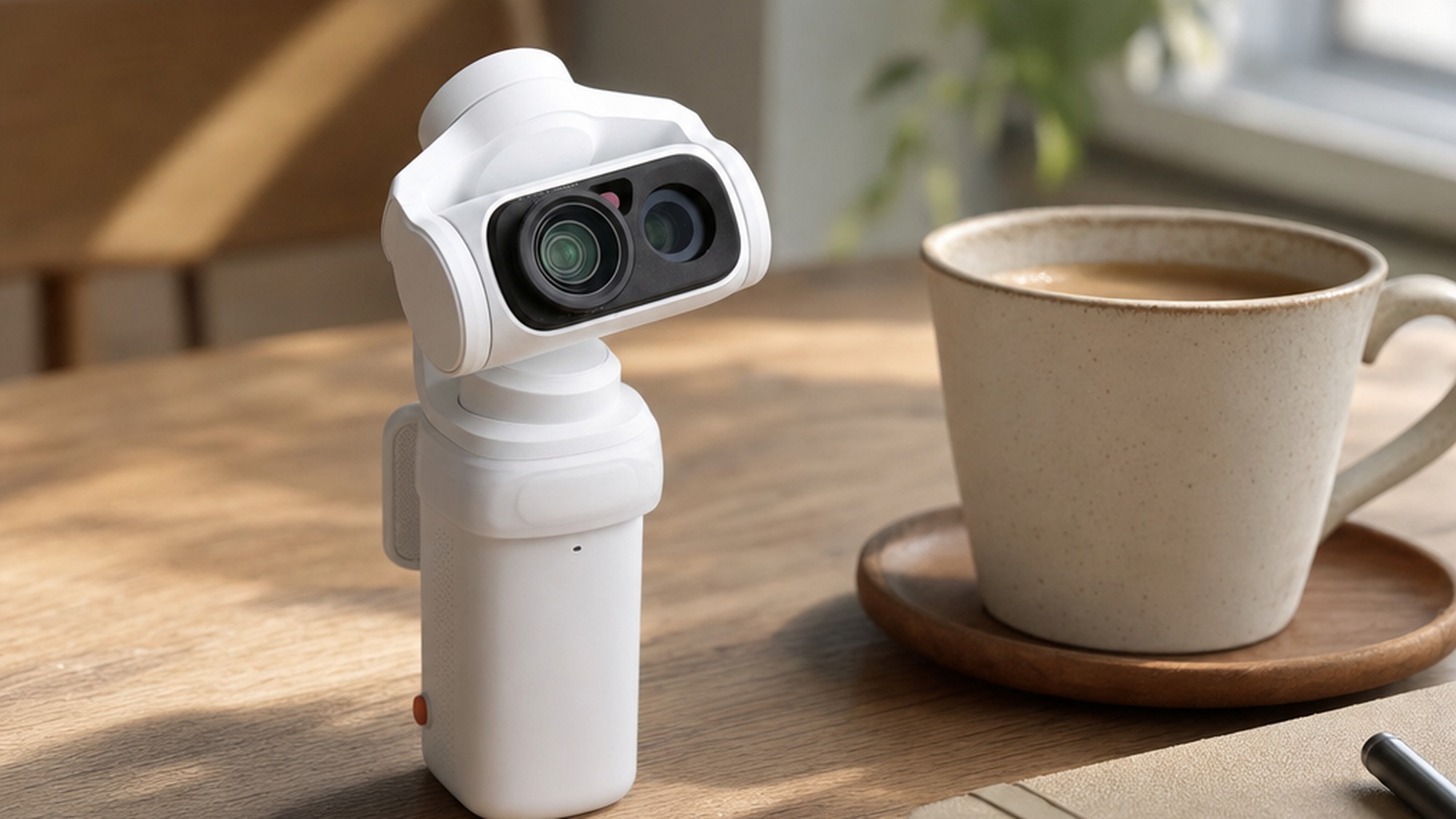
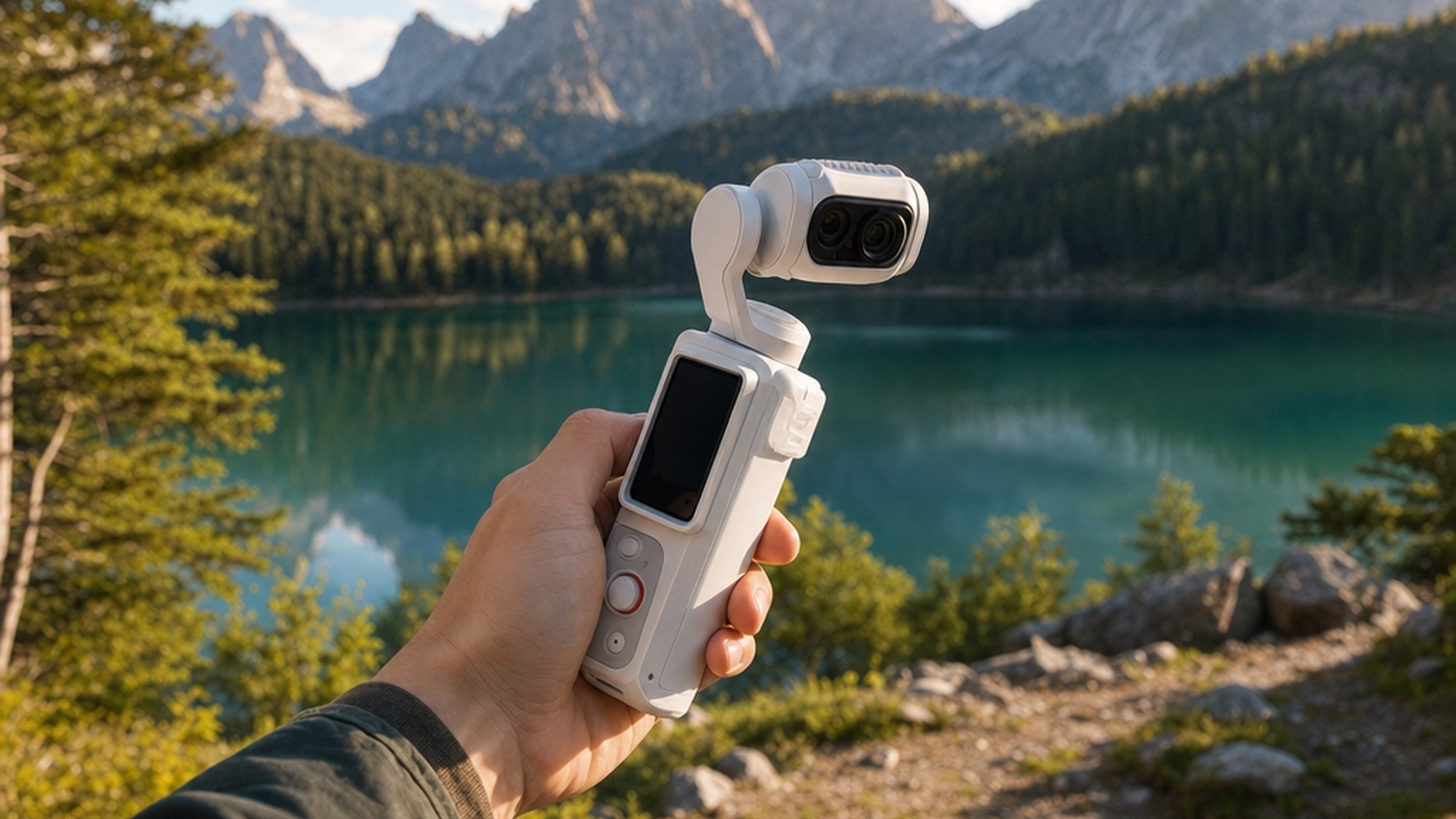
What makes the Luna Ultra different is what Insta360 bolted onto that foundation. Where DJI ships one lens, Luna ships two: a 1-inch main camera and a smaller telephoto. Where DJI fixes the screen to the body, Luna lets you pop the screen off and use it as a wireless remote monitor. And where most pocket cameras are sealed gadgets, Luna is built as a modular system with magnetic lenses, filters, and even a head-tracking earpiece. Insta360 reportedly spent five years studying how the Osmo Pocket is used before launching, and the design reads like a point-by-point list of answers to DJI’s limitations.
What is the Insta360 Luna Ultra, and how does it work?
A pocket gimbal camera that fuses a Leica-tuned 1-inch sensor, a second telephoto lens, and a 3-axis stabilizer into one handheld body.
Brushless motors cancel pitch, roll, and yaw in real time, so handheld footage stays smooth on the move.
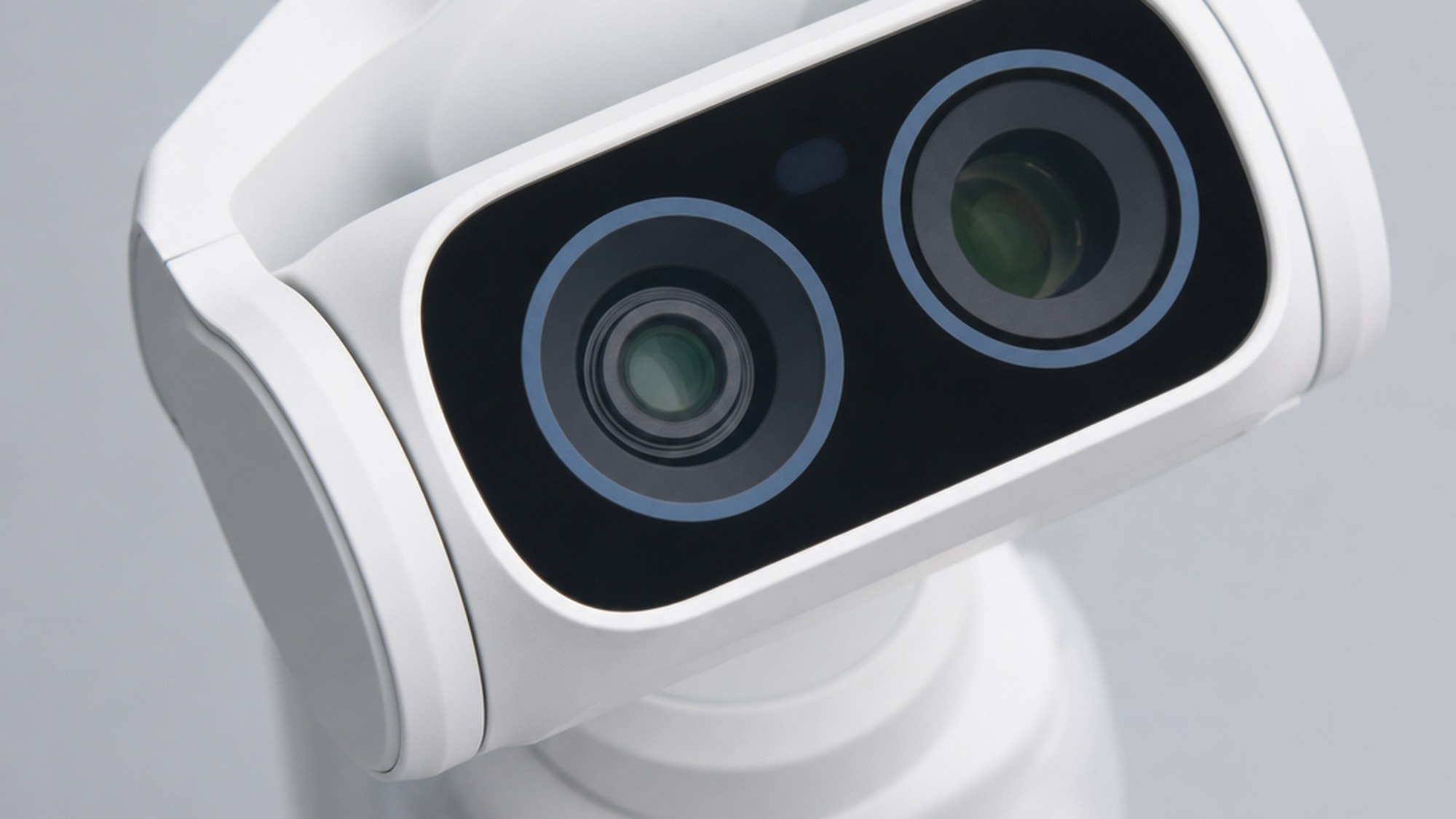
A 1-inch wide main camera pairs with a 1/1.3-inch telephoto for up to 6x lossless zoom.
The 2-inch OLED screen pops off and works as a wireless remote up to 66 feet from the body.
Magnetic filters, a wide-angle lens, and a POV head tracker turn it into a system, not a sealed gadget.
The Detachable Monitor: Filming Yourself Without a Second Pair of Hands
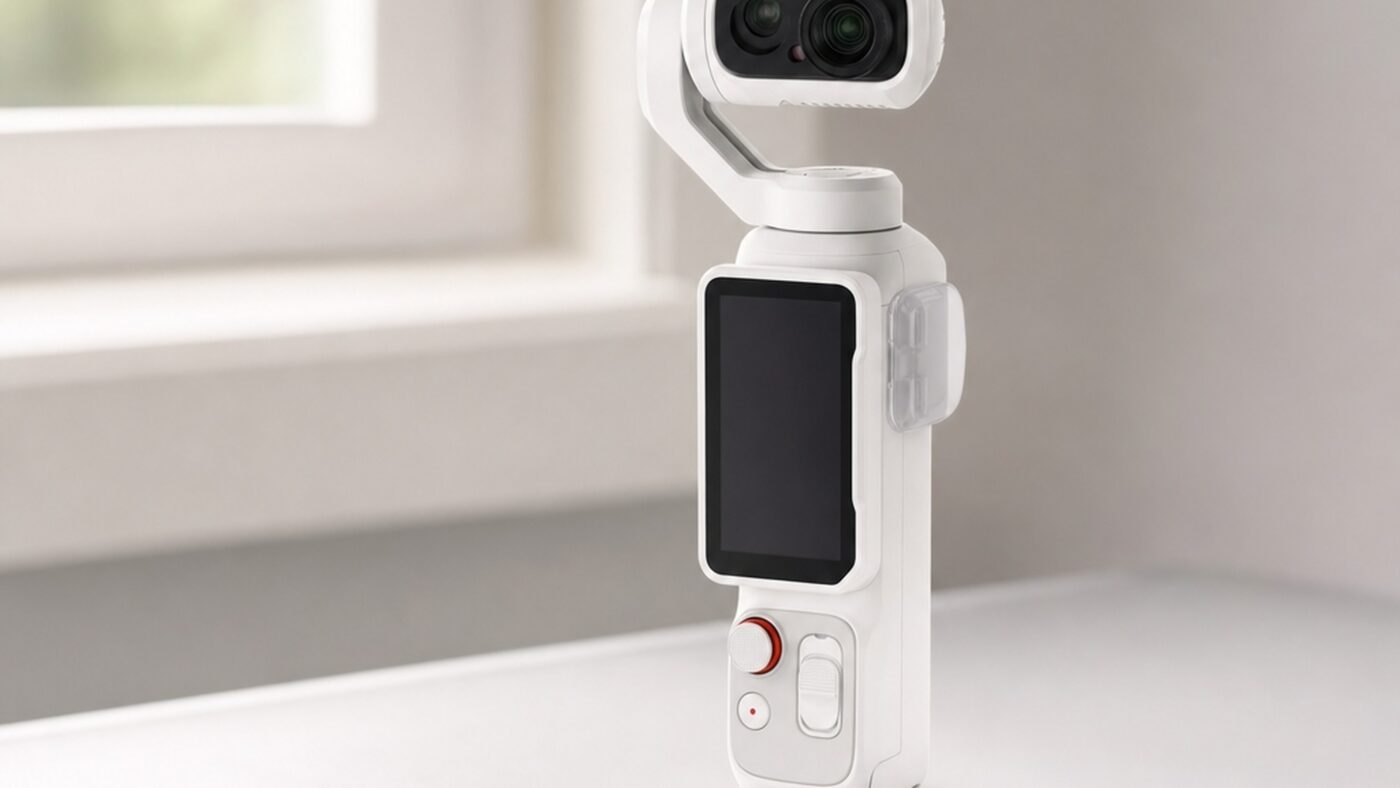
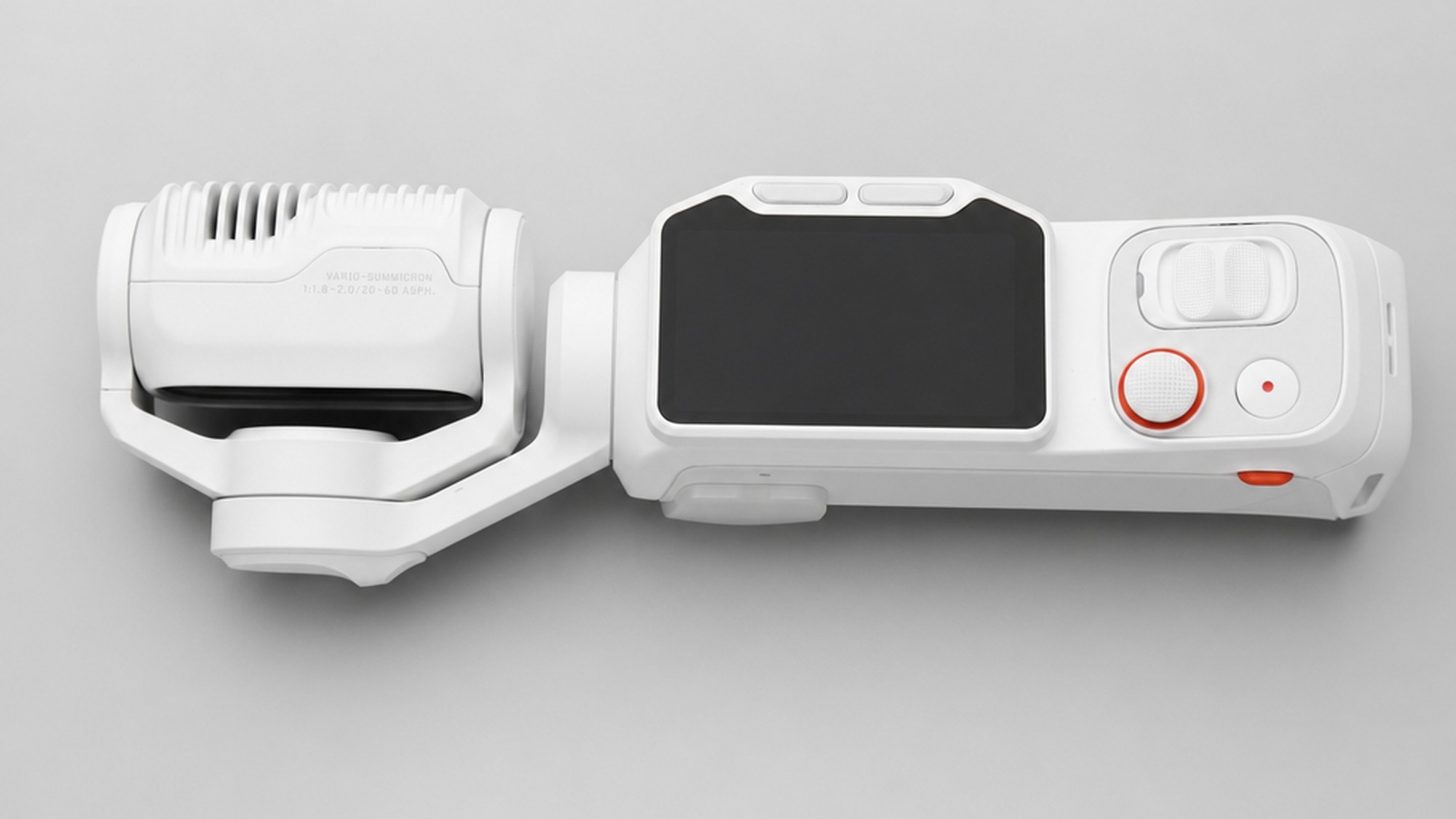
The single feature reviewers keep circling back to is the screen. The Luna Ultra’s 2-inch OLED touchscreen does not just tilt, it detaches entirely from the body and becomes a wireless monitor and remote control. Insta360 rates the link at up to 66 feet, roughly 20 meters, with about 10 meters as the reliable working range. Mount the camera on a tripod, walk into the frame, and the detached screen in your hand still shows a live preview and lets you start, stop, zoom, and reframe the shot.
For a solo creator this solves the oldest problem in self-filming: you cannot see what the camera sees while you are standing in front of it. A product demo on a table, a piece-to-camera in your kitchen, a wide group shot at a party, all of them normally demand a phone app, a second person, or a lot of run-and-check guesswork. With the detachable monitor you set the camera down, take the screen with you, and direct your own shot from where you are actually standing. TechRadar’s hands-on preview called the detachable screen the standout feature DJI does not have, and it is hard to argue otherwise. The screen also carries one of the camera’s four microphones, so your voice still tracks with you when the screen is in your hand.
Insta360 Luna Ultra vs DJI Osmo Pocket 3: How They Actually Differ
For years DJI had this category almost to itself, and the Osmo Pocket 3 remains the reference point every rival is measured against. The two cameras share the same headline sensor size but pursue opposite philosophies. DJI builds a refined, single-lens tool and trusts you to point it. Insta360 stuffs in a second camera, a detachable monitor, and AI tracking, betting that creators want flexibility over simplicity. Here is how the core specs compare. Treat the DJI column as shipping manufacturer figures and the Luna Ultra column as launch specs that independent testing is still verifying.
| Spec | DJI Osmo Pocket 3 | Insta360 Luna Ultra |
|---|---|---|
| Main sensor | 1-inch CMOS | 1-inch CMOS (Leica) |
| Second camera | None, single lens | 1/1.3-inch telephoto |
| Zoom | Digital only | 6x lossless, up to 12x |
| Max video | 4K at 120fps | 8K at 30fps, 4K at 120fps |
| Screen | 2-inch rotating OLED, fixed | 2-inch detachable OLED |
| Wireless monitor | No | Up to 66 feet |
| Weight | About 179g | Just over 200g |
| Battery, rated | Up to 166 min | Up to 240 min |
| Launch price | About 519 dollars | 769.99 dollars |
The pattern is clear. DJI offers the lighter, cheaper, simpler camera with the deepest accessory ecosystem and a mature app honed over three generations. The Luna Ultra answers with a second telephoto camera, real optical zoom, Leica color science, and a screen that detaches into a remote. However, it is worth noting that more cameras and a heavier body also mean more cost, more weight, and more software that has never shipped before. As Engadget points out, the Luna lands a couple hundred dollars above DJI’s base Pocket, so this is a premium pitch, not a value play. In our view the detachable monitor and the telephoto are the two differences that genuinely change how you shoot, while the 8K headline is the least important number on the sheet.
The Dual-Lens Gimbal: What the Second Camera Buys You
The phrase dual lens gimbal sounds like a marketing flourish, but the second camera changes the math of what a pocket device can do. The 1/1.3-inch telephoto sits beside the 1-inch wide and gives the Luna Ultra 3x optical reach, 6x lossless zoom, and up to 12x total. On a single-lens Pocket, zooming means cropping into the sensor and throwing away resolution. On the Luna, you switch to a dedicated optic that actually pulls distant subjects closer without the quality collapse. That is the one thing a single lens cannot fake.
The upside list is real: tighter framing without walking forward, flattering compression for talking-head selfies, and natural background blur for portraits, all from your pocket. The downside list is just as real. The telephoto rides a smaller sensor, so it gathers less light and falls behind the main camera once the sun goes down. Two cameras and a bigger body add the weight that pushes the Luna past 200 grams. And every extra mode is one more thing to learn and one more thing that can misbehave on first-generation firmware. In our read of the spec sheet, the second lens is the most consequential upgrade here, because reach and compression are creative tools, not just bigger numbers. Side-by-side footage tells that story better than any table, and DC Rainmaker put the two cameras head to head:
Head Tracking for POV: Hands-Free Filming in the Real World
The Luna Ultra’s most unusual accessory is a POV Head Tracker, a small earpiece that links to the gimbal so the camera follows wherever you look. Insta360 sells it separately, around 399 yuan in China at launch, and it has no direct equivalent on the Osmo Pocket. The idea is simple: mount the camera on your chest or a nearby stand, wear the tracker, and the gimbal pans and tilts to match your head, keeping the action centered without a single touch.
The real-world cases are easy to picture. A cook with both hands in the dough can keep the shot locked on the cutting board while glancing between bowls. A cyclist or hiker gets true point-of-view footage that turns with their gaze instead of staring rigidly forward. A craftsperson filming a tutorial can look between the camera and their workpiece while the frame tracks their attention, and a coach demonstrating a technique stays in shot while moving around a student. For any scenario where your hands are busy and the subject is you, head tracking removes the operator from the equation. It is a niche tool, but for the people who need it, nothing else in this class does it.
Common Myths About Handheld Gimbal Cameras
A new flagship always drags the same misconceptions back into the conversation, so it is worth clearing a few. The first myth is that a modern phone already does this. A current flagship shoots excellent video, but its software stabilization crops the frame and gets noisy in low light, and you cannot twist a phone into selfie framing one-handed while walking. Our Oppo Find X9 Ultra camera review shows how far phone sensors have come, and also where physical stabilization still pulls ahead.
The second myth is that 8K and more megapixels automatically mean better video. They do not. Almost everyone delivers in 4K or 1080p, and the real quality win comes from the 1-inch sensor and the gimbal, not the resolution headline. The third myth is that a gimbal camera replaces a proper camera. It does not. The fixed lens, tiny body, and small grip trade creative control for convenience, and a mirrorless camera on a full gimbal still wins for serious work. The last myth is that stabilization alone makes footage look professional. Smooth motion is the floor, not the ceiling, and you still need light, composition, and exposure discipline to get a result worth posting.
How to Shoot Smooth Video With a 1-Inch Sensor Gimbal
Getting the best out of a 1-inch sensor gimbal is mostly about a handful of habits. Start with light. That bright F1.8 lens overexposes fast in daylight, so a set of ND filters lets you keep a natural 1/50 shutter at 24fps instead of a stiff, fast-shutter look. The Luna’s magnetic ND set is built for exactly this, and it is the single most underrated accessory for video.
Next, walk properly. Even a perfect gimbal cannot erase a bouncing torso, so bend your knees slightly and glide heel to toe, the so-called ninja walk, to give the motors clean input to smooth. Let the gimbal settle for a beat before and after each move, and match the gimbal mode to the shot: follow mode for walking pieces, FPV or a faster response for action, and a locked mode for static framing. Lock your exposure so the image does not pulse as you pan past a bright window, and shoot I-Log when you plan to color grade. Finally, respect the sensor split. The main 1-inch camera handles low light far better than the smaller telephoto, so in dim scenes resist the urge to zoom and stay on the wide lens. Lean on Insta360’s Deep Track 5.0 subject tracking when you are filming yourself, and let the camera hold focus while you concentrate on the take.
What Early Users and Reviewers Report
Because the Luna Ultra only began shipping in June 2026, long-term owner data is still thin, but the early hands-on consensus is unusually consistent on a few points. Reviewers across the launch coverage single out the detachable monitor as the genuine differentiator, the feature that makes existing Pocket owners look twice. The most concrete recurring criticism is weight and folding: at just over 200 grams the Luna is noticeably heavier than the 179-gram Osmo Pocket 3, and early hands-on reviews note that the gimbal cannot fully retract when the magnetic wide-angle lens is attached, so it does not always pocket as cleanly as DJI’s.
Chinese hands-on reviews that tested retail units flagged a practical limit worth knowing before you buy. At 4K60 with the highest bitrate, the 1550mAh battery and thermal budget deliver roughly an hour of recording, closer to 90 minutes at standard bitrate, well short of the up-to-four-hours headline figure that assumes lighter settings. The other open question is the one no spec sheet answers: this is Insta360’s first gimbal, and a brand-new mechanical platform has no track record for calibration drift or motor reliability the way DJI’s multi-generation hardware does. Enthusiasm is high, but in our view the smart move is to watch the first wave of owner reports before trusting it on a paid shoot.
The Future of Portable Smart Imaging
The Luna Ultra matters beyond its own spec sheet because it marks the moment the pocket gimbal stopped being a one-company market. DJI grew the Osmo Pocket from a niche gadget into a device it has sold in the millions, and that success is exactly what pulls in challengers. With Insta360 now shipping a credible rival, the obvious next move is the smartphone brands circling a category they have watched mature, the same way every phone maker eventually shipped wireless earbuds.
The direction of travel is also clear in the software. AI systems like Deep Track 5.0 are pushing these cameras from tools you aim toward cameras that frame, follow, and compose on their own, and accessories like the head tracker hint at a future where the operator disappears entirely. For buyers right now, the choice is refreshingly simple. If you want the lightest, cheapest, most proven option, the Osmo Pocket 3 still wins on refinement and value. If you want reach, a wireless monitor, and Leica color, and you can stomach first-generation risk, the Luna Ultra is the more capable and more interesting camera. Either way, the era of DJI’s uncontested pocket gimbal is over, and that competition is the best thing that could happen to anyone shopping for the best vlogging camera 2026 will offer.
- Dual-lens system adds a real 1/1.3-inch telephoto with 6x lossless zoom, reach a single-lens pocket camera cannot fake
- Detachable OLED screen doubles as a wireless monitor up to 66 feet away, so you can frame yourself from across the room
- Leica-tuned 1-inch sensor shoots 8K30 with Dolby Vision and 14 stops of dynamic range on Insta360’s spec sheet
- Modular accessories, from a POV head tracker to magnetic filters, make it a system rather than a sealed gadget
- At just over 200 grams it is heavier than DJI’s 179 gram Osmo Pocket 3, and you feel it on long handheld takes
- First-generation software and a brand-new gimbal mean reliability is still unproven against DJI’s mature platform
- The gimbal cannot fully fold flat when the magnetic wide-angle lens is attached, per early hands-on reviews
- At 769.99 dollars it costs well above the base Osmo Pocket 3, pushing it out of impulse-buy territory
Frequently Asked Questions
How much does the Insta360 Luna Ultra cost, and which kit should I buy?
Insta360 lists the Luna Ultra at 769.99 dollars for the base body in the US, with pricier bundles that add a microphone, a wide-angle lens, or an extended-battery handle. For most vloggers the base body plus a separate ND filter set covers daily shooting. Step up to the creator bundle only if you already know you need the external mic and wide lens.
Is the Insta360 Luna Ultra available in the US?
Yes. Insta360 began selling the Luna Ultra worldwide on June 10, 2026, through its own store, Amazon, Best Buy, and B&H Photo. That matters because DJI’s newest Osmo Pocket models are not officially sold in the United States, so the Luna Ultra is one of the few flagship pocket gimbals you can buy through normal US retail channels.
Does the Luna Ultra work with Final Cut Pro and Premiere Pro?
It does. The Luna Ultra records built-in timecode and supports 10-bit I-Log capture plus professional color workflows including ACES. That means clips drop into Final Cut Pro or Adobe Premiere Pro with accurate sync for multi-camera edits, and the Log footage gives you grading headroom you do not get from a phone.
How long does the Insta360 Luna Ultra battery last?
Insta360 rates the 1550mAh battery at up to four hours, though that figure assumes lighter settings like 1080p. Chinese hands-on reviews found that 4K60 at the highest bitrate drains it in roughly an hour, closer to 90 minutes at standard bitrate. A 23-minute charge restores about 80 percent, and an extended-battery handle is sold separately.
Can the Luna Ultra shoot well in low light?
The 1-inch main sensor with its bright F1.8 Leica lens is built for it, and both lenses support a dedicated 4K60 night mode. The wide-angle main camera will hold up far better than the smaller 1/1.3-inch telephoto once light drops, so for dim scenes stick to the main lens rather than zooming in.
Is the Luna Ultra better than the DJI Osmo Pocket 3 for vlogging?
It depends on what you value. The Osmo Pocket 3 is lighter, cheaper, more refined, and backed by a mature app and accessory ecosystem. The Luna Ultra answers with a second telephoto camera, optical zoom, Leica color, and a detachable wireless monitor. Pick DJI for proven simplicity, the Luna Ultra for reach and flexibility if you accept first-generation risk.