

The Xiaomi Smart Band 10 Pro landed in May 2026 at 399 RMB (approximately $55), bringing hardware that looks out of place in its price bracket: a 1.74-inch AMOLED panel pushing 2,000 nits peak brightness, a 4-LED 2-PD optical heart rate sensor rated at 98.2% accuracy against a clinical reference device, built-in 5-system GNSS, and a new sleep HRV monitoring mode powered by Sleep Algorithm 2.0. TechRadar’s review of the standard Xiaomi Smart Band 10 called it the best budget fitness tracker around – the Pro variant raises that ceiling further with a sensor array that was premium territory just two years ago.
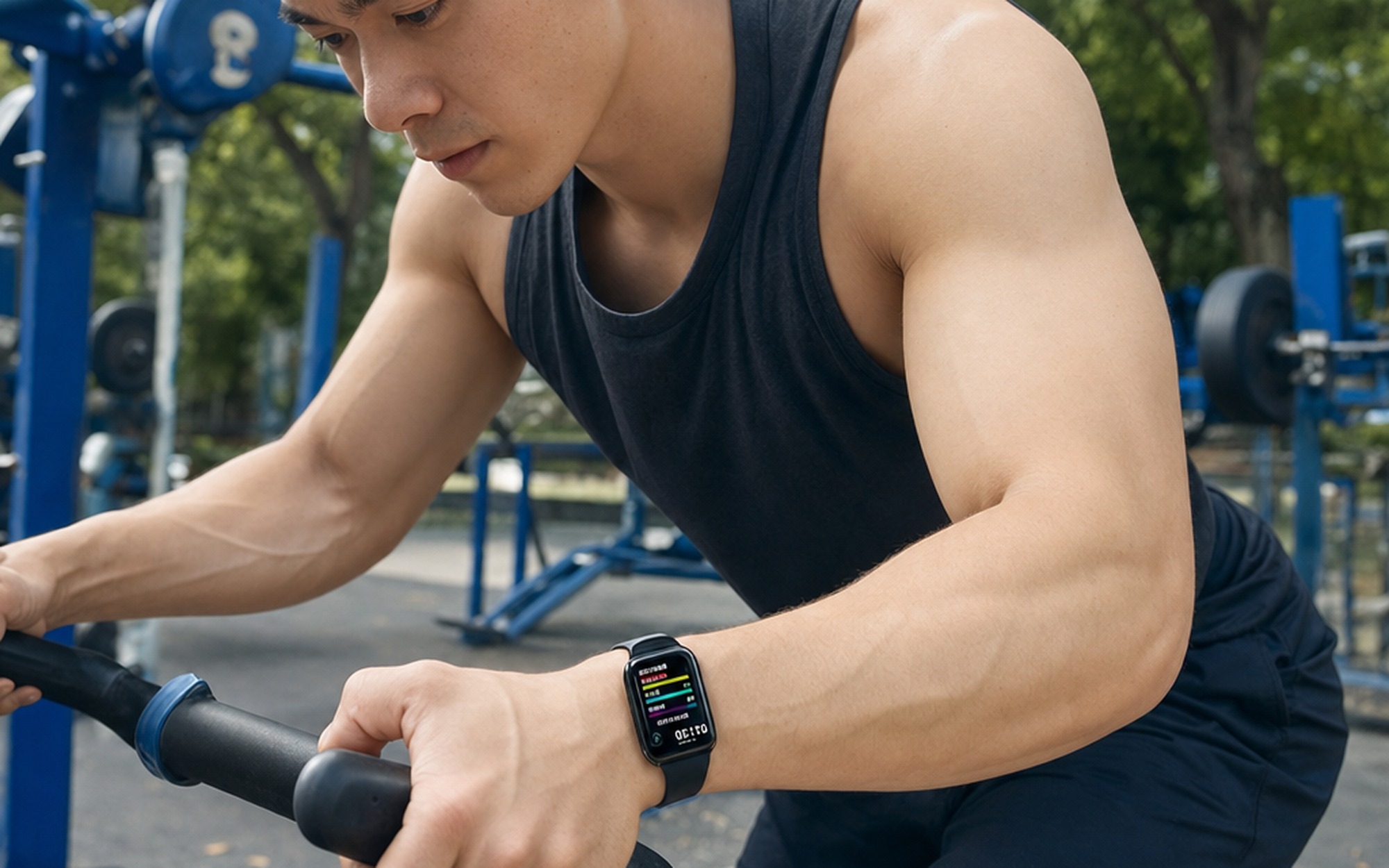
What’s New: The Pro Upgrades That Actually Matter
Comparing the Band 10 Pro against its predecessor, the Band 9 Pro, three hardware changes stand out as genuinely meaningful:
- Brighter panel: Peak brightness rises from 1,200 nits to 2,000 nits – a 67% jump that matters most in direct outdoor sunlight, where most workouts tracked by this band actually happen
- Upgraded heart rate system: The 4-LED 2-PD sensor replaces the previous generation’s single-LED design, pushing the accuracy specification from 98% to 98.2% against a reference medical device
- Sleep Algorithm 2.0 with HRV: Xiaomi reports 11% better sleep entry and exit detection accuracy, and 14% more precise sleep stage classification. The headline addition is overnight HRV (heart rate variability) monitoring – absent on the base Band 10 entirely
The 350mAh battery and the independent 5-system GNSS module carry over unchanged from the Band 9 Pro. Both were already best-in-class for the price tier; the Pro doubles down on health sensor precision rather than rebuilding the fundamentals.
Display: 2,000 Nits of Real-World Usability
The Band 10 Pro uses a 1.74-inch AMOLED panel at 336 PPI, a 60Hz refresh rate, and 2.5D curved glass across all four edges – the symmetrical four-bezel design Xiaomi now treats as its premium-band standard. At 2,000 nits peak, the display is genuinely readable in direct sunlight; the standard Band 10’s 1,500-nit panel already performs well outdoors, and this represents a step above that in the harshest conditions.
The enclosure shed weight compared to the Band 9 Pro: 21.6g without strap versus the previous 24.5g, achieved through tighter packaging and an aluminum alloy frame measuring 9.7mm thick. Xiaomi also offers a white ceramic edition for users who want a more premium aesthetic at a higher price point.
How the 4-LED 2-PD Heart Rate Sensor Works
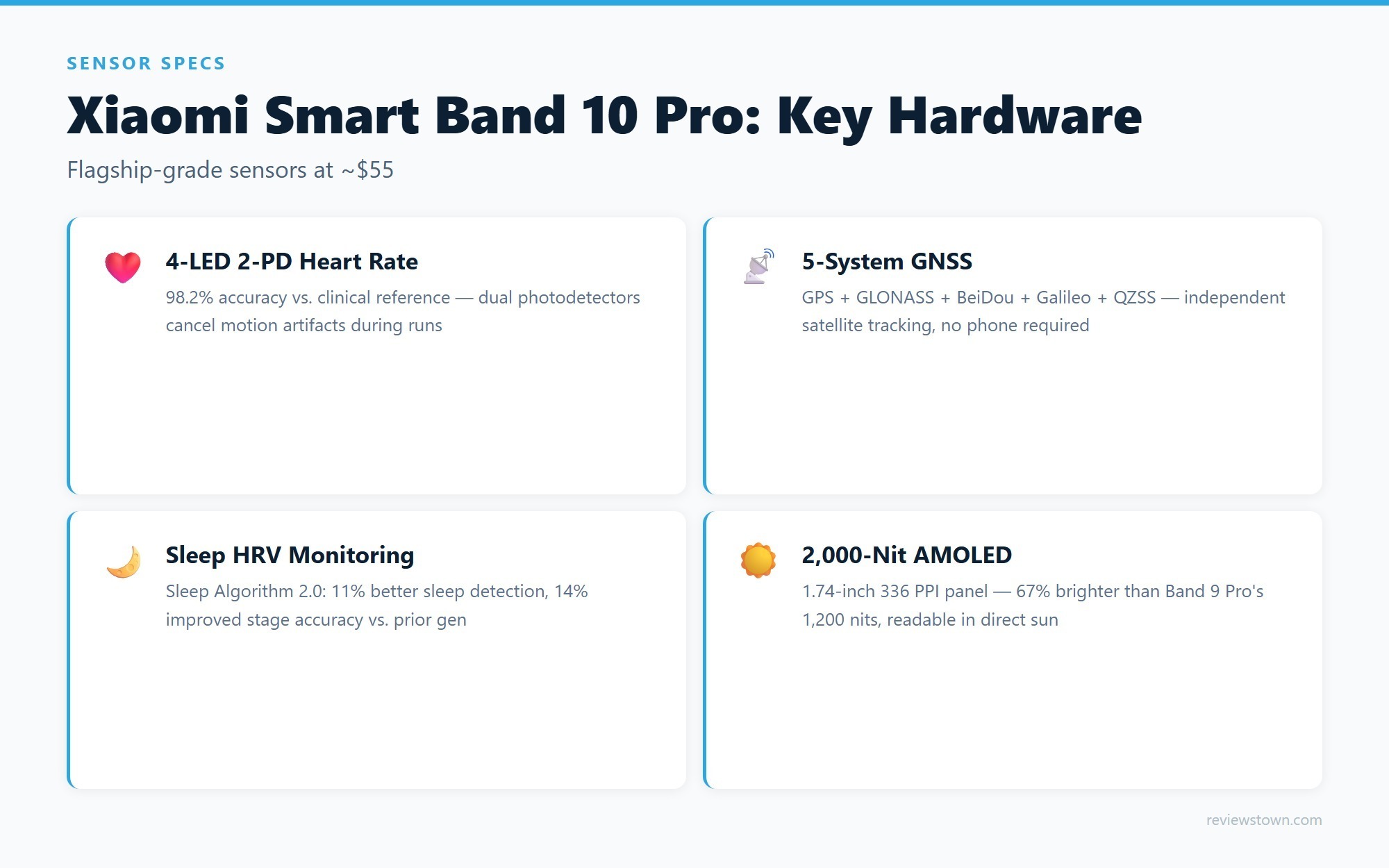
Most budget fitness bands use a single green LED paired with one photodiode (PD) to estimate blood flow at the wrist. The Band 10 Pro’s 4-LED 2-PD configuration changes both sides of that equation:
- Four LEDs illuminate the wrist from slightly different positions, sampling a larger tissue volume – this matters when the band shifts slightly during arm swing or wrist flexion
- Two independent photodetectors read the reflected signal separately, and the onboard algorithm cross-references both readings to identify and cancel motion artifacts
- The result is cleaner real-time heart rate data particularly during interval training, cycling, or any activity with high-frequency wrist movement
GSMArena’s testing of the base Xiaomi Smart Band 10 found heart rate readings “much more accurate than previous Smart Band models in both resting mode and during workouts” – and the Pro’s upgraded sensor architecture represents a further step from that baseline. Independent accuracy testing against a chest strap or pulse oximeter will ultimately define real-world performance; the 98.2% specification sets a high bar relative to single-LED competitors at the price.
Built-in GNSS: Running Without Your Phone
The Band 10 Pro’s 5-system GNSS module – GPS, GLONASS, BeiDou, Galileo, and QZSS – records outdoor routes, pace per kilometre, and distance independently, without a phone. That independence is the key competitive differentiator at this price point: the Samsung Galaxy Fit 3, for instance, relies entirely on a paired phone for GPS positioning, meaning a connectivity drop during a run produces an incomplete route trace.
Two new GPS-dependent sports modes debut on the Pro: professional track mode with automatic lap detection for track runners, and professional cycling mode with grade and cadence metrics. These join the existing 150+ workout types. Underwater heart rate monitoring and a sport vlog capture function also arrive as new additions on this generation.
For context on what fitness trackers under $100 with built-in GPS actually exist in 2026: the options remain surprisingly thin. The Amazfit Band 7 Pro and Huawei Band 9 are the main alternatives at comparable price points; most Samsung, Fitbit, and entry-level Garmin devices at this tier use phone-connected GPS only. The Band 10 Pro’s price-to-GPS hardware ratio stands out.
Sleep HRV Monitoring: The Standout New Feature
Heart rate variability – the millisecond variation between consecutive heartbeats – is a practical proxy for autonomic nervous system recovery. Higher overnight HRV generally signals good adaptation to training load; a sustained downward trend often precedes performance decline or illness. Sleep HRV monitoring is new to the Band 10 Pro and completely absent from the standard Band 10.
To enable it: open Mi Fitness → select the band → Sleep → Advanced Monitoring → toggle Sleep HRV on. The band measures HRV throughout each sleep stage identified by Sleep Algorithm 2.0 and displays a morning recovery trend in the app.
The algorithm improvements are specific and verifiable: 11% better detection of sleep entry and exit points (fewer false “sleeping” counts while you’re reading in bed) and 14% improved classification accuracy between light sleep, deep sleep, and REM stages compared to the previous algorithm generation.
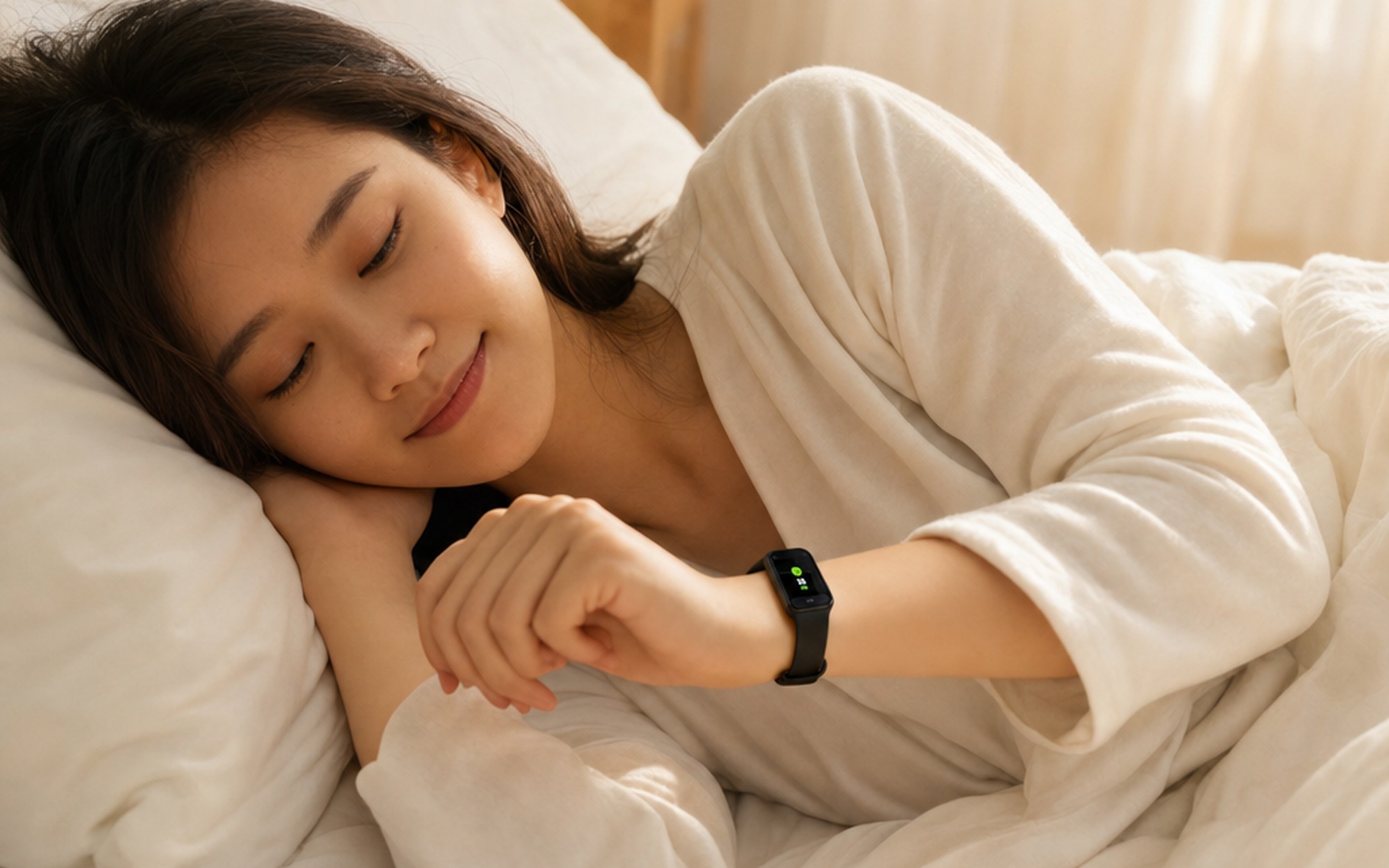
A realistic assessment on sleep stage accuracy is warranted: Reddit’s r/miband noted that Xiaomi’s sleep tracking “has improved a lot, but still not at the same level” as premium sleep trackers when it comes to deep sleep time estimation, with some tendency to overstate deep sleep. However, the overnight HRV trend operates as a recovery signal independently of stage classification precision – even if the deep/REM breakdown isn’t polysomnography-grade, the HRV direction over multiple nights provides actionable training load context.
Battery Life: What Real-World Numbers Look Like
The Band 10 Pro’s 350mAh battery carries a significant capacity advantage over the 233mAh cell in the base Band 10. Xiaomi’s own ratings by usage mode:
| Usage Mode | Rated Battery Life |
|---|---|
| Typical (no AOD, moderate notifications) | 21 days |
| Always-On Display active | 10 days |
| Heavy use (continuous HR + AOD + frequent alerts) | 8 days |
For grounding those manufacturer numbers: GSMArena’s independent testing of the base Band 10 measured 10 days on a single charge with all health features, AOD active, and notifications enabled – in line with Xiaomi’s own AOD claim for that model. With the Pro carrying a 50% larger battery running the same power-efficient AMOLED technology, the 10-day AOD figure appears credible, and Android Authority confirmed the base Band 10 “still offers up to 21 days on a typical charge” even with the brighter display. The Samsung Galaxy Fit 3’s rated battery life is 13 days; if the Band 10 Pro sustains its 10-day heavy-use figure independently, that represents meaningful endurance alongside capabilities the Galaxy Fit 3 does not offer.
Xiaomi Smart Band 10 Pro vs Samsung Galaxy Fit 3
| Feature | Xiaomi Smart Band 10 Pro | Samsung Galaxy Fit 3 |
|---|---|---|
| Display | 1.74″ AMOLED, 2,000 nits | 1.6″ AMOLED |
| Heart rate sensor | 4-LED 2-PD (98.2% accuracy) | Standard optical |
| Built-in GPS | 5-system GNSS (independent) | None – phone GPS only |
| Rated battery | 21 days typical | 13 days typical |
| Sleep HRV monitoring | Yes | No |
| NFC car key | Yes (BMW, Tesla, Xiaopeng, more) | No |
| Weight | 21.6g | 18.5g |
| Sports modes | 150+ | 100+ |
| iOS compatibility | Yes | Yes |
| Price (approx.) | ~$55 | ~$40 |
The ~$15 premium on the Band 10 Pro covers standalone GPS, a clinically-referenced heart rate sensor, HRV sleep monitoring, and NFC car key support. For a runner who trains without a phone, the price gap closes in the first workout. For a user whose workouts are always phone-paired and who only needs step counting, calorie tracking, and basic sleep data, the Galaxy Fit 3 remains a sound budget choice – lighter and slightly cheaper, but considerably thinner on sensor hardware.
iOS Compatibility: What iPhone Users Need to Know
The Band 10 Pro pairs with iPhones running iOS 13 and later via the Mi Fitness app. Full functionality is available on iOS: notifications, health data sync, sleep HRV, NFC features, and GPS. However, one well-documented limitation applies: iOS background app refresh constraints can cause Mi Fitness to drop its Bluetooth connection during active GPS workouts when the band is running in phone-tethered GPS mode. Reddit’s r/miband documented this with the Band 10: “the GPS connection constantly drops, often pausing the workout or even cancelling” on iOS.
The practical fix is to use the band’s independent GNSS mode rather than phone-tethered GPS. When the Band 10 Pro records satellite data directly using its own onboard module, it operates entirely independently – the iOS connection interruption issue does not apply. This is a meaningful practical advantage for iPhone users who run outdoors, and it turns what looks like a platform limitation into a non-issue for the majority of GPS use cases.
NFC Car Key Support
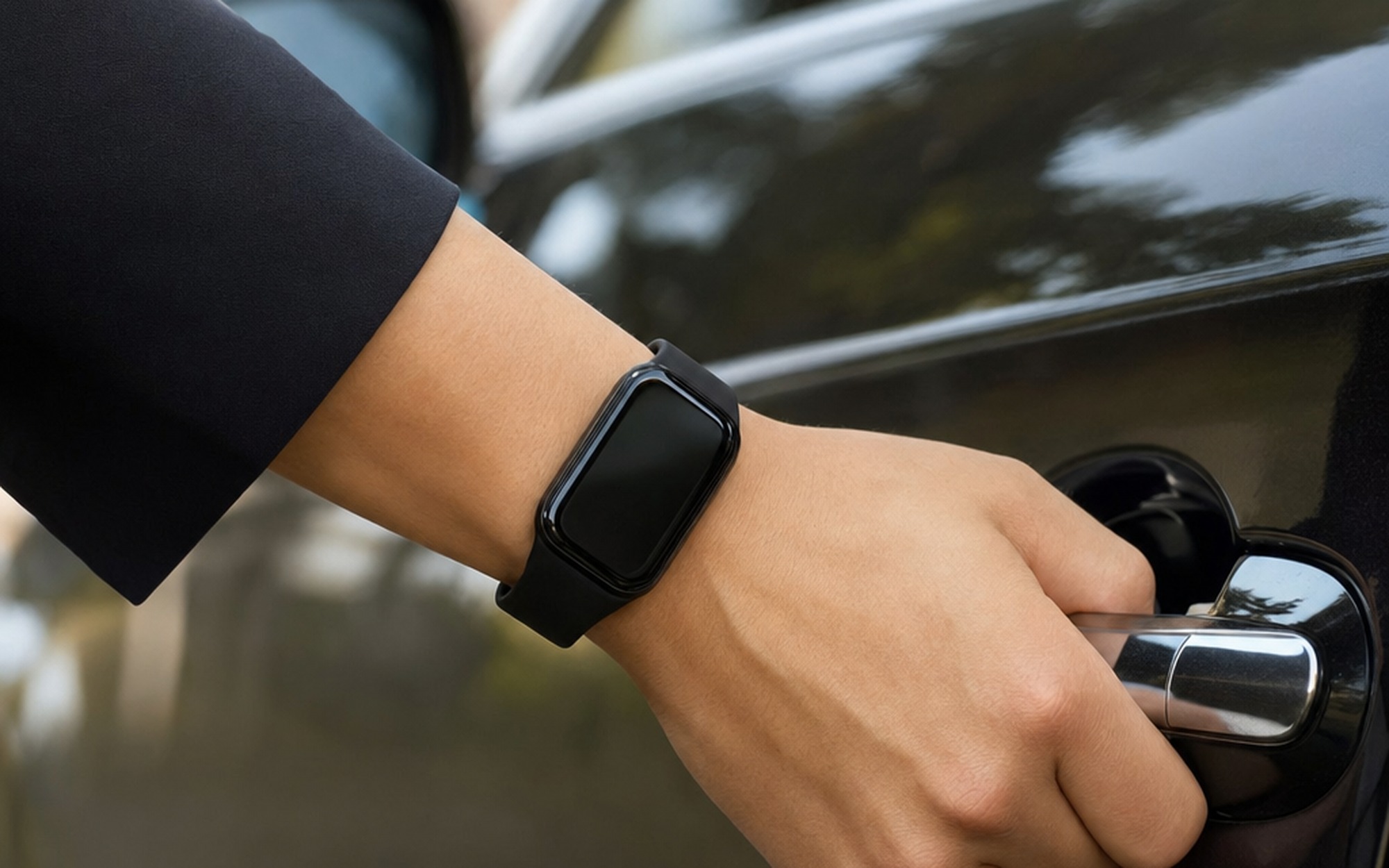
The Band 10 Pro’s NFC stores secure car keys that operate independently of the phone – compatible vehicles include Xiaomi SU7, BMW, Deep Blue (Deepal), Xiaopeng (XPENG), and Tesla models. Unlocking requires only a tap of the band to the door handle; no phone proximity or app activity is needed in the moment.
Among fitness bands under $100, NFC-based car key support is unusual. Engadget’s 2026 Best Fitness Trackers guide highlights NFC payment as a differentiating feature in mid-tier wearables; independent car key functionality – without relying on a phone relay – remains rarer still at this price point. For owners of compatible vehicles, it eliminates the everyday friction of locating a key fob or unlocking a phone.
What Users Actually Report
Community feedback across r/miband and early YouTube reviews provides a more nuanced picture than the spec sheet alone:
Build quality earns consistent praise. One long-term Band 10 user described it as “very solid, well-built for the price (aluminum), with good quality components (screen, vibration).” The aluminum frame and tighter build quality on this generation are widely acknowledged as improvements over earlier plastic-chassis Mi Band models.
Sleep accuracy has improved but carries caveats. Deep sleep time in particular is still reported as overestimated relative to premium sleep trackers – “improved a lot, but still not at the same level.” The new HRV overnight metric adds a recovery signal that does not depend on precise stage classification, so users tracking training load will find the HRV trend useful even where the exact deep/REM breakdown is approximate.
GPS on iOS requires the independent GNSS mode. Tethered GPS mode on iOS suffers from Bluetooth interruptions that can pause or cancel active workouts – a known Mi Fitness app behavior on iPhone. Users who switch to the band’s standalone GNSS mode do not report this issue.
Global firmware rollout lags the Chinese release. At least one early global version adopter reported that “Mi Fitness doesn’t support it yet – the app doesn’t even recognize the device.” This appears to be a deployment delay at launch rather than a permanent limitation, but buyers in global markets should expect a short wait if purchasing on day one.
Verdict
At ~$55, the Xiaomi Smart Band 10 Pro makes a compelling case that the budget fitness band category has structurally improved. The 4-LED 2-PD sensor, 5-system GNSS, 2,000-nit AMOLED, sleep HRV monitoring via Sleep Algorithm 2.0, and 350mAh battery represent a genuine capability upgrade – not a spec-bump refresh – at a price where the usual trade-off is “pick two.”
Buy it if: you run outdoors without your phone, want recovery metrics from overnight HRV, or need display brightness that holds up in direct sunlight. The NFC car key feature is a practical daily convenience for owners of compatible vehicles. Android users get the best overall experience with no known platform quirks.
Consider alternatives if: you’re an iOS user who relies on tethered phone GPS during runs – use the band’s independent GNSS mode instead and the iOS issue disappears. If you’re in a region where the global firmware hasn’t fully deployed, waiting one firmware cycle avoids the app recognition issue some early buyers encountered.
For the reader building out a Xiaomi ecosystem alongside devices like the Xiaomi Book Pro 14, the Mi Home and Mi Fitness integration adds a layer of cohesion worth considering. For everyone else: the hardware stands on its own merits.
- 2,000-nit AMOLED display outperforms every competitor at this price
- 4-LED 2-PD heart rate sensor rated at 98.2% accuracy
- Built-in 5-system GNSS for phone-free outdoor tracking
- Sleep HRV monitoring via upgraded Sleep Algorithm 2.0
- 350mAh battery supports 21 days typical or 10 days with AOD
- NFC car key support for BMW, Tesla, Xiaopeng, and more
- Slim 9.7mm profile at just 21.6g without strap
- Mi Fitness app GPS on iOS can disconnect during tethered runs
- Sleep deep-stage data still slightly overestimated vs. clinical tracking
- No global official product page at launch (May 2026)
- Early global firmware may lag Chinese release by weeks
Frequently Asked Questions
Is the Xiaomi Smart Band 10 Pro good value at $55?
Yes. At ~$55 / 399 RMB, the Band 10 Pro delivers a 1.74-inch 2,000-nit AMOLED display, a 4-LED 2-PD heart rate sensor at 98.2% accuracy, 5-system independent GNSS, sleep HRV monitoring, and NFC car key support. Competing bands with built-in GPS typically cost $80–$120. The closest rival, the Samsung Galaxy Fit 3, lacks both GPS and HRV for ~$40 less.
Can you wear the Xiaomi Smart Band 10 Pro in the shower or while swimming?
Yes. The Band 10 Pro carries a 5 ATM water resistance rating, making it safe for showering, swimming, and water sports up to 50 metres. It also includes a dedicated underwater heart rate monitoring mode among its 150+ supported workout types.
Is the Xiaomi Smart Band 10 Pro better than the Band 9 Pro?
In three areas, yes: display brightness jumps from 1,200 nits to 2,000 nits; the heart rate sensor upgrades from a standard optical design to a 4-LED 2-PD system at 98.2% accuracy; and Sleep Algorithm 2.0 adds overnight HRV monitoring with improved sleep stage detection. The 350mAh battery and 5-system GNSS carry over unchanged from the Band 9 Pro.
Which fitness tracker has the best heart rate accuracy in 2026?
Among budget bands under $60, the Xiaomi Smart Band 10 Pro’s 4-LED 2-PD sensor at 98.2% accuracy is one of the most precisely specified on the market. Premium devices like the Apple Watch Ultra 2 and Garmin Forerunner 965 achieve higher accuracy in medical-grade comparisons, but at 4–10x the price. For the sub-$60 category, the Band 10 Pro leads on sensor specification.
Does the Xiaomi Smart Band 10 Pro work with iPhone and iOS?
Yes — the Mi Fitness app supports iOS 13 and later with full functionality including notifications, health data, sleep HRV, and GPS. One caveat: tethered GPS during runs can experience Bluetooth drops on iOS due to background app refresh limits. The fix is to use the band’s independent GNSS mode, which records routes locally without relying on the phone connection.
How long does the Xiaomi Smart Band 10 Pro battery actually last?
Xiaomi rates the 350mAh battery at 21 days typical, 10 days with Always-On Display active, and 8 days under heavy use with continuous heart rate monitoring and frequent notifications. For comparison, GSMArena tested the base Band 10 (233mAh) at 10 days with all features plus AOD enabled — the Pro’s 50% larger cell should match or exceed that figure under equivalent conditions.