

Most fitness wearables compete to add more features. WHOOP 5.0 competes by taking features away.
No screen. No step counter. No notification mirror. No app store. What you get instead is a subscription-backed health analytics engine that lives on your wrist 24/7, quietly building a picture of how your body is recovering, sleeping, and responding to training load. Since its 2025 launch, WHOOP has expanded from fitness tracker into a health platform – adding blood pressure monitoring, an Advanced Labs biomarker service with clinician oversight, and AI coaching that now remembers your patterns across weeks and months.
The competitive landscape also shifted in May 2026 when Google launched the Fitbit Air at $99 with no subscription required – a direct, screenless challenger that has WHOOP publicly on the defensive. This review covers the real cost breakdown, the 2026 platform updates, what the AI Coach actually does, and the honest WHOOP vs Apple Watch (and Fitbit Air) comparison that most articles still haven’t caught up to.
The Philosophy Behind No Screen: WHOOP’s Deliberate Subtraction
When WHOOP founder Will Ahmed built the first prototype out of Harvard in 2011, the Fitbit was already a hit and the Apple Watch was three years away. Ahmed’s thesis was counterintuitive: the wearable that would actually change athlete behavior wasn’t the one with the most features – it was the one that got out of the way.
The screenless design isn’t a cost-cutting measure. It’s a product statement. Every time you glance at an Apple Watch, you’re one Slack notification away from losing focus. WHOOP makes that impossible. The only thing on your wrist is the sensor. All data lives in the app, reviewed intentionally – not reactively.
This philosophy attracted its first wave of users from professional sports: NFL rosters, Olympic cycling teams, NBA players. Patrick Mahomes, LeBron James, and Rory McIlroy have all been photographed wearing WHOOP during competition – not because of a sponsorship deal, but because coaching staff mandated recovery monitoring.
The mainstream pivot came when WHOOP opened to general consumers, kept the same data rigor, and layered in tiers now extending to clinical health territory. The question heading into 2026 is whether the elite-athlete philosophy – and the price tag that comes with it – still holds as subscription-free competitors enter the same space.
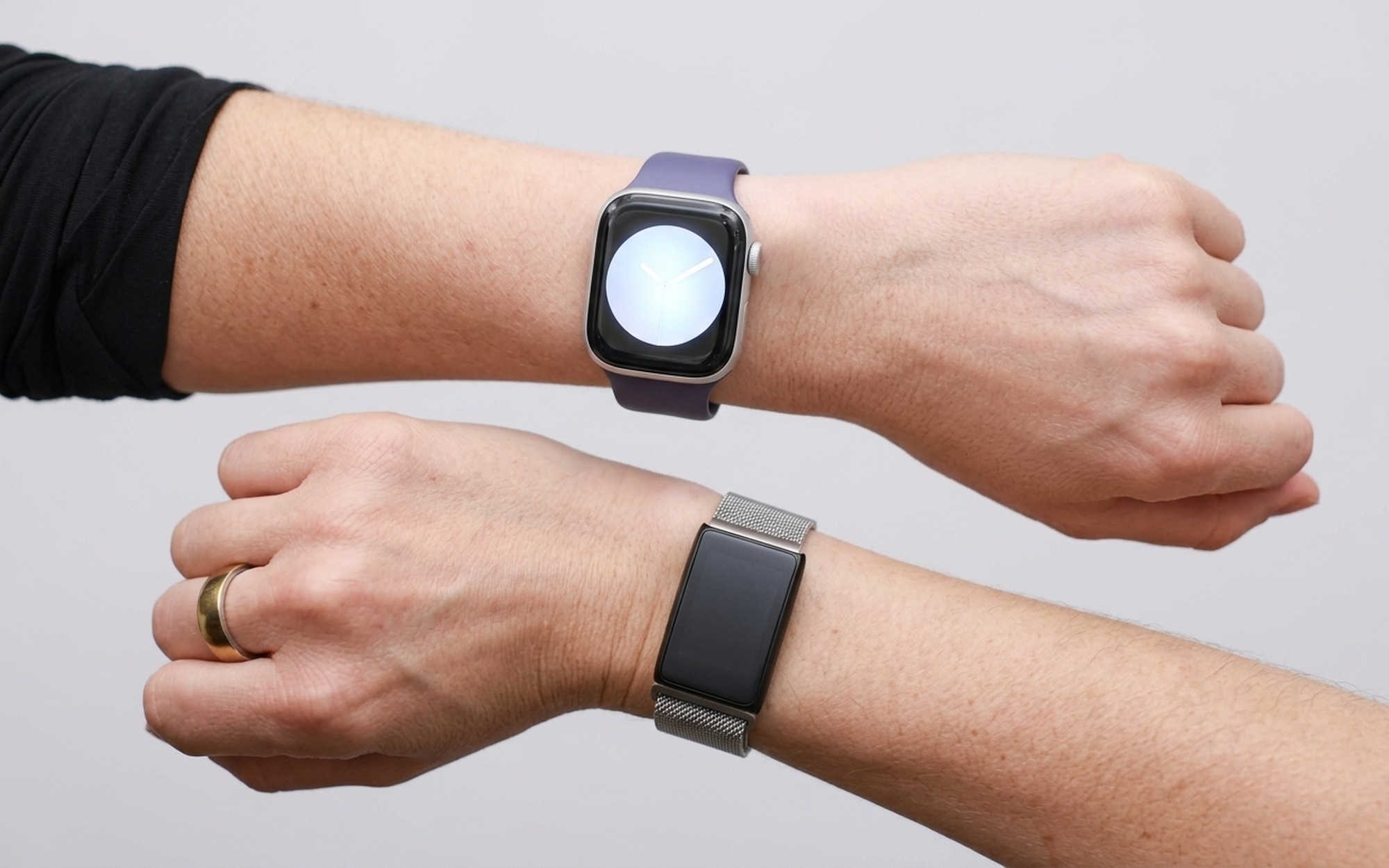
From Fitness Tracker to Health Platform: WHOOP’s Evolution Since Launch
WHOOP shipped version 5.0 in 2025, addressing the two most common complaints about the 4.0: battery life and sensor accuracy.
Battery life jumped from roughly four days to a claimed 14 days on a charge. In practice, reviewers at Wareable report 10–12 days under normal use – still a generational improvement over any smartwatch. An on-wrist PowerPack lets you charge without removing the band, eliminating data gaps during charging.
Sensor hardware moved from three LEDs to four, improving photoplethysmography (PPG) accuracy – particularly relevant for high-intensity workouts where motion artifact degrades signal quality. WHOOP has since updated its signal processing algorithm to improve heart rate tracking across a broader range of conditions, making Recovery, Strain, and Sleep data more precise without new hardware.
Platform features added through 2026:
– Blood Pressure Insights (WHOOP Life/MG only) – after a one-time calibration with a standard blood pressure cuff, WHOOP provides daily systolic and diastolic estimates based on overnight PPG analysis. Tracks how behaviors like alcohol, sleep debt, and stress correlate with cardiovascular health over time.
– Advanced Labs – order blood panel tests (75+ biomarkers) from home; receive a clinician-reviewed report with an action plan linked to your WHOOP data. A Women’s Health Panel covering 11 female-specific biomarkers launched in 2026.
– On-demand clinician consultations – live video calls with licensed clinicians, launching in the US in summer 2026, making WHOOP the first consumer wearable to offer integrated telehealth alongside its sensor data.
– Strength Training Trend View – tracks Strength Activity Time at weekly, monthly, and 6-month periods; lets you set strength-specific goals in your Weekly Plan.
– Behavior Trends – redesigned journal with voice and text input; WHOOP AI suggests new behaviors to track based on detected patterns in your data, and shows which habits correlate positively or negatively with Recovery over 90-day windows.
Where WHOOP 5.0 stumbled at launch: early adopters reported hardware defects, strap delamination, and a poorly communicated upgrade path from 4.0. WHOOP addressed warranty claims and improved QC, but it’s worth checking production date if buying secondhand.
The Real Cost of WHOOP: A Subscription Math Breakdown
WHOOP’s business model remains its most discussed aspect. Hardware is bundled with membership – you cannot buy the device outright. As of 2026, there are three tiers, not four. The WHOOP MG hardware (with ECG and blood pressure) is included in the WHOOP Life tier:
| Tier | Annual Cost | Monthly Equivalent | What’s Included |
|---|---|---|---|
| WHOOP One | $199/yr | $16.58/mo | WHOOP 5.0 band, core tracking |
| WHOOP Peak | $239/yr | $19.92/mo | WHOOP 5.0 band, sleep/strain coach, Healthspan, stress monitor |
| WHOOP Life | $359/yr | $29.92/mo | WHOOP MG hardware, ECG, AFib detection, blood pressure, Advanced Labs |
Verify current pricing at whoop.com – tiers and rates are updated periodically.
The math that matters: Apple Watch SE starts at $249 upfront with no ongoing subscription. A WHOOP One membership costs $199/year – cheaper in year one, but $597 over three years versus a device you own outright. The Fitbit Air, launched in May 2026, is $99 one-time with no subscription at all.
WHOOP’s counterargument: you’re not paying for hardware depreciation, you’re paying for a continuously improving health coaching service – and the platform genuinely does keep adding value (Advanced Labs, clinician consultations, blood pressure) that competitors don’t offer. That argument holds for serious users. It’s harder to sustain for someone who mainly wants to stop their watch from buzzing.
One hidden cost people overlook: if you cancel your WHOOP membership, you lose access to all your historical data. WHOOP’s export functionality is limited. Years of HRV trends and sleep logs live on WHOOP’s infrastructure – factor this into your commitment calculus.
WHOOP vs Apple Watch – and the Fitbit Air Challenge
For years, WHOOP vs Apple Watch was the only meaningful comparison in the screenless-versus-smartwatch debate. In May 2026, Google changed that by launching the Fitbit Air at $99 with no subscription – the first device to directly occupy WHOOP’s philosophical territory (screenless, health-first, no notifications) without the annual fee.
Apple Watch is a wrist computer with health sensors bolted on. Its value is breadth: notifications, payments, GPS, Siri, a full app ecosystem, ECG via finger press, crash detection. Health tracking is a secondary layer on a device built primarily as an iPhone extension. It does not do continuous overnight HRV monitoring.
WHOOP is a health analytics engine with no secondary function. No notifications. No navigation. No clock. Everything it does is oriented toward one question: how is your body responding to the stress you’re putting it through? The specific capability Apple Watch cannot replicate is continuous HRV measurement throughout the entire sleep period – not a brief morning spot-check, but a full-night average built from hundreds of readings across sleep stages. For a deeper look at how HRV tracking varies across device types, see our heart rate monitor comparison guide.
Fitbit Air (May 2026) is the most direct philosophical competitor WHOOP has faced. It’s screenless, subscription-free, weighs 12g (lighter than WHOOP), and offers continuous heart rate monitoring with seven days of battery. What it doesn’t have: WHOOP’s Strain Score system, HRV coaching, Recovery Score, behavioral trend analysis, AI Coach, or any of the clinical features. DC Rainmaker reported that WHOOP went immediately on the defensive following the Fitbit Air launch, publishing a feature roadmap that was widely criticized as reactive and incomplete.
The honest take: Fitbit Air threatens WHOOP at the margins – people who liked the idea of WHOOP but balked at the subscription. For committed athletes who use the coaching layer daily, WHOOP’s data depth still has no direct equivalent. The three-way comparison now looks like this:
- WHOOP – maximum health coaching depth, premium price, subscription locked
- Apple Watch – general-purpose smartwatch with strong health features, no subscription
- Fitbit Air – screenless form factor, budget price, basic tracking, no subscription
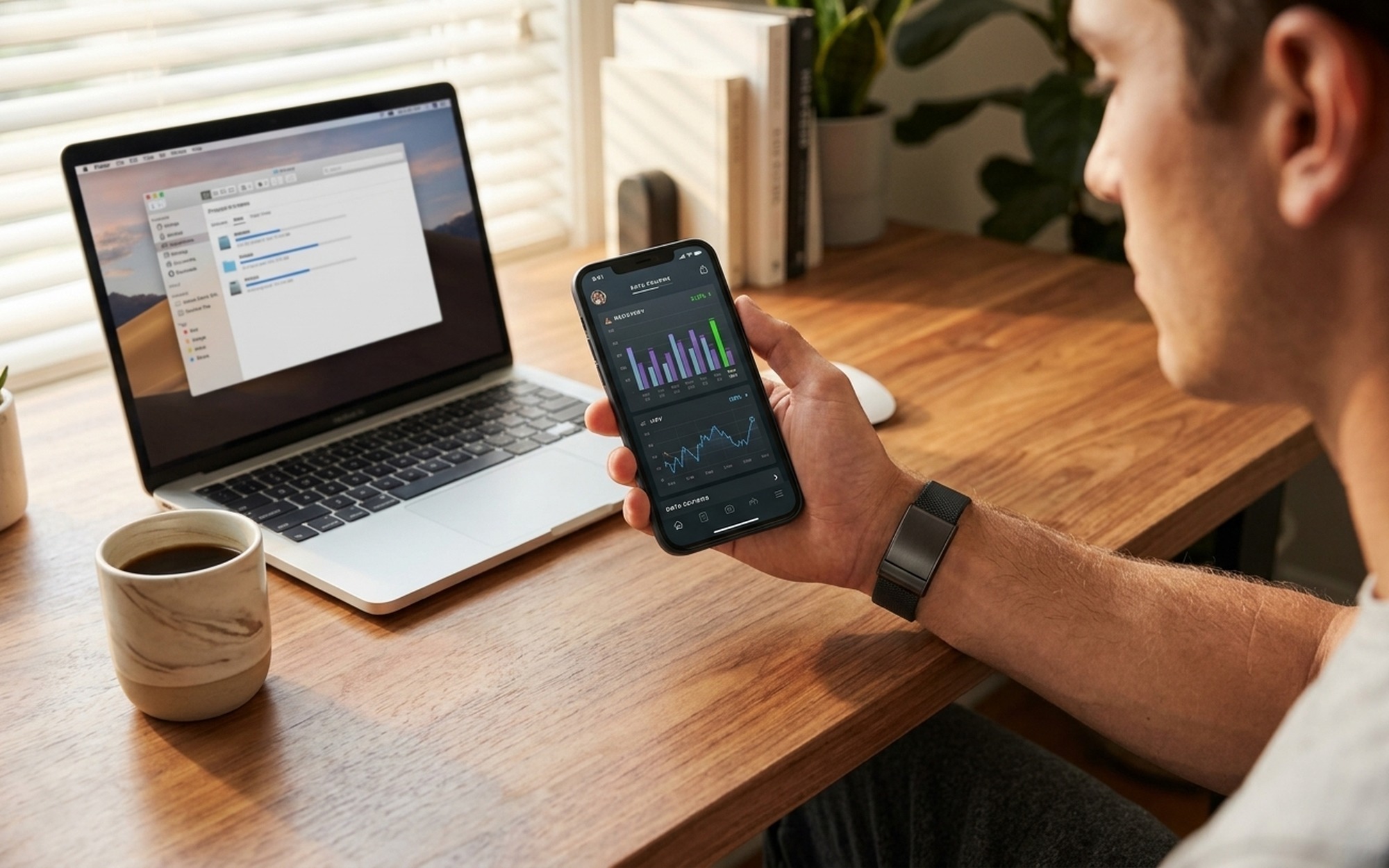
How WHOOP’s AI Coach Works in 2026
WHOOP Coach uses a large language model with direct access to your personal health data – not generic health advice, but coaching grounded in your last 90 days of HRV trends, sleep debt, strain history, and Healthspan markers.
In practice, you can ask:
– “Why is my recovery only 34% today?” → It references last night’s sleep fragmentation, compares your HRV to your 30-day baseline, and flags accumulated sleep debt from the past week.
– “Should I do a hard workout this afternoon?” → Based on your current Recovery Score and recent strain load, it recommends either pushing hard or pulling back – and explains the physiological reasoning.
– “What’s been affecting my sleep quality this month?” → It surfaces patterns: late-strain Thursdays correlating with poor Friday sleep scores, or declining respiratory rate in the second half of sleep as a potential early-illness signal.
2026 AI updates make the Coach meaningfully smarter:
– My Memory – a centralized log of the personalized context WHOOP AI has built about you. You can view, edit, or delete entries – correcting misinterpretations before they skew future coaching. If WHOOP incorrectly inferred you’re training for a marathon when you’re actually recovering from a knee injury, you can fix that.
– Proactive Check-Ins – instead of waiting for you to ask, WHOOP now pushes timely recommendations: flagging four consecutive days of declining HRV before a race weekend, or alerting you when accumulated sleep debt crosses 18 hours in a month.
– Voice and text behavior logging – the journal now accepts natural language input and AI-suggested behaviors based on detected data patterns, reducing the friction that caused many users to abandon daily logging.
What AI Coach still cannot do: it has no access to external data (food logs, Garmin workouts, medication records), it doesn’t make medical diagnoses, and its recommendations are heuristic rather than clinical. The clinician consultation feature launching in summer 2026 is WHOOP’s attempt to bridge that gap – a licensed clinician who can see your WHOOP data and discuss it with you over video, but that’s a separate human layer, not an AI extension. As CNET’s WHOOP analysis noted, the coaching is meaningfully more contextual than generic health tips – the 2026 updates push it further in that direction.
HRV, Recovery Scores, and the Science WHOOP Is Built On
Heart Rate Variability is the foundation of everything WHOOP does, and it’s worth understanding what it actually measures before trusting a number with your training decisions.
HRV measures the variation in time between consecutive heartbeats. A heart beating at 60 BPM doesn’t beat exactly once per second – the gaps fluctuate millisecond to millisecond. Higher variability generally indicates a well-functioning autonomic nervous system with strong parasympathetic (rest-and-digest) activity. Lower variability suggests the sympathetic (fight-or-flight) system is dominant – a sign of stress, fatigue, illness, or under-recovery.
WHOOP takes your overnight HRV average, compares it to your personal 30-day baseline, and synthesizes it with:
– Resting heart rate
– Respiratory rate
– Blood oxygen saturation
– Sleep performance (time in REM and deep sleep versus what you need)
The output is your Recovery Score (0–100%), color-coded green/yellow/red. A green score (67–100%) signals physiological readiness for high-load training. Red (0–33%) flags a need to prioritize recovery over performance.
The critical caveat: HRV is highly individual. A professional cyclist might baseline at 80ms; a sedentary adult might baseline at 25ms. Neither is inherently better – what matters is deviation from your baseline. WHOOP needs approximately 30 days of data to establish a reliable personal baseline, which is why month one is effectively calibration rather than coaching. If you quit after two weeks because the Recovery Scores seem random, you haven’t given the system enough data to do its job.
Who Should Buy WHOOP – And Who Should Skip It
Buy WHOOP if:
– You train 4+ times per week and want objective data to periodize effort and reduce overtraining risk
– You suspect poor sleep quality is suppressing performance and want granular sleep stage analysis
– You want to quantify how lifestyle choices – alcohol, travel, stress – affect physiological recovery
– You’re willing to spend 3–5 minutes each morning reviewing your data and adjusting your day accordingly
– The clinical direction (blood pressure trends, Advanced Labs, upcoming clinician consultations) appeals to you as preventive health monitoring
Skip WHOOP – and consider these alternatives – if:
– You want a device that tells you the time, shows notifications, and runs apps → Apple Watch
– You want the screenless philosophy without the subscription → Google Fitbit Air ($99, no subscription), which launched May 2026 and offers continuous heart rate monitoring, 7-day battery, and basic sleep tracking
– You’re a casual exerciser doing 2–3 sessions per week and mainly want activity encouragement → either Apple Watch or Fitbit Air
– You’ve started and abandoned fitness trackers before – WHOOP’s data depth rewards consistent engagement, not passive wear
The honest truth: WHOOP doesn’t make you healthier by itself. It makes you aware of signals your body is already sending – and gives you an AI layer that knows your specific patterns, not a population average. For people who will act on that data daily, it remains one of the most effective behavior-change tools in consumer health. For people who won’t, it’s an expensive wristband facing increasingly credible competition.
- 14-day battery life eliminates daily charging
- No screen means zero notification distractions
- AI Coach turns raw health data into plain-language guidance
- Continuous HRV tracking throughout the entire sleep period, not just spot checks
- Healthspan score tracks biological aging markers across 9 dimensions
- WHOOP Life tier includes FDA-cleared EKG, blood pressure trends, and Advanced Labs
- Subscription required — $199 to $359 per year with no hardware-only option
- Zero screen means total app dependency for any data
- Overwhelming data volume can feel like homework for casual users
- Canceling WHOOP means losing access to years of personal health history
- HRV accuracy still debated; works best as a trend tracker, not a clinical tool
- No GPS, no maps, no payments — and Fitbit Air now offers a screenless alternative at $99 with no subscription
Frequently Asked Questions
Is a WHOOP band really worth it in 2026?
WHOOP is worth it for serious athletes who will engage with daily HRV coaching, sleep analysis, and behavioral trend data. In 2026, the calculus shifted: Google Fitbit Air now offers a screenless alternative at $99 with no subscription. If you want deep recovery coaching, AI insights, blood pressure trends, and Advanced Labs biomarker testing, WHOOP still leads. If you just want fewer distractions and basic health data without an annual fee, Fitbit Air is worth considering first.
What is the WHOOP controversy?
WHOOP faces two persistent criticisms. First, the subscription model ($199–$359/year) requires ongoing payment with no hardware-only option, and canceling means losing access to your historical data. Second, in May 2026, DC Rainmaker reported WHOOP going on the defensive immediately after Google launched the Fitbit Air, posting what critics described as a rushed feature roadmap. WHOOP’s competitive moat is narrowing as subscription-free screenless trackers enter the market.
What are the disadvantages of WHOOP?
The biggest disadvantages are the ongoing subscription cost (no one-time purchase option), total reliance on the smartphone app for any data, and the learning curve — WHOOP’s data takes weeks to interpret meaningfully. It also lacks GPS, contactless payments, and smart notifications. And since May 2026, the Google Fitbit Air offers a comparable screenless form factor at $99 with no subscription, making WHOOP’s value proposition harder to justify for casual users.
Is WHOOP better than Apple Watch for health tracking?
WHOOP is more specialized for health optimization — continuous HRV monitoring throughout the entire sleep period, recovery coaching, and strain tracking are its core strengths. Apple Watch is a better all-around device: real-time notifications, GPS, ECG, fall detection, and no recurring subscription fee. For pure physiological analytics and coaching, WHOOP wins. For a wrist computer that also tracks health, Apple Watch wins. Many serious athletes wear both.
What does a WHOOP band do that an Apple Watch can’t?
WHOOP’s key differentiator is continuous HRV measurement across your entire sleep period, not a brief morning spot-check. Combined with its Strain Score coaching system, AI Coach, behavioral trend analysis, and (on WHOOP Life) daily blood pressure estimation and Advanced Labs biomarker testing, it gives a depth of physiological coaching that Apple Watch doesn’t replicate. WHOOP also removes the screen entirely — by design — to eliminate the distraction cycle that makes smartwatch health data easy to ignore.