
The Laptop That Rethinks What Integrated Graphics Can Do
For years, “integrated graphics” was shorthand for “not good enough.” The Honor MagicBook Pro 16 2026 challenges that assumption head-on. By pairing Intel’s top-tier Core Ultra X9 388H processor – running at a full 88W TDP – with the Intel Arc B390 integrated GPU featuring 12 Xe3 execution units, Honor is making a bold claim: that this thin-and-light can match the gaming output of a desktop RTX 3050 while running over 13 hours on a single charge.
Spanning 354×242×16.9mm and tipping the scales at just 1.66kg, the MagicBook Pro 16 2026 is lighter than the MacBook Pro 16 M4 by nearly half a kilogram. It is Honor’s most refined laptop to date – and one of the most compelling Windows laptop arguments in the $1,200–$1,500 segment this year.
Design and Build Quality: MacBook Pro Ambitions, Windows Price Tag
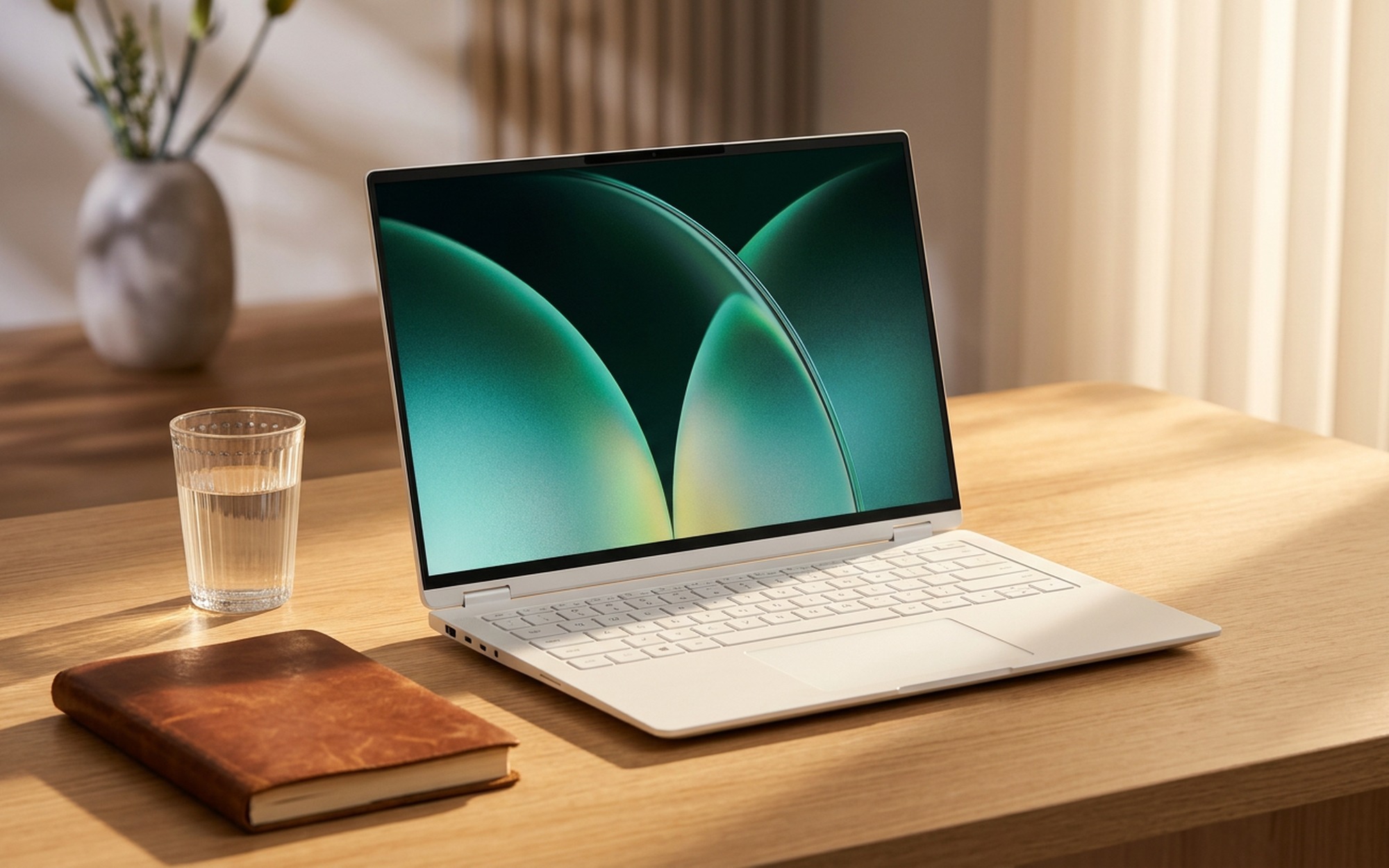
Honor describes the MagicBook Pro 16 2026 as the best-built laptop in the MagicBook Pro lineup’s history – a claim that holds up under scrutiny. The chassis is machined from high-strength aluminum alloy and treated with a pearl electrophoresis finish, then overlaid with Honor’s proprietary 3D iridescent particle spray coating. The result is a lid that shifts subtly between silver, pearl, and pastel tones depending on the angle of light – a distinctive visual signature that sets it apart from the uniform matte aluminum that dominates the premium laptop space.
Three colorways are available: Moonlight White, Starry Gray, and Celadon Green. All three use the same iridescent treatment; the Green variant is particularly striking in person.
At 16.9mm thin and 1.66kg, the MagicBook Pro 16 2026 sits in unusual territory: a 16-inch laptop that weighs less than many 14-inch gaming machines. The chamfered edges, tight panel alignment, and hinge resistance all reinforce a product built with care rather than cost-cutting.
Display: 3K 165Hz With Real Color Accuracy
The 16-inch panel is a highlight. At 3072×1920 resolution – a 16:10 aspect ratio at 226 pixels per inch – text and UI elements are crisp at native scaling. The 165Hz refresh rate and 3ms response time are specs typically reserved for gaming laptops, and they deliver noticeably smoother motion whether you’re scrolling through a long document or running a fast-paced game.
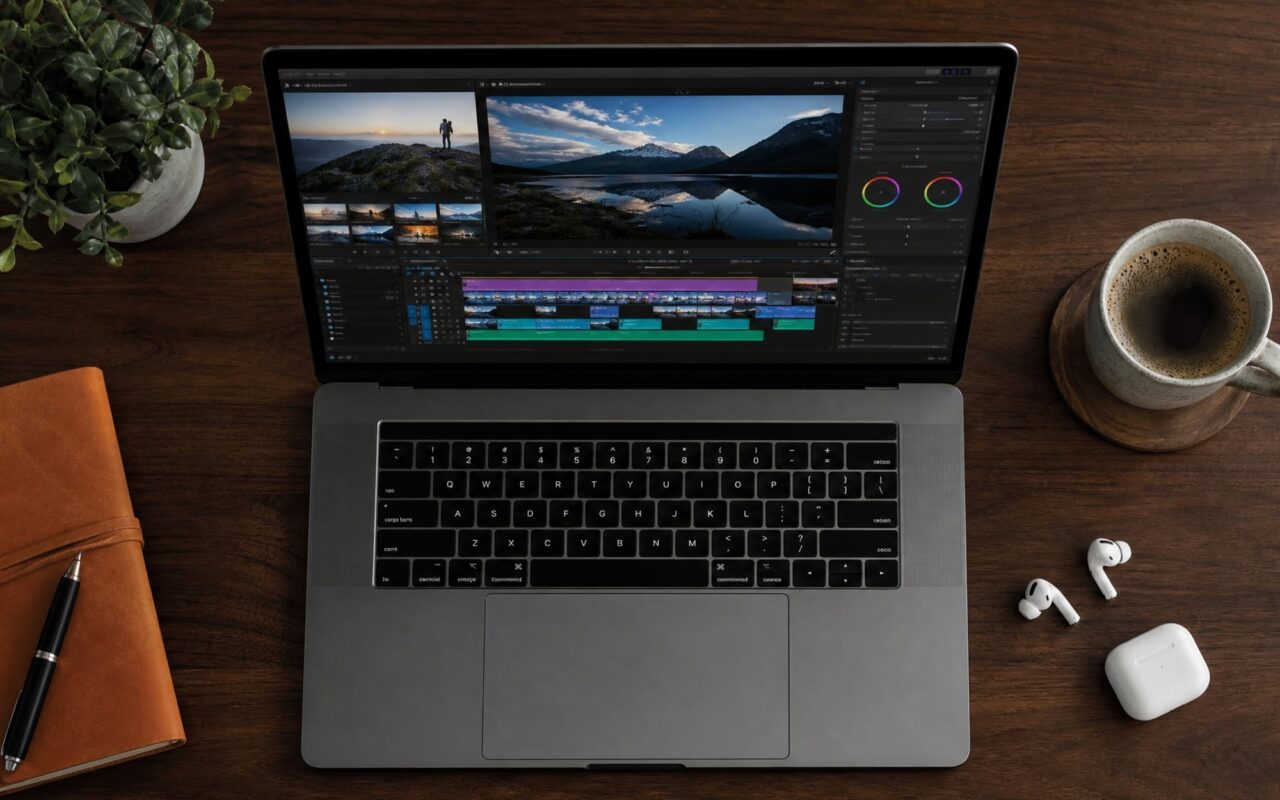
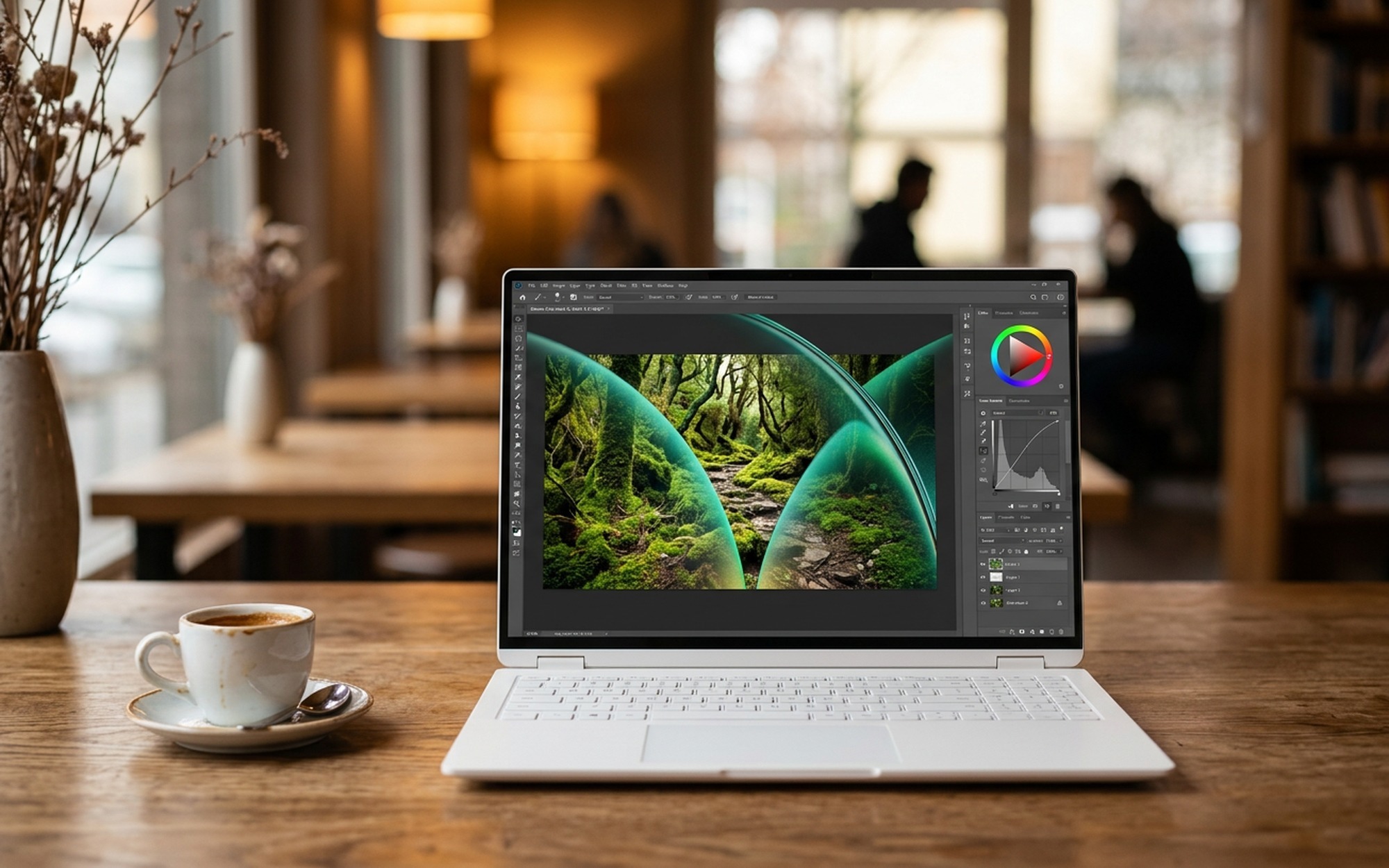
100% DCI-P3 coverage means this display is genuinely useful for photo and video editors working in wide-color workflows, not just a marketing checkbox. At 500 nits of peak brightness, outdoor legibility is solid in shaded environments. The panel uses 4320Hz high-frequency dimming to reduce flicker at all brightness levels – a meaningful benefit for users prone to eye strain during long sessions.
The 16:10 aspect ratio provides approximately 11% more vertical workspace compared to a 16:9 display of the same diagonal – a tangible productivity advantage in code editors, spreadsheets, and web browsers.
Intel Core Ultra X9 388H: Full-Power Performance, Unlocked
The Core Ultra X9 388H is the flagship chip in Intel’s Panther Lake lineup for mobile platforms. Its 4P + 8E + 4 LPE core configuration (16 cores, 22 threads) runs at a full 88W TDP in Performance mode – a figure that positions it alongside workstation-class laptops rather than traditional thin-and-lights. Smart mode dials power back to 50W for quieter, cooler operation when sustained peak performance is not required.
Honor’s internal benchmark data produces an eye-catching result: at 50W (Smart mode), the Core Ultra X9 388H outperforms the AMD Ryzen AI 9 H 465 running at its rated 80W TDP. That efficiency advantage implies Intel’s Panther Lake architecture has made substantial IPC and power delivery improvements over previous generations – and at the MagicBook Pro 16’s 88W Performance mode ceiling, the gap widens further.
The dual-fan cooling system with 12mm copper heat pipes is sized to sustain 88W continuously. The 16-inch chassis provides substantially more thermal headroom than 14-inch alternatives, and Honor’s engineering appears to have used it effectively based on early impressions from hands-on reviewers.
Intel Arc B390 Integrated Graphics: The RTX 3050 Challenger
The Intel Arc B390 GPU integrated into the Core Ultra X9 388H configuration features 12 Xe3 execution units – significantly more than the Arc B370 (10 Xe3) found in the Core Ultra X7 358H variant. This is the same next-generation Xe3 architecture that powers Intel’s discrete Arc Battlemage cards, now packaged as an integrated GPU with shared system memory bandwidth.
Honor’s benchmark claim – that the Arc B390 matches a desktop GeForce RTX 3050 – is plausible given Xe3’s architectural improvements over Iris Xe. The desktop RTX 3050 handles 1080p gaming at medium-to-high settings in most titles from 2021–2024; applying that yardstick to the Arc B390 suggests:
- Esports titles (Valorant, CS2, League of Legends, Apex Legends): smooth 1080p at high-to-ultra settings, typically above 60fps
- Mid-tier AAA games (Elden Ring, Cyberpunk 2077, Spider-Man: Miles Morales): playable at 1080p medium settings, 30-50fps in demanding scenes
- Older or optimized titles (Grand Theft Auto V, Fortnite, Minecraft RTX off): comfortably above 60fps at 1080p high
For comparison, the Arc B370 in lower-tier MagicBook Pro 16 configurations (Core Ultra X7 358H) offers two fewer execution units and lower memory bandwidth – worth stepping up to the X9 388H if gaming matters.
The Arc B390 also benefits from Intel’s XeSS 3.0 upscaling technology, which can boost frame rates in supported titles by 40-80% with minimal visual quality loss – a meaningful practical advantage over relying on native rendering alone. XeSS 3.0 with Frame Generation support is available in a growing library of titles including Cyberpunk 2077, The Last of Us Part I, and Hogwarts Legacy.
Battery Life: 92Wh Is a Class Statement
The 92Wh battery is the standout specification for buyers who work on the go. Honor rates it at 13.5 hours of HD video streaming on Bilibili (the Chinese streaming platform used as a real-world proxy), with third-party estimates placing typical productivity use at 12-15 hours depending on screen brightness and workload.
For context: the MacBook Pro 14 M4 ships with a 72.4Wh battery. The Honor’s 92Wh cell is 27% larger – and while Apple’s M4 chip achieves remarkable efficiency, the combination of Panther Lake’s power management at 50W Smart mode and the substantially larger battery delivers competitive all-day runtime on Windows.
The 100W GaN fast charger is included in the box – not a given at this price tier. It fills the battery from 0 to 100% in approximately 68 minutes, or to 50% in around 30 minutes. The laptop also supports 80W reverse charging, allowing you to use the MagicBook Pro 16 as a power bank to top up a phone or tablet.
Ports, Connectivity, and Software
The MagicBook Pro 16 2026 covers nearly every connectivity scenario without dongles:
| Port | Spec |
|---|---|
| Thunderbolt 4 | 40Gbps, external display and eGPU support |
| USB-C 3.2 Gen 2 | 10Gbps, full-featured (video out + power delivery) |
| USB-A × 2 | 5Gbps each |
| HDMI 2.1 | 4K@144Hz output |
| 3.5mm audio | Headphone/mic combo |
Two USB-A ports means standard peripherals – mice, USB drives, dongles – plug in without adapters. HDMI 2.1 means connecting to a 4K monitor requires no adapter at all. Wireless runs on Intel AX211 (Wi-Fi 6E), which supports the 6GHz band for lower congestion in dense environments. Bluetooth 5.4 is a step ahead of the 5.1 found in many competing models.
On the software side, Windows 11 is layered with Honor’s MagicOS utilities: YOYO Assistant (AI summarization and smart search), cross-device collaboration features for pairing with Honor smartphones, and multi-device clipboard sharing. These are supplementary tools rather than the core appeal – the hardware is the reason to buy this machine.
Honor MagicBook Pro 16 2026 vs. MacBook Pro 16: The Honest Comparison
The MacBook Pro 16 M4 Pro starts at $2,499 – roughly double the Honor’s entry price. Both target professionals who need a portable workstation. The comparison is inevitable.
Where the Honor wins:
– Battery capacity: 92Wh vs. 72.4Wh (MacBook Pro 14 M4)
– Display refresh rate: 165Hz vs. 120Hz on MacBook Pro
– Port selection: native HDMI 2.1 and dual USB-A, no dongle required
– Weight: 1.66kg vs. 2.14kg for MacBook Pro 16
– Price: approximately 50% less at entry configuration
Where the MacBook Pro wins:
– GPU performance: M4 Pro’s GPU substantially outperforms Arc B390 in creative workloads
– Single-core CPU efficiency: Apple Silicon leads for single-threaded tasks
– Display measured quality: Liquid Retina XDR calibration and ProMotion
– Software ecosystem: Final Cut Pro, Logic Pro, Xcode, macOS stability
– Long-term software support and resale value
The honest assessment: if you’re in the Apple ecosystem or depend on macOS-exclusive creative tools, nothing in this segment replaces the MacBook Pro. If you need a premium Windows laptop with the longest battery in its class, a faster-refreshing display, more physical ports, and significantly lower cost – the Honor MagicBook Pro 16 2026 is a serious machine that deserves serious consideration. Gizmochina’s coverage of the MagicBook Pro 14 and 16 launch captures how Honor has repositioned itself as a legitimate premium competitor.
Pricing and Availability
The Honor MagicBook Pro 16 2026 launched in China in April 2026 across three configurations:
| Configuration | Price (CNY) | Approx. USD |
|---|---|---|
| Core Ultra 5 338H + Arc B370 + 32GB | ¥7,999 | ~$1,105 |
| Core Ultra X7 358H + Arc B370 + 32GB | ¥8,999 | ~$1,240 |
| Core Ultra X9 388H + Arc B390 + 32GB | ¥10,999 | ~$1,515 |
All configurations include 1TB NVMe SSD storage (YMTC PC411). Global availability has not been confirmed at time of writing; Honor has been expanding its laptop lineup internationally, and the MagicBook Pro series has previously reached European and Southeast Asian markets. TechRadar’s hands-on with the MagicBook Pro 14 sibling suggests the 2026 generation represents a meaningful step up in build quality over 2024 models.
Final Verdict
The Honor MagicBook Pro 16 2026 is the strongest case for an integrated graphics laptop in 2026. The Core Ultra X9 388H’s 88W performance ceiling, the Arc B390’s surprising gaming capability, and the 92Wh battery’s all-day endurance combine in a chassis that looks and feels genuinely premium – at a price that undercuts the competition by a meaningful margin.
The limitations are real: no discrete GPU option means the ceiling for gaming and GPU-accelerated creative work is lower than dedicated gaming laptops, and the current China-only availability is a barrier for international buyers. But for the student, professional, or light gamer who wants a single machine that handles everything without a charger nearby, the MagicBook Pro 16 2026 deserves a place on the shortlist.
Rating: 8.5 / 10
Honor MagicBook Pro 16 2026 reviewed based on official specifications, manufacturer benchmark data, and early hands-on impressions. Review unit not provided by Honor.
- Intel Core Ultra X9 388H runs at full 88W — desktop-class performance in a 16.9mm thin chassis
- Intel Arc B390 integrated graphics benchmarks on par with a desktop RTX 3050 for 1080p gaming
- 92Wh battery with 13.5-hour video runtime — largest in its thin-and-light class
- 16-inch 3072×1920 165Hz display with 100% DCI-P3 and 4320Hz flicker-free dimming
- Weighs just 1.66kg — lighter than the MacBook Pro 16 by nearly 500 grams
- Premium iridescent aluminum build — Honor’s best MagicBook craftsmanship to date
- 100W GaN fast charging: full battery in approximately 68 minutes
- Wi-Fi 6E and Bluetooth 5.4 — cutting-edge wireless connectivity
- No discrete GPU option — demanding AAA titles at high settings remain out of reach
- Wi-Fi 6E rather than Wi-Fi 7 — some 2026 competitors offer the newer standard
- Currently a China-market launch; global availability and pricing not yet confirmed
- Integrated Arc graphics still trails dedicated laptop GPUs like the RTX 4060 by a meaningful margin
Frequently Asked Questions
Is the Honor MagicBook Pro 16 2026 good for gaming and everyday productivity with only integrated graphics?
Yes — for everyday productivity and light-to-moderate gaming, it performs excellently. The Intel Arc B390 GPU matches a desktop RTX 3050 in benchmarks, handling esports titles (League of Legends, Valorant, CS2) at high settings and more demanding games at medium 1080p. For AAA gaming at high settings or above 1080p, a discrete GPU laptop is a better fit.
How does the Intel Core Ultra X9 388H with 88W TDP compare to AMD Ryzen AI 9 in real-world laptop performance?
Honor’s benchmark data shows the Core Ultra X9 388H in its 50W Smart mode outperforming the AMD Ryzen AI 9 H 465 at its full 80W TDP. At the MagicBook Pro 16’s 88W Performance mode, the advantage increases further — placing Intel’s Panther Lake architecture meaningfully ahead of current AMD competition for multi-core workloads.
What is the best 16-inch laptop under $1,500 with premium build and all-day battery life in 2026?
The Honor MagicBook Pro 16 2026 is a top contender — starting around $1,240 in China, it combines a 1.66kg premium iridescent aluminum chassis, a 92Wh battery with 13.5-hour video runtime, a 165Hz 3K display, and Intel’s Core Ultra X9 388H. Few 16-inch Windows laptops match this combination of weight, battery, and performance at this price.
Can a 2026 integrated graphics laptop really match entry-level discrete GPU performance for 1080p gaming?
With Intel’s Arc B390 (12 Xe3 execution units), yes — synthetic benchmarks show parity with the desktop RTX 3050. In practice, expect smooth 1080p gaming in esports and older titles, and 30-60fps at medium settings in recent AAA games. The gap to dedicated laptop GPUs like the RTX 4060 remains real, but for casual gaming the Arc B390 removes the need for a second device.
What are the full specs, weight, and dimensions of the Honor MagicBook Pro 16 2026?
The Honor MagicBook Pro 16 2026 measures 354×242×16.9mm and weighs 1.66kg. Key specs for the top configuration: Intel Core Ultra X9 388H (88W), Intel Arc B390 GPU, 32GB LPDDR5x at 9600MT/s, 1TB NVMe SSD, 16-inch 3072×1920 165Hz 100% DCI-P3 display, 92Wh battery, Wi-Fi 6E (Intel AX211), Bluetooth 5.4, Thunderbolt 4, USB-C 3.2 Gen 2, 2× USB-A, HDMI 2.1, and 3.5mm audio.