
The Clip-On Earbud Revolution (And Why Sony Took So Long)
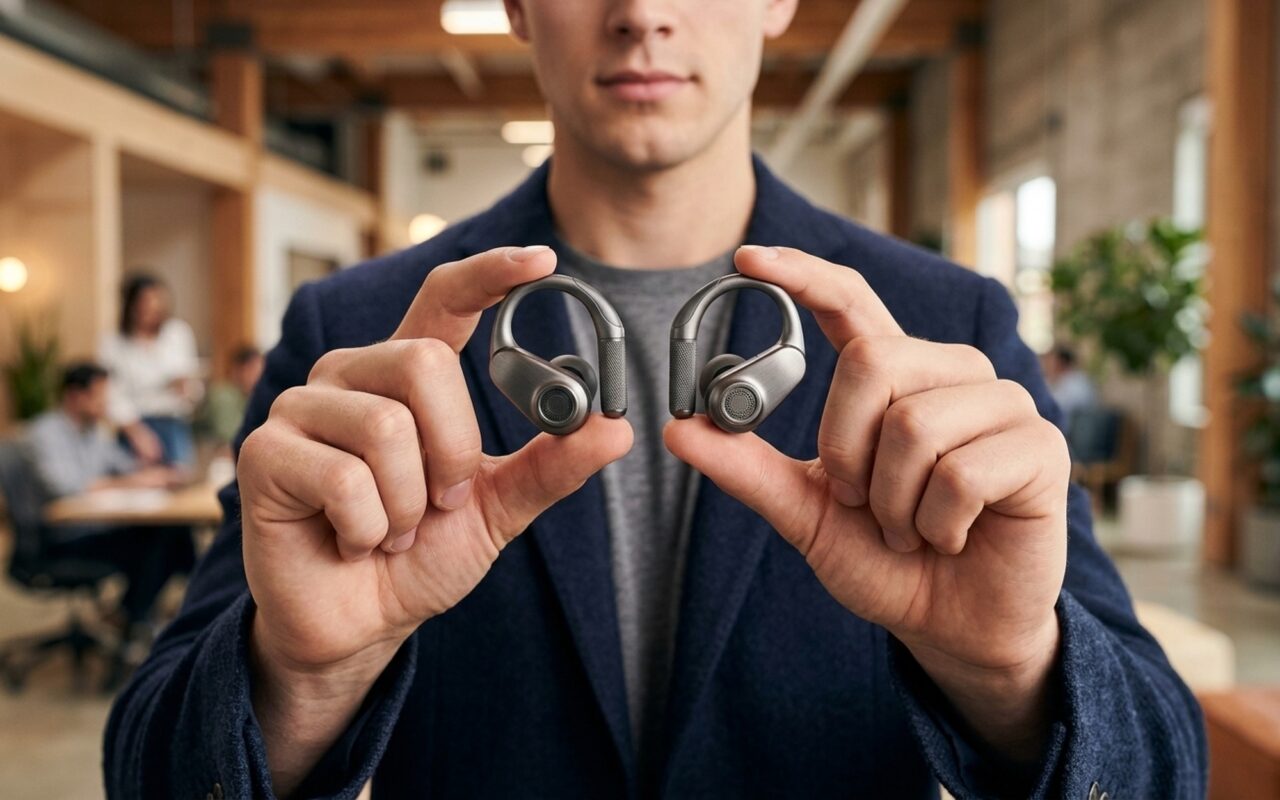
If you have walked through any major city, airport, or gym in 2026, you have seen them: people wearing what look like large plastic earrings clamped to the sides of their heads. Clip-on open-ear earbuds have gone from a niche curiosity to one of the fastest-growing segments in personal audio, and for good reason. Unlike traditional in-ear buds that seal your ear canal, open-ear designs let you hear your surroundings naturally – ideal for runners who need traffic awareness, office workers who want to catch a coworker’s question, or anyone who simply cannot stand the plugged-up feeling of silicone tips.
The category was pioneered by Bose with the Sport Open Earbuds in 2021, refined by Huawei with the FreeClip in 2023, and flooded with budget alternatives from brands like Soundcore and EarFun in the years since. Sony, despite being the dominant force in premium wireless audio with its WF-1000XM series, waited until late 2025 to enter the ring.
The Sony LinkBuds Clip represents a calculated, over-engineered answer to the question that has defined this category from the start: can you make an earbud that fits everyone, sounds good, and doesn’t fall off? After spending three weeks testing them as my daily driver for music, calls, meetings, and workouts, here is everything you need to know.
Sony LinkBuds Clip: Key Specifications at a Glance
Before diving into the hands-on experience, here are the numbers that matter:
| Specification | Sony LinkBuds Clip | Bose Ultra Open | Huawei FreeClip |
|---|---|---|---|
| Driver | 10mm open-ring | 12mm dipole | 10.8mm dual-magnet |
| Bluetooth | 5.3 | 5.3 | 5.2 |
| Codec Support | SBC, AAC | SBC, AAC, aptX Adaptive | SBC, AAC, L2HC |
| Battery (Buds) | 9 hours | 7.5 hours | 10 hours |
| Battery (Case) | 28 hours | 19.5 hours | 30 hours |
| Quick Charge | 3 min = 60 min | None | 5 min = 60 min |
| Water Resistance | IPX4 | IPX4 | IP54 |
| Wireless Charging | No | No | Yes |
| Wear Detection | No | No | Yes |
| Weight (per bud) | 5.1g | 6.4g | 5.7g |
| Price | $229.99 | $299.00 | $199.00 |
Design & Fit: The C-Bridge and the Spirit Pillow
Clip-on earbuds live and die by fit. A traditional in-ear bud stays put through friction inside the ear canal. A clip-on bud relies entirely on clamping force around the outer ear – too much pressure causes pain within an hour, too little and the bud flies off on your morning run.
The C-Bridge Mechanism
Sony’s solution is what it calls the C-bridge, a flexible silicone-and-plastic bridge that connects the battery housing behind your ear to the speaker driver in front. It sits in a middle ground between the floppy, fabric-wrapped feel of the Bose Ultra Open and the rigid plastic clamp of budget alternatives. The spring tension is carefully tuned: firm enough that the buds do not move during a brisk jog, soft enough that you forget you are wearing them after 15 minutes.
The battery housing and driver module are finished in a matte, soft-touch texture that feels premium and resists fingerprints. At 5.1 grams per bud, they are the lightest in their class – lighter than the Bose Ultra Open (6.4g) and even the Huawei FreeClip (5.7g). That weight difference is noticeable after several hours of wear.
The Spirit Pillow: Solving the One-Size Problem
Here is the genuine innovation. Sony includes a small silicone cushion they call the adapting cushion, known colloquially as the Spirit Pillow. It slides onto the C-bridge and narrows the gap between the battery and driver, effectively tightening the clamp for people with thinner ears.
I have thin ears. Standard clip-on earbuds wobble when I turn my head, and some fall off when I chew. With the Spirit Pillow attached, the LinkBuds Clip locked into place without any increase in pressure or discomfort. I tested this on three friends with different ear shapes – one with larger ears, one with smaller ears, and one who has never found clip-on earbuds comfortable – and all three reported a secure, comfortable fit within minutes of adjustment.
The earring-style design does mean these are visible. People will notice them. If you prefer invisible earbuds, traditional in-ear models like the Sony WF-1000XM6 are the better choice. But if you embrace the look, the LinkBuds Clip comes in two understated colors: black and white.
Sound Quality: Fighting Physics (And How to Fix the Bass Problem)
Let us address the question everyone asks about open-ear earbuds: how do they sound? The honest answer requires acknowledging the physics that no brand can escape.
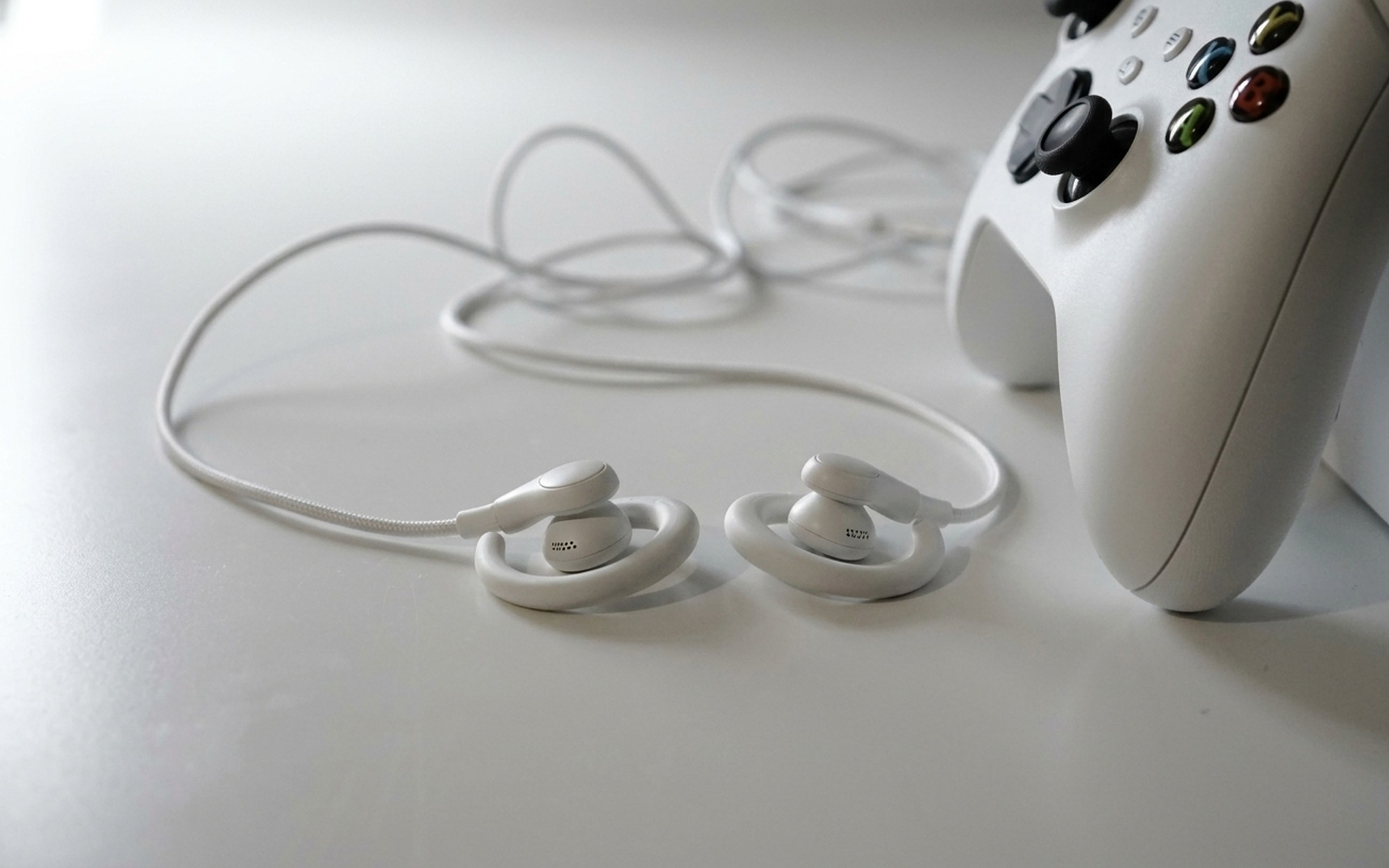
The LinkBuds Clip uses a 10mm open-ring dynamic driver that sits outside your ear canal rather than sealing inside it. Without a sealed chamber, low-frequency sound waves dissipate into the air before they reach your eardrum. This is not a Sony problem – it is a physics problem that affects every open-ear earbud on the market, from the $299 Bose Ultra Open to the $50 no-name Amazon brands.
Out-of-the-Box Sound Profile
Sony has tuned the LinkBuds Clip for clarity over impact. The midrange and treble are the stars: vocals cut through with crisp detail, acoustic guitars have realistic string texture, and podcasts sound like the host is in the room with you. The soundstage is notably wide – wider than the Bose Ultra Open – because the open design naturally creates a sense of space that sealed earbuds cannot replicate.
However, the bass roll-off is real and immediately noticeable. On tracks like Kendrick Lamar’s DNA or Billie Eilish’s bad guy, the sub-bass that gives these songs their energy is simply absent. The mid-bass – the thump of a kick drum or the pluck of a bass guitar – is present but subdued, more felt as a suggestion than an impact.
This is not a dealbreaker for every genre. Jazz, classical, folk, acoustic pop, and spoken word content sound excellent. I listened to Miles Davis’s Kind of Blue and heard detail in the cymbal work I had missed on my daily-driver WF-1000XM6. But if your playlist leans toward EDM, hip-hop, or rock, you will notice the missing low end.
How to Improve Bass: EQ Settings That Work
The Sony Sound Connect app includes a full manual equalizer that can meaningfully improve bass response. After extensive testing, here is the EQ setting that produced the best results without introducing distortion or harshness:
- 400Hz: +1
- 1kHz: +2
- 2.5kHz: +1
- 6.3kHz: 0
- 16kHz: +1
- Clear Bass: +8 to +10
This profile lifts the low end enough to add warmth without muddying the mids, and the treble boost at 16kHz restores some of the sparkle that bass-heavy EQ profiles typically sacrifice. It will not give you skull-rattling sub-bass – no EQ can overcome the physics of an unsealed driver – but it makes the listening experience significantly more engaging for bass-heavy tracks.
The Codec Compromise
One of the more frustrating decisions: the LinkBuds Clip supports only SBC and AAC codecs. There is no LDAC, no aptX, no LC3. For a company that brands its premium headphones with Hi-Res Audio labels and has built its reputation on high-bitrate wireless codecs, this is difficult to excuse. If you are streaming lossless audio from Tidal or Apple Music, you are leaving detail on the table regardless of which device you use.
The likely reason is power consumption: LDAC requires more processing and drains battery faster, and Sony clearly prioritized playback time over bitrate. But at $230, consumers have the right to expect both. The WF-1000XM6 at a similar price supports LDAC, making this omission feel like a deliberate product segmentation choice rather than a technical limitation.
Leak Suppression: Useful but Destructive
The LinkBuds Clip includes a Leak Suppression mode designed to prevent people nearby from hearing your music. It works by aggressively cutting mid-high frequencies that are most audible to bystanders. The problem: it makes your music sound hollow and distant. Use it on a quiet office floor where audio leakage would be noticeable, but turn it off whenever sound quality matters. In most outdoor and commuting scenarios, ambient noise covers any leakage naturally.
Call Quality: The Real Reason to Buy These
If the LinkBuds Clip has a killer feature, it is microphone performance. Sony has equipped these with a bone conduction sensor that picks up vibrations from your skull and jaw, combined with a beamforming microphone array for ambient noise rejection.
Real-World Testing
I conducted a series of increasingly difficult call tests:
Quiet indoor office: The person on the other end said I sounded like I was speaking directly into a podcast microphone. Full, natural voice with no compression artifacts.
Busy coffee shop with background chatter: My voice remained clear and prominent. Background voices were audible but heavily suppressed – the person I was speaking to could tell I was in a public place but had no trouble understanding every word.
Windy street corner (15-20 km/h gusts): This is where open-ear designs typically fall apart. I expected wind noise to overwhelm the microphones entirely. To my surprise, the person on the other end had no idea I was outside until I mentioned it. The bone conduction sensor picked up my voice through jaw vibration while the microphone array digitally filtered the wind. This is the best outdoor call performance I have experienced from any open-ear earbud.
Walking next to a busy road: Car and truck noise was faintly audible in the background of the call, but my voice cut through cleanly. The person I called said it sounded like I was calling from a car rather than standing on the sidewalk.
Meeting Performance
For Zoom, Teams, and Google Meet calls, the LinkBuds Clip performs admirably. The open-ear design means you hear your own voice naturally, preventing the disorienting plugged-ear feeling that makes some people shout during calls. The microphone pickup is clear enough that meeting transcription software captured my words with near-perfect accuracy.
The bone conduction sensor makes a real difference in preventing the hollow, distant sound that plagues most open-ear microphone systems. If your workday involves hours of calls and you find traditional earbuds uncomfortable after an hour, this is the strongest reason to choose the LinkBuds Clip over any competitor.
Sony LinkBuds Clip vs Bose Ultra Open vs Huawei FreeClip: Full Comparison
These three products define the premium clip-on earbud market in 2026. Each takes a different approach to the same fundamental challenge.
Design Philosophy
Sony LinkBuds Clip: Engineered for adaptability. The C-bridge plus Spirit Pillow system is the most flexible fit solution on the market. If you have struggled with earbud fit in the past, Sony’s approach has the highest probability of working for your ear shape.
Bose Ultra Open Earbuds: Engineered for simplicity. The clip mechanism is a single flexible piece with no adapters or adjustments – it either fits or it doesn’t. Bose prioritizes audio processing and noise management over mechanical customization.
Huawei FreeClip: Engineered for value. At $30 less than Sony and $100 less than Bose, Huawei packs in wireless charging, wear detection, and the longest battery life while still delivering balanced sound. The design is more fashion-forward, with a distinctive C-shape bridge available in purple and beige.
Sound Signature Comparison
| Aspect | Sony LinkBuds Clip | Bose Ultra Open | Huawei FreeClip |
|---|---|---|---|
| Bass response | Light, EQ-dependent | Warmest in class | Balanced, moderate |
| Midrange clarity | Excellent | Good | Very good |
| Treble detail | Crisp, occasionally bright | Smooth, rolled-off | Clear, controlled |
| Soundstage width | Very wide | Moderate | Wide |
| Max volume | Loud | Moderate | Loud |
| Best for | Vocals, podcasts, acoustic | Jazz, pop, rock | All genres |
| Worst for | EDM, hip-hop | High-volume listening | Critical listening |
Call Quality Ranking
- Sony LinkBuds Clip – Bone conduction wins for noisy environments
- Bose Ultra Open – Better wind rejection, slightly less natural voice
- Huawei FreeClip – Good in quiet, struggles outdoors
Comfort During Extended Wear (8+ Hours)
- Sony LinkBuds Clip – Lightest weight, Spirit Pillow customization
- Huawei FreeClip – Ergonomic design, slightly heavier than Sony
- Bose Ultra Open – Comfortable but heaviest, fixed fit
Features and Value
The comparison highlights a clear pattern: Sony leads in fit customization and call quality, Bose leads in music warmth and brand reliability, Huawei leads in features-per-dollar. Your choice should be driven by which of these priorities matters most to you.
Do Clip-On Earbuds Stay On During Exercise?
I tested the LinkBuds Clip across a week of workouts to answer this question definitively.
Running (5K and 10K distances)
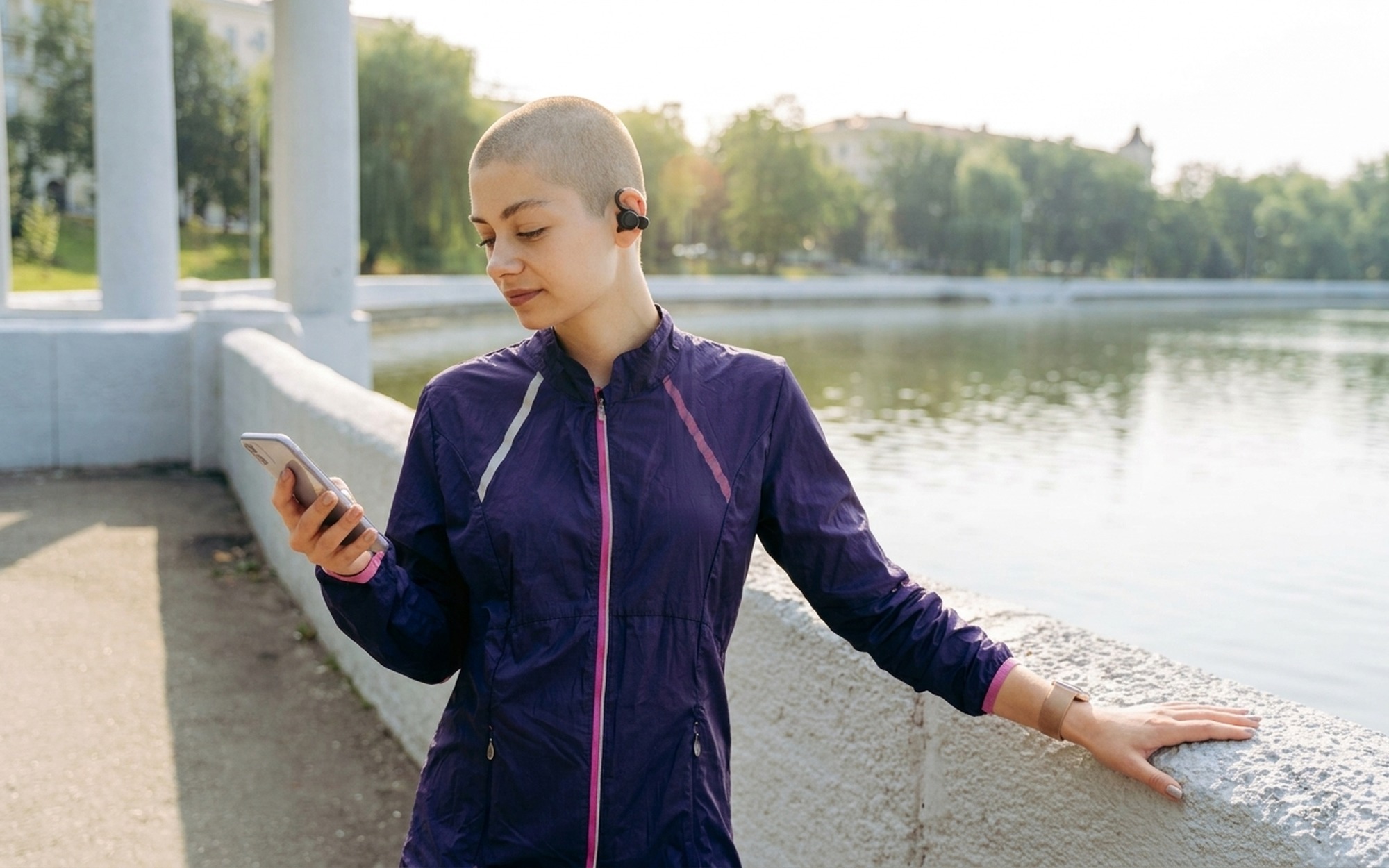
The buds stayed perfectly in place during steady-state running. No adjustments were needed over a 45-minute 10K. The open-ear design was a genuine safety advantage on road runs where hearing approaching cars and cyclists is critical.
Gym Workouts (Weights, Machines, Treadmill)
Weight training posed no problems at all. Bench press, squats, deadlifts, lat pulldowns – the buds never shifted. The one exception: exercises that involve lying flat on a bench with your head turned to the side can press the battery housing against your head, which gets uncomfortable after a few reps. This is not unique to Sony; all clip-on designs share this limitation.
High-Intensity Intervals and Plyometrics
During box jumps, burpees, and jump squats, the buds stayed secure but I noticed slight movement on landing. They never felt close to falling off, but the sensation of movement was distracting. For pure HIIT workouts, ear-hook style sports earbuds like the Powerbeats Pro or Shokz OpenRun remain more confidence-inspiring, though they lack the day-to-day versatility of the LinkBuds Clip.
Sweat and Weather Resistance
With an IPX4 rating, the LinkBuds Clip handles sweat and light rain without issue. After a particularly sweaty treadmill session, I rinsed the buds briefly under a tap – they survived without problems. IPX4 is not full waterproofing, however. Do not submerge them, and avoid heavy downpours. The Huawei FreeClip offers slightly better protection at IP54, adding dust resistance.
Verdict on Exercise
For runners, cyclists, and gym-goers, the LinkBuds Clip is a reliable workout companion. The combination of secure fit, environmental awareness, and sweat resistance makes them one of the best open-ear options for active use. Only HIIT enthusiasts and contact sport athletes should look elsewhere.
Battery Life & Charging: Real-World Performance
Sony claims 9 hours of continuous playback from the buds and 28 additional hours from the charging case, for a total of 37 hours. In my testing with mixed use – music at 60-70% volume, several hours of calls, and the EQ active – I consistently got:
- Music only: 8 hours 20 minutes (close to the 9-hour claim)
- Mixed music and calls: 7 hours 45 minutes
- Calls only: 7 hours 10 minutes (bone conduction sensor draws more power)
These are solid numbers. The 8-hour continuous music result means the LinkBuds Clip can get through a full workday without returning to the case, which is more than the Bose Ultra Open (7.5 hours claimed, roughly 6.5 hours real-world).
The charging case holds roughly 3.5 full charges. There is a 3-minute quick-charge feature that delivers approximately 60 minutes of playback – useful when you realize you forgot to charge before a run.
The Charging Downsides
Charging speed is underwhelming. A full charge of the case takes roughly 3 hours via USB-C. There is no wireless charging, which is disappointing at this price point when the Huawei FreeClip includes it. There is also no fast charging for the case itself – the 3-minute quick charge applies only to the buds when placed in the case.
The Sound Connect App and Software Experience
Sony’s Sound Connect app (formerly Headphones Connect) is the most feature-rich companion app in the audio space, and the LinkBuds Clip benefits from the full software ecosystem.
Equalizer
The 5-band manual equalizer plus Clear Bass slider gives precise control over the sound signature. Your EQ settings are saved to the buds themselves, so they persist across devices. This is a genuine advantage over Bose, whose app offers only preset EQ modes with no manual adjustment.
Listening Modes
Three listening modes are available:
– Standard: Full frequency range, no processing
– Voice Enhancement: Boosts vocal frequencies for podcasts and calls
– Leak Suppression: Cuts frequencies audible to bystanders (degrades sound quality)
Useful Features
- Adaptive Volume Control: Automatically adjusts volume based on ambient noise level. Works well in practice – I rarely needed to touch the volume controls during a walk from quiet neighborhood to busy street.
- Multipoint Connection: Connect to two devices simultaneously. Switching between my phone and laptop was seamless.
- Find My Earbuds: Uses your phone to locate misplaced buds. Accurate to within a few meters.
- 360 Reality Audio: Sony’s spatial audio format. Requires a compatible streaming service (Tidal, Deezer). The effect is impressive but the content library remains limited.
What’s Missing
- No wear detection: Taking the buds off does not pause playback. In 2026, this is standard on earbuds half the price.
- No voice assistant hotword: You can trigger your phone’s assistant, but there is no always-listening wake word.
Price & Value: Is $230 Worth It?
At $229.99, the Sony LinkBuds Clip is a premium-priced product in a category where competent alternatives start at $60. The question is whether Sony’s refinements justify the premium.
What $230 Gets You
- The most customizable fit system on the market (Spirit Pillow)
- Best-in-class call quality for open-ear earbuds
- 9-hour battery life (class-leading alongside Huawei)
- Sony’s full Sound Connect app ecosystem
- IPX4 water resistance
- The lightest clip-on buds available
What $230 Does Not Get You
- No active noise cancellation (by design, but worth noting)
- No high-res codecs (LDAC, aptX)
- No wear detection
- No wireless charging case
- No included ear tips or wing options (beyond the Spirit Pillow)
Value Comparison
If you are price-sensitive, the Anker Soundcore AeroClip at under $100 delivers 80% of the experience for less than half the price. The Huawei FreeClip at $199 offers better battery life and wireless charging at a lower price. The Bose Ultra Open at $299 is the most expensive option but delivers the warmest sound.
However, if fit and call quality are your absolute priorities – and for many people who spend hours on calls or have struggled with earbud comfort, they are – the Sony LinkBuds Clip delivers value that its competitors cannot match. The Spirit Pillow alone has no equivalent on the market, and the bone conduction microphone system is genuinely superior.
For more on how Sony’s premium earbuds compare, see our full Sony WF-1000XM6 review for the best noise-cancelling alternative from the same brand.
Pros and Cons Summary
Pros:
– Best-in-class fit across different ear shapes with Spirit Pillow adapter
– Exceptional call quality with bone conduction voice isolation
– Comfortable for all-day wear (lightest in class at 5.1g)
– IPX4 water resistance for gym and outdoor use
– Bluetooth 5.3 with stable multipoint connection
– Excellent companion app with manual EQ
Cons:
– No wear detection or auto-pause when removing earbuds
– Limited bass response due to open-ear physics
– No LDAC or high-res codec support (SBC/AAC only)
– Expensive at $229.99 given missing features
– Leak Suppression mode degrades audio quality significantly
– No wireless charging for the case
Final Verdict: Who Should Buy the Sony LinkBuds Clip?
The Sony LinkBuds Clip is a specific tool for a specific person, and understanding whether that person is you determines whether these are worth the money.
Buy the LinkBuds Clip if:
– You spend hours on calls and need the best microphone performance in an open-ear format
– You have struggled with earbud fit and want the most adaptable design available
– You need all-day comfort and environmental awareness (office, commuting, parenting)
– You run or cycle outdoors and value hearing traffic around you
Skip the LinkBuds Clip if:
– Bass-heavy music is central to your listening experience – get the Bose Ultra Open or closed-back WF-1000XM6
– You want the best value – the Huawei FreeClip offers similar features for $30 less
– You need ANC for noisy commutes or flights – open-ear designs fundamentally cannot provide noise cancelling
Score: 8/10
The LinkBuds Clip earns its score through execution rather than innovation. The C-bridge and Spirit Pillow solve real fit problems that have plagued this category from the start. The bone conduction microphone sets a new standard for open-ear call quality. But the missing features – wear detection, LDAC, wireless charging – feel like deliberate product segmentation rather than technical constraints, and at $230, that stings.
Sony did not reinvent the clip-on earbud. It simply built the most polished, most comfortable, and most call-friendly version of one. For the right user, that is more than enough.
For more information and detailed comparisons, check the SoundGuys best clip-on earbuds guide and CNET’s best open earbuds of 2026. See the official specifications on Sony’s LinkBuds Clip product page and read Mashable’s review for another perspective.
- Best-in-class fit across different ear shapes with Spirit Pillow adapter
- Exceptional call quality with bone conduction voice isolation
- Comfortable for all-day wear (8+ hours continuous)
- IPX4 water resistance for gym and outdoor use
- Bluetooth 5.3 with stable multi-device connection
- No wear detection or auto-pause when removing earbuds
- Limited bass response due to open-ear physics
- No LDAC or high-res codec support (SBC/AAC only)
- Expensive at $229.99 given missing features
- Leak Suppression mode degrades audio quality significantly
Frequently Asked Questions
Is the Sony LinkBuds Clip worth the price in 2026?
At $229.99, the Sony LinkBuds Clip is priced at a premium that’s hard to justify if you prioritize raw sound quality or features. For the same money, you can get the Sony WF-1000XM6 with industry-leading ANC and LDAC support. However, if you specifically need an open-ear design for all-day comfort and situational awareness, the LinkBuds Clip justifies its price through best-in-class fit (Spirit Pillow adapter), exceptional call quality (bone conduction voice isolation), and Sony’s software ecosystem. It is the most polished clip-on earbud on the market, but value depends entirely on whether the open-ear form factor is a must-have for you.
Do clip-on earbuds actually stay on during exercise?
Yes, well-designed clip-on earbuds stay securely on during most forms of exercise, including running, cycling, and gym workouts. The Sony LinkBuds Clip uses a C-bridge friction mechanism that grips the outer ear from behind, and the optional Spirit Pillow silicone adapter provides additional friction for those with thinner ears. However, there are caveats: high-impact activities like jumping rope or box jumps can cause them to shift, and they may not feel secure during contact sports or exercises that involve lying on your side. With an IPX4 water resistance rating, the LinkBuds Clip can handle sweat and light rain. For most runners and gym-goers, clip-on earbuds are actually more secure than traditional in-ear buds because they don’t rely on ear canal friction to stay in place.
How do I fix Sony LinkBuds Clip sound quality problems and lack of bass?
The most common sound quality complaint about the Sony LinkBuds Clip is weak bass, which is inherent to the open-ear design — since the drivers sit outside your ear canal, low frequencies naturally dissipate. To improve sound, first ensure a proper fit: the speaker should sit as close to your ear canal as possible without causing discomfort. Then, open the Sony Sound Connect app and adjust the EQ — try boosting the Clear Bass slider to +8 or +10, and set the manual EQ to a subtle V-shape: +1, +2, +1, 0, +1 across the five bands. Disable Leak Suppression mode unless you specifically need privacy, as it aggressively cuts mid-high frequencies and makes audio sound hollow. If sound quality is still poor, check that your audio source supports AAC (iPhone) or SBC (Android), and ensure Bluetooth connection is stable by keeping your device within 10 meters without obstructions.
What are the best open-ear earbuds for phone calls and meetings in 2026?
For phone calls and meetings, the Sony LinkBuds Clip leads the pack thanks to its bone conduction sensor paired with a multi-microphone array that isolates your voice even in windy or noisy environments. The Bose Ultra Open Earbuds are a close second, offering better wind noise reduction but slightly less natural voice reproduction. The Huawei FreeClip performs well indoors but struggles with background noise cancellation outdoors. For budget-conscious buyers, the Anker Soundcore AeroClip offers decent call quality at under $100. If you spend your day in Zoom meetings or take calls while walking outside, the Sony LinkBuds Clip is the best open-ear option available, but the Bose Ultra Open is worth considering if multipoint switching across devices is more important to you than absolute voice clarity.
Why do clip-on earbuds have no bass and which model is best for music?
Clip-on earbuds lack bass because of fundamental physics: the drivers sit outside your ear canal rather than sealing inside it. In traditional in-ear buds, the silicone tip creates a sealed chamber that traps low-frequency sound waves, allowing bass to resonate. Open-ear clip-on designs lose this seal entirely — bass frequencies dissipate into the air before reaching your eardrum. This affects all open-ear earbuds, not just Sony’s. For music lovers who want the best bass in an open-ear format, the Bose Ultra Open Earbuds currently offer the warmest low-end response thanks to their larger drivers and proprietary audio processing. The Sony LinkBuds Clip ranks second for music with its clear midrange and treble, while the Huawei FreeClip provides the most balanced overall sound signature. If bass is your priority, closed-back in-ear buds like the Sony WF-1000XM6 remain the better choice.
How does the Sony LinkBuds Clip compare to Bose Ultra Open and Huawei FreeClip?
These three premium clip-on earbuds each serve different priorities. The Sony LinkBuds Clip ($229.99) wins on fit customization (Spirit Pillow adapter) and call quality (bone conduction). The Bose Ultra Open Earbuds ($299) offers the warmest bass response, superior wind noise reduction, and simpler multipoint switching. The Huawei FreeClip ($199) provides the best battery life at 10 hours per charge, includes wireless charging in the case, and has the most balanced sound signature out of the box. For comfort and all-day wear, Sony leads. For music enjoyment in an open format, choose Bose. For features-per-dollar and battery life, Huawei is the strongest value. All three lack active noise cancellation by design — if you need ANC, closed-back earbuds like the Sony WF-1000XM6 are the better option.