The Heavy Truth
Let’s get the elephant out of the room first. The Samsung Galaxy Z TriFold is heavy.
I don’t mean “premium” heavy. I mean “pulling your gym shorts down” heavy. At 310 grams naked—and pushing 350 grams with the official kickstand case—this isn’t a phone you casually slip into a shirt pocket. It is a dense, rectangular slab of ambition that demands commitment.
For 19,999 CNY (roughly $2,800), you are buying the second major entrant in the tri-fold race, following Huawei’s lead. But unlike its predecessors, Samsung hasn’t tried to make this a piece of jewelry. They built a tool. A very expensive, very heavy tool that feels like it escaped from an engineering lab before the aesthetics team could finish it.
The “Ariel Atom” Aesthetic
Most foldables try to seduce you with jewelry-like hinges and ceramic finishes. The Z TriFold does not care.
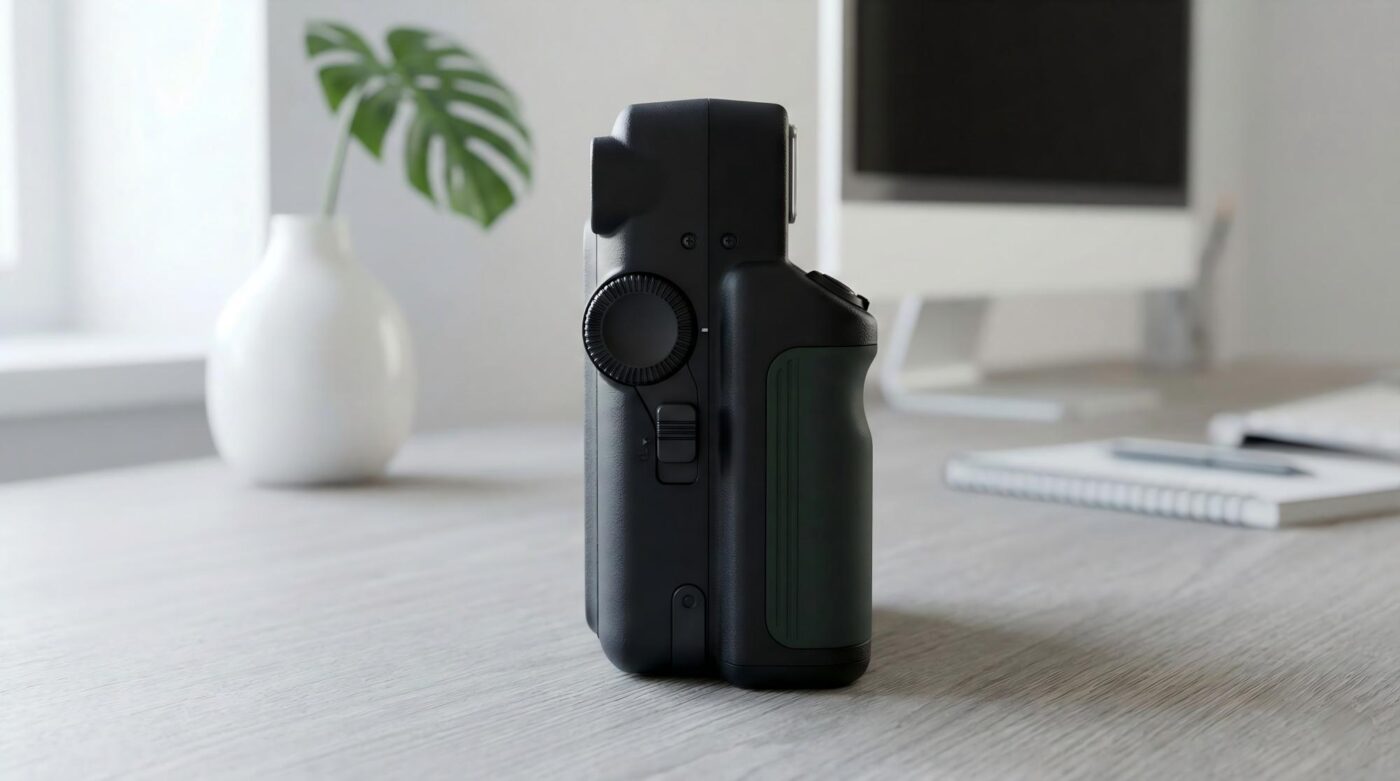
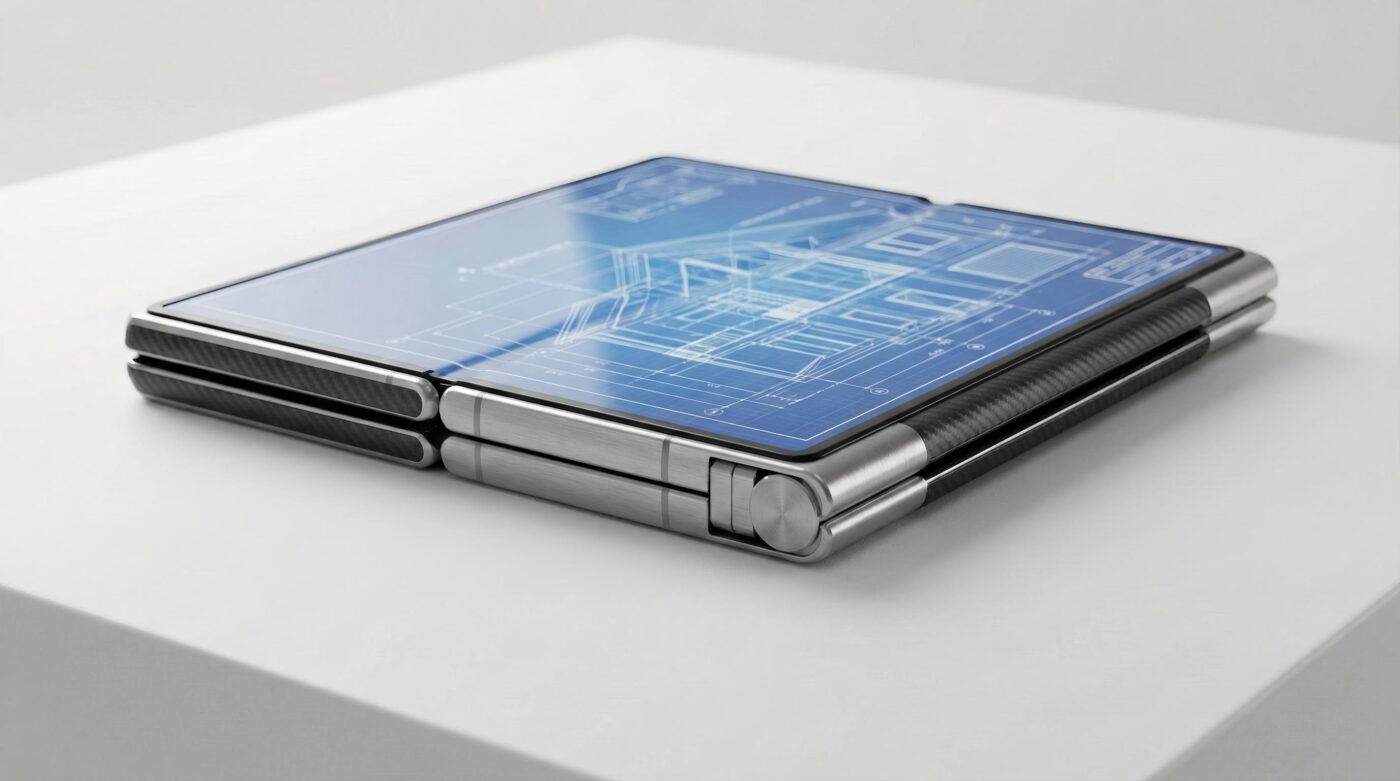
The back plate uses a carbon-fiber-textured polymer that feels less like a luxury watch and more like the dashboard of a track car. It collects fingerprints with an enthusiasm I haven’t seen since the Galaxy S6. The third section of the device is noticeably wider than the others, a purely functional choice to make unfolding easier.
It reminds me of an Ariel Atom. It’s ugly in a way that suggests high performance. It’s stripped back, industrial, and comes in exactly one color: Black. Samsung clearly assumes that if you’re buying this, you care about spreadsheets, not fashion.
The 10-Inch Payoff
So why tolerate the brick-like ergonomics? Because opening it feels like a magic trick.
You aren’t just getting a slightly larger square, as you do with the Z Fold 7. You are getting a legitimate 10-inch tablet with a 4:3 aspect ratio. That ratio matters.
- Video Impact: Standard bi-fold phones give you a 10:9 box that is terrible for video. The TriFold’s 4:3 canvas offers 50% more screen real estate than a standard Fold. YouTube videos play with massive impact.
- Browsing: Desktop-class websites load without the mobile clutter.
- Reading: For the first time, I found myself using a phone as a dedicated PDF reader. Held vertically, it displays full technical documents without requiring a pinch-to-zoom dance. It’s the closest a phone has ever come to replacing my iPad Mini.
The Spec Sheet Lottery
Samsung threw everything they had at the logic board but got stingy with the display.
The Good:
- Processor: Snapdragon 8 Elite (Special Edition). It chews through multitasking without a stutter.
- RAM: 16GB. Mandatory for the kind of abuse this phone invites.
- Battery: 5600mAh. Surprisingly decent, though three screens drain it fast.
- Charging: 45W. Finally matching the Ultra series.
The Bad:
- The Screen Quality: Here is the insult. The inner display resolution is 1584 x 2160. That is a pixel density (PPI) of roughly 269. For a device costing nearly $3,000 in 2026, that is inexcusable. Text looks soft. Icons are fuzzy. The Z Fold 7 has a PPI of 368. This feels like a regression.
- No Inner AOD: You can’t have the Always-On Display on the big screen. Why? Who knows.
Software Salvation
OneUI is usually a mixed bag, but on this form factor, it shines thanks to GoodLock.
Because the phone is so wide, reaching across the screen is impossible with one hand. Samsung’s “One Hand Operation+” module is the savior here. I set up a virtual trackpad that slides out from the side, letting me control the far corners of the screen with just my thumb. It turns a two-hand device into a manageable one-hand browser.
DeX on the Go
Then there is DeX. Samsung is the only manufacturer still taking “phone as PC” seriously. On the TriFold, DeX doesn’t need an external monitor. You can run the full desktop interface right on the 10-inch screen.
With a Bluetooth keyboard, this is a legitimate laptop replacement for emergency work. It runs three apps side-by-side—price checking, chatting, and browsing—without the claustrophobia of a standard phone.
Verdict: A Prototype You Can Buy
The Galaxy Z TriFold is a “Yes, but…” device. Yes, it changes how you consume content. Yes, it is a multitasking monster. But it is too heavy, too expensive, and the screen sharpness is bafflingly low for the price.
If you live in PDF files, manage server logs via SSH on the go, or need to impress fellow engineers, this is your holy grail. For everyone else? It’s a 310-gram tech demo.
Wait for the Z TriFold 2. Or better yet, wait to see if the rumored 2026 iPhone Fold forces Samsung to actually fix that pixel density.
- Pros: Unmatched multitasking, genuine 10-inch canvas, DeX mode is a killer app.
- Cons: Unforgivably heavy, low-res inner screen, fingerprint magnet.